SHAHNAMEH: The Persian Book of Kings

The definitive translation by Dick Davis of the great national epic of Iran—now newly revised and expanded to be the most complete English-language edition

$34.5

arrow-down
Order now

About the audiobook

Author:
Abolqasem Ferdowsi, Translated by Dick Davis from the original Persian
Languages:
English
Reader:
Dick Davis, Sean Rohani, Nikki Massoud

Our sincere gratitude to the Parwiz Zafari fund at the Hamid and Christina Moghadam Program in Iranian Studies at Stanford University for their generous support in bringing this audio production to life. You can learn more about their work at iranianstudies.stanford.edu.

Dick Davis—“our pre-eminent translator from the Persian” (The Washington Post)—has revised and expanded his acclaimed translation of Ferdowsi’s masterpiece, adding more than 100 pages of newly translated text. Davis’s elegant combination of prose and verse allows the poetry of the Shahnameh to sing its own tales directly, interspersed sparingly with clearly marked explanations to ease along modern audiences.

Originally composed for the Samanid princes of Khorasan in the tenth century, the Shahnameh is among the greatest works of world literature. This prodigious narrative tells the story of pre-Islamic Persia, from the mythical creation of the world and the dawn of Persian civilization through the seventh-century Arab conquest. The stories of the Shahnameh are deeply embedded in Persian culture and beyond, as attested by their appearance in such works as The Kite Runner and the love poems of Rumi and Hafez.

This audiobook is expertly read by Dick Davis, Nikki Massoud, and Sean Rohani with audio engineering by Blake Rook.

About the author

FERDOWSI was born in Khorasan in a village near Tus, in 940. His great epic the Shahnameh, to which he devoted most of his adult life, was originally composed for the Samanid princes of Khorasan, who were the chief instigators of the revival of Persian cultural traditions after the Arab conquest of the seventh century. During Ferdowsi’s lifetime this dynasty was conquered by the Ghaznavid Turks, and there are various stories in medieval texts describing the lack of interest shown by the new ruler of Khorasan, Mahmud of Ghazni, in Ferdowsi and his lifework. Ferdowsi is said to have died around 1020 in poverty and embittered by royal neglect, though confident of his and his poem’s ultimate fame. 

About the Translator

Dick Davis brings a unique array of gifts to the challenges of translating Hafez and his contemporaries. In his own right, he is a poet of great technical accomplishment and emotional depth. He is also the foremost English-speaking scholar of medieval Persian poetry now working in the West. Numerous honors testify to his talents. In the U.K., he received the Royal Society of Literature’s Heinemann Award for his second book of poems, Seeing the World, in 1981; his Selected Poems was chosen by both the Sunday Times and the Daily Telegraph as a Book of the Year in 1989; and his collection Belonging was selected as the Poetry Book of the Year by The Economist in 2003. In the U.S., A Kind of Love—the American edition of his Selected Poems—received the Ingram Merrill prize for “excellence in poetry” in 1993. He has received awards for his scholarship from the Arts Council of Great Britain, The British Institute of Persian Studies, and the Guggenheim Foundation, and he is the recipient of grants for his translations from the National Endowment for the Humanities and the National Endowment for the Arts. Twice, in 2000 and 2001, he received the Translation Award of the International Society for Iranian Studies, and in 2001 he received an Encyclopedia Iranica award for “services to Persian poetry.” His translation of Ferdowsi’s Shahnameh: the Persian Book of Kings was chosen as one of the “ten best books of 2006” by the Washington Post.

Davis read English at Cambridge, lived in Iran for eight years (he met and married his Iranian wife Afkham Darbandi there), then completed a PhD in Medieval Persian Literature at the University of Manchester. He has resided for extended periods in both Greece and Italy (his translations include works from Italian), and has taught at both the University of California and at Ohio State University, where he was for nine years Professor of Persian and Chair of the Department of Near Eastern Languages, retiring from that position in 2012. In all, he has published more than twenty books and is a Fellow of the Royal Society of Literature.

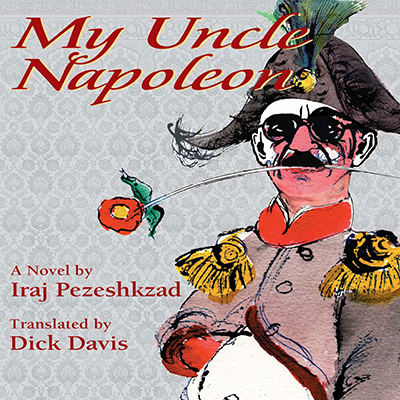
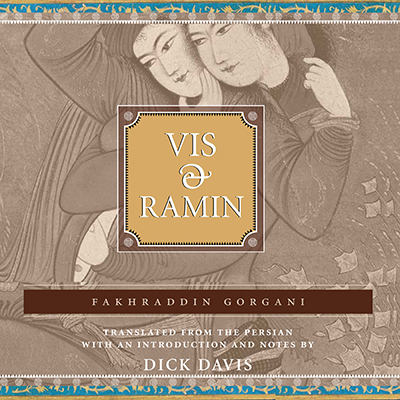
Among the qualities that distinguish his poetry and scholarship are exacting technical expertise and wide cultural sympathy—an ability to enter into distant cultural milieus both intellectually and emotionally. In choosing his volume of poems Belonging as a “Book of the Year” for 2006, The Economist praised it as “a profound and beautiful collection” that gave evidence of “a commitment to an ideal of civilized life shared by many cultures.” the Times Literary Supplement has called him “our finest translator of Persian poetry.” In 2009 Mage published a book of Dick Davis’s own poems about Iran: At Home and Far From Home: Poems on Iran and Persian Culture. His book about the Shahnameh, Epic and Sedition was published by Mage in paperback in 2006. His books of translations are: Borrowed Ware: Medieval Persian Epigrams (1998), The Shahnameh (2004); The Legend of Seyavash (2004); Rostam: Tales of Love and War from Persia’s Book of Kings (2007); Vis and Ramin (2008); Faces of Love: Hafez and the Poets of Shiraz (2012).

Reviews

From: Times Literary Supplement

It is almost impossible to exaggerate the influence of the Shahnameh on the national culture of Iran…it marks the definitive emergence of New Persian as a language of literature and culture… in much the same way as the Authorized Version of the Bible anchored English.  The vigorous simple language of the poem is easily comprehensible to educated Iranians a thousand years after it was written.
Davis’s translation of most of the narrative material into pros, but the more intensely poetic and lyrical passages into English rhyming couplets, has in the main been very successful. His lively, natural English prose certainly allows the reader to enjoy the narratives as adventures, romances and moral tales in the way they were always intended. He provides a useful and informative introduction which serves to put Ferdowsi’s work into context for the non-specialist reader. The liveliness of the style gives an interesting, action packed and sometimes moving epic…For the first time ever, it is possible for the reader of English who has no Persian to get a feeling for and understanding of one of the great monuments of world literature.

From: Choice
Author: Choice, W. L. Hanaway, emeritus

With this volume, Davis completes his prose and verse translation of most of the Shahnameh, the Persian national epic, which Firdawsi completed in about 1010 CE. The first two volumes, The Lion and the Throne (CH, May’98) and Fathers and Sons (CR, Feb’01), rendered the mythical and legendary parts of the epic; the present volume presents the “historical” section. Davis’s translation is smooth, elegant, and up-to-date, with no attempt at “stained-glass” effects. He found a felicitous combination of prose and verse that seems just right for its purpose. The verse sections are particularly good, and one wishes for more. This set supersedes The Epic of the Kings, Reuben Levy’s translation (CH. Apr’68), hitherto the standard modern prose rendition. The physical book is sumptuous. The design is consistent throughout the three volumes, but the opulence seems to increase with each. No detail is overlooked, and the publishers out do themselves here in the taste and splendor of their reproductions of Persian miniature paintings. Summing Up: Essential. No collection of Middle East studies or art history should be without this three-volume set.

From: Washington Post Book World
Author: Michael Dirda

“Grand . . . To imagine an equivalent to this violent and beautiful work, think of an amalgam of Homer’s Iliad and the ferocious Old Testament book of Judges. . . . Thanks to Davis’s magnificent translation, Ferdowsi and the Shahnameh live again in English. This marvelous translation of an ancient Persian classic brings these stories alive for a new audience.”

From: The New York Times Book Review
Author: Reza Aslan

The Shahnameh has much in common with the blood-soaked epics of Homer and with Paradise Lost and The Divine Comedy. . . . The poem is, in a sense, Iran’s national scripture, and Ferdowsi Iran’s national poet. . . . Davis brings to his translation a nuanced awareness of Ferdowsi’s subtle rhythms and cadences. . . . His Shahnameh is rendered in an exquisite blend of poetry and prose.

From: The New Criterion
Author: Russel Seitz

“It takes Dick Davis’s delightful and animated translation of Persia’s classic 623 pages to get around to banning wine-drinking, a prohibition ended by royal decree two pages later, with 257 pages of music, seduction, and polo matches left to go. All this action, myth, and history fairly fly off the page, for Davis renders Ferdowsi’s 50,000 sesquipedalian lines of poetry as a prose narrative that here and there erupts into sonnet-sized snatches of verse. The scheme works brilliantly.… ‘That poetry which is the most difficult,” wrote Irshad Ullah Khan, “has been rendered into English … with the comparative strength of the inspirational truth and elegance of the Persian. His work shall not die.’ It is hard to vouch for any volume’s immortality, but this ranks among the best Persian translations of the last thousand years.”

From: Khaled Hosseini, author of The Kite Runner

Davis’s wonderful translation will show Western readers why Ferdowsi’s masterpiece is one of the most revered and most beloved classics in the Persian world.