Books

Book Reviews

For: Tales of Two Cities: A Persian Memoir

By: Kirkus Reviews

“An exceptional, emotionally blooded memoir. . . . That this [memoir] turns out to be a breathtaking example of the quiet, selfless gorgeousness of the memorist’s art is the reader’s good fortune. Milani offers classically ordered writing about character, place, and time. . . . The entire memoir is infused with the perversity, nightmarishness, and occasional strange sweetness of growing up amid religious rule and ritual. This is a tale on whose every word readers will hang.”

For: Tales of Two Cities: A Persian Memoir

By: Library Journal

“A great deal of information about Iran is covered in this volume, from the Shi’ite clerics’ obsession with hierarchy to Iranians’ favorite conspiracy theories explaining the forces behind Iran’s Islamic revolution.”

For: Tales of Two Cities: A Persian Memoir

By: The Vancouver Sun

“Milani paints powerful portraits of life under siege. . . . An effective and powerful blend of the personal and political, Milani’s memoirs try to create cohesion and meaning from his own fragmented past and Iran’s recent tragic history.”

For: Tales of Two Cities: A Persian Memoir

By: San Francisco Chronicle

“A consistantly dramatic and moving memoir.”

For: Tales of Two Cities: A Persian Memoir

By: The Oregonian

“[Milani’s] reflections on revolution, in general and on the Iranian revolution in particular, are very impressive.”

For: Tales of Two Cities: A Persian Memoir

By: Small Press Magazine

“A fascinating autobiography interwoven with the cultures, religions, philosophies and politics of Iran. . . . More can be learned about the recent history and politics of Iran and its Islamic Revolution from this personal memoir than from any history book or news report.”

For: Tales of Two Cities: A Persian Memoir

By: UC-Berkeley

Author: Stephen Greenblatt, Professor of Literature

“Abbas Milani is a sharp and thoughtful observer of the political process and a remarkably sensitive chronicler of the human dimensions of Iran’s excruciating contemporary history. Tales of Two Cities is a significant and deeply moving achievement.”

For: Tales of Two Cities: A Persian Memoir

By: Foreign Affairs

Author: William B. Quandt

“The reader will not find here deep insights into the high politics of Iran, but rather a wealth of insights into Iranian society and culture. Along the way Milani also makes acute observations about American society.”

For: In the Dragon’s Claws: The Story of Rostam and Esfandiyar

By: Coleman Barks, translator of The Essential Rumi

“Jerome Clinton with his lively and supple blank verse line continues to lift Ferdowsi out of the 10th and 11th centuries and beautifully into the present.”

For: In the Dragon’s Claws: The Story of Rostam and Esfandiyar

By: Univ. of Cambridge

Author: Charles Melville

“The story of Rostam and Esfandiyar tells a tale as old as Iran, of heroic action, ambition, pride, and the impossibility of breaking free from the wheeling spheres of Destiny. Clinton’s translation of a difficult text is skillful, elegant, sensitive and exciting, and maintains the tension up to its unavoidable climax. It is quickly evident that we are in the presence of a great work of literature, admirably recreated for the modern English-speaking reader.”

For: Discovering Cyrus: The Persian Conqueror Astride the Ancient World

By: FIRES

Author: Nerina Rustomji

Westerners know ancient Persia mostly through the eyes of its enemies, the Greeks. For that reason, our view of the Persians is largely colored by that relationship: We generally see them as militaristic, imperial, cruel and exotic-like the caricatured emperor Xerxes in the movie The 300. This book is about Xerxes’s grandfather, Cyrus the Great, whom even the Greeks acknowledged as an exceptional leader. Xenophon’s Cyropaedia (Education of Cyrus) cites the progressive, humanitarian statecraft of Cyrus, portraying him as an ideal prince. This Greek work was quite popular in r8th-century Britain and America, and copies survived in Thomas Jefferson’s library. Zarghamee goes far beyond the Cyropaedia, tracking down just about everything known about Cyrus and shaping it into a well-written narrative of his life. Cyrus’s military achievements were indisputable: He built a standing army out of the Persian tribes and conquered foes including the Babylonians, creating the Achaemenid Persian empire. But he was more than a general. Cyrus showed great tolerance of other peoples and faiths. He allowed the exiled Jews of Babylon to return toJerusalem and rebuild their temple. His life is worth studying, as Zarghamee ably shows.

ROBERT W. LEBLING, Arthur Clark, Assistant Editor, SAUDI ARAMCO WORLD

For: Discovering Cyrus: The Persian Conqueror Astride the Ancient World

By: The University of Edinburgh

Author: Dr Lloyd Llewellyn-Jones, Senior Lecturer in Ancient History

“Here it is at last, a thorough, fluent, and engaging biographical study of Cyrus the Great. Students will find this book indispensible for its clear narrative and scholars will profit from its rich source materials, while casual readers will find much to enjoy as they set about discovering the Great King’s life and world.   “Cyrus II, one of antiquity’s most important figures, has long-deserved a readable modern biography and in Reza Zarghamee he has found a scholarly champion.”

For: Discovering Cyrus: The Persian Conqueror Astride the Ancient World

By: The British Museum

Author: Dr John Curtis, OBE, FBA, Keeper of Special Middle East Projects

“This is the most comprehensive study to date of the life and times of Cyrus the Great, and it will be welcomed by scholars and the general public alike.”

For: Discovering Cyrus: The Persian Conqueror Astride the Ancient World

By: Harvard University

Author: Richard Frye, Professor Emeritus of Iranian Studies

“This book should be regarded as the most definitive study not just on Cyrus, but on the beginning of Iran and the Achaemenid Empire.”

For: Discovering Cyrus: The Persian Conqueror Astride the Ancient World

By: University of California, Irvine

Author: Touraj Daryaee, Howard C. Baskerville Professor in the History of Iran and the Persianate World

“Reza Zarghamee has left no stone unturned in his biography of Cyrus the Great. All sources and records have been meticulously treated, and the work is well-written. This is a great book for both scholars and members of the educated public interested in knowing about one of the important personages of the ancient world.”

For: Discovering Cyrus: The Persian Conqueror Astride the Ancient World

By: Institute for the Study of the Ancient World, NYU

Author: Daniel Thomas Potts, Professor of Ancient Near Eastern Archaeology and History

“Reza Zarghamee has written a detailed account of one of the most important figures in Iranian and indeed world history. Cyrus the Great is a subject of endless fascination and Mr. Zarghamee has done all readers a great service through his careful analysis of, in particular, the Greek sources on Cyrus and the early Persian Empire. The book is well-written and should appeal to a wide readership.”

For: Discovering Cyrus: The Persian Conqueror Astride the Ancient World

By: Publishers Weekly

“Well researched and thorough…the work is fair, incisive, and detailed, and merits the attention of a broad readership.”

For: Iran and the West: A Critical Bibliography, 1500-1987, Volume 1

By: Asian Affairs

Author: Denis Wright 

“… Future historians will find in it more of value about the ways of the Shah and those around him during the critical months of the Revolution than in any other book so far written by an Iranian…Dr. Ghani includes intriguing tit-bits of information in some of his commentaries. . . In short, this is a very useful contribution to Persian studies.”

For: Iran and the West: A Critical Bibliography, 1500-1987, Volume 1

By: The New York Review of Books

Author: William Shawcross

The Duke of Wellington observed, “Persia has been much exposed to authors.” During the nine years since the Iranian revolution, over one hundred new books on Iran have been published in English alone and there are hundreds more in French, Iranian, and other languages. Not all of them are reliable. Persia, or Iran, arouses passions. Not quite as Vietnam did, but for a much longer period. For students of Iranian affairs Dr. Ghani’s long book is, and will be, invaluable.

Before the fall of the Shah, Cyrus Ghani was a well-known Tehran lawyer, bibliophile, and connoisseur of movies. He was not part of the court but he knew everyone in the Pahlavi entourage. He was also a contact of the US Embassy, and a profile of him was found and later published, among many thousands of documents, by the militants who occupied the embassy in November 1979. (These documents, one of the most important collections of confidential US government papers ever to be made public, are available in more than fifty volumes. Some of them were shredded by embassy staff before the takeover of the mission was complete and have been painstakingly reconstituted, shred by shred.)

It was the habit of embassy officials, as in other capitals, to leave their successors lists of the best and worst contacts they had in Tehran. Some of the profiles found in the embassy are highly damaging to their subjects, who tend to be described as bores, sycophants, or crooks. Cyrus Ghani comes out well. Martin Herz, an astute US political counselor during the late Sixties, describes him as a most useful contact and good friend, but not without his blind spots:

He is “pro-American” in the sense that he shares our values and has a deep and truly encyclopaedic knowledge and interest In the US. But he is also a liberal nationalist and would not mind seeing the US humbled, not just in Iran but also in the Middle East. Cyrus Is a true conversationalist In the best sense of the word, and has a vast storehouse of knowledge about Iran. He is also a kind of intelligence exchange-he always seeks inside information and undoubtedly passes it along, so he cannot really be trusted beyond a certain point. On the other hand, he quickly tires of people who “just give me the line.”

If this comment seems unexceptional, compare it with what Herz wrote of Jamshid Kabir, against whose name he considered it necessary to issue a “WARNING NOTICE”:

Useless to try to discuss serious subjects with Jamshid, who is a courtier first and last. His wife, Marina, is a caricature. Great party goers, but it has never been clear why anyone would want to cultivate them. Their famous party in 1967 was distinguished by the fact that half the guests came down with acute poisoning, apparently because a devout Moslem on their household staff disapproved of merrymaking on a mourning day. Too bad Mrs. Kabir seems to have escaped unscathed.

I recall meeting Dr. Ghani In a beach house on Long Island In the fall of 1978; it was quite clear that he knew a revolution was coming to Iran. And so he had arranged for most of his library to be shipped out of Tehran to London and New York. Even so, he lost some 2,500 books. His Iran and the West, an alphabetically arranged critical bibliography of published works on Iran, is based on the many books, journals, and articles that are left.

It is therefore a somewhat eclectic work; it cannot and does not pretend to be exhaustive. It is nonetheless fairly comprehensive. Its sections-and Ghani’s library-embrace history, politics, and travel; literature, religion, science, language, and “Western Fiction with an Eastern Setting”; arts, archaeology, books of illustrations, photograph albums, and art-sale catalogs; pamphlets, articles, journals, occasional papers, museum catalogs, newspaper and news magazine articles.

That is a lot of subjects to cover, and although some subjects are merely mentioned, Ghani uses many of his entries as occasions to expound, and digress on, the turbulent history of Iran’s relations with the countries to its west. One reviewer has described the book as “a very high quality junk shop:’ This Is true insofar as it is much less predictable than an ordinary bibliography. It is the sum of Ghani’s prejudices, passions, and learning. He seems to know everything about Iran-and to have strong views on most questions. His book, like a good junk shop, is a wonderful place to browse in and linger.

He is particularly informative about the tortured relations between Britain and Iran in the nineteenth and early twentieth centuries. Many Iranians believe, with some good reason, that Britain sacrificed the interests of Iran to its overwhelming concern to protect India, to which Iran was considered entirely sUbsidiary. Today Iranians are still obsessed with the British role in the continuing melodrama of their country. There are many who consider Khomeinl a British agent. There is a well-known saying in Iran, “Lift a mullah’s beard and you’ll see ‘Made in Britain’ on his chino” It Is commonly believed, particularly by those around the late Shah, that the British inspired the Shah’s overthrow and the Ayatollah’s return. Why? First to humiliate the United States, which had arrogated far too much (previously British) influence to itself during the time of the Shah. The British like shahs to be British not American puppets. Secondly, to create a crisis in the Middle East and thus inflate the price of North Sea oil, which was coming on stream in 1979. The Shah’s fall certainly had that effect, although no one has supplied any evidence of a British conspiracy to bring It about.

Ghani has more than forty pages on the various editions of the Rubaiyat of Omar Khayyam, which, while far from the most important Persian poem in Persia, is easily the most Important to foreigners. (That was a fact recognized by the Shah’s regime and among the scores of sumptuous illustrated books the court produced were many lavish editions of the Rubaiyat carefully designed to appeal to Western romanticism.) The Rubaiyat magnificent translation by Edward Fitzgerald was first published in 1859. It came to the attention of a number of writers, including Richard Burton, Dante Gabriel Rossetti, and John Ruskin, who praised it very highly. It led Tennyson to become Interested in Persian poetry, and he considered translating Hafez. But Ghani tells us that his wife thought that the funny writing was harmful to his eyes, particularly when she learned that it had to be read backward. So she hid all his Persian texts and made him take up badminton instead.

Ghani’s prejudices are splendidly evident throughout. One book, An American Family In Persia, is dismissed as a “commonplace and useless work:” He describes the memoirs of the Shah’s second wife, Soraya, as “the best autobiography ever written by any half-German, half-Persian former Queen who later became an actress and made one film:’ Poor Soraya. Life at the Shah’s court in the Fifties does sound dismal. She hated the palace built by the Shah’s father, she hated the food, she hated traveling to the remoter provinces of Iran, and she hated the Shah’s scheming family. Above all, she hated Mohammad Mossadeq, “an aged tribal prince who was elected to parliament in 1950” and who seemed set on ruining her life. After the coup of 1953 in which she and the Shah first fled to Rome and then were restored with British and American help, things improved—until the Shah divorced her in 1958 for her failure to bear him children.

In discussing one of the Shah’s own memoirs, Mission For My Country(1961), Ghani draws on his own knowledge of court life in the Sixties and Seventies to give a portrait of the Shah that is both critical and sympathetic. Those who knew him as a young man often remarked on his “kindness”; he was also nervous and unconfident, while at the same time believing in his own divine mission. After the British removed his father and installed him as shah in 1941,

He was popular and had genuine support in almost all strata of Persian society. At his own initiative, he established a weekly informal meeting with some six or seven of the foremost scholars of the day where, In effect, he was to be educated…He was moved by poetry, amazed at tales of misrule by former monarchs, and saddened by Incidents of cruelty in Persian history.

Before the uprising by Mossadeq in 1953 the wise men were all very impressed by their young king.

Ghani believes the CIA-MI6 coup, which overthrew Mossadeq and restored the Shah to the throne, transformed him. From then on he demanded absolute and unquestioning support from a claque of “people of often dubious character and reputation:’ Still, there were “golden years” in the Sixties when the reforms, encouraged by Kennedy and called by the Shah his “White Revolution,” began to improve the conditions of Iranians.

Then came the election of Richard Nixon, whom the Shah knew and liked, the Anglo-American decision to make the Shah “policeman of the Gulf’ after the British withdrew from “east of Suez,” and Nixon and Kissinger’s “fateful” decision In May 1972 to give the Shah all the arms he wanted. At the end of 1972,

there was a marked change in the Shah. He grew more aloof and became more imperial and imperious. His arrogant treatment of his ministers became intolerable. The tone of his “talks” to the people became more remote…Corruption increased. Nothing could be done without the help of a contact in high places.

After the huge oil price rises of 1973-1974,

Some five or six super agents (together with some 25-30 sub agents) began to manage the economy…One of the key ministers devoted his entire time and energy towards fulfilling the wishes and financial interests of the Royal Family…There was a growing sense of injustice among the people and especially among the emerging middle classes. Violence and armed insurrection increased and was met by increased brutality and savagery. Large numbers of the young turned towards Islam for an answer.

In 1976 came the election of Jimmy Carter and the Shah’s decision to liberalize the regime—to try to transform himself into an Eastern Juan Carlos. Catastrophe followed.

Ghani notes that it is still hard to arrive at a just appraisal of the Shah. Iranians initially viewed him

as a tyrant, then as a saint, and now as a weak, vacillating nonentity who was a mere toy in the hands of others. He cannot be dismissed or ignored In these simple terms. The Iran of the last forty odd years, and in many ways the Iran of today, is his legacy.

Still, it is now nine years since the Shah departed. Nine years of the Ayatollah’s rule have also left ineradicable marks upon Iranian society. Ghani is an Iranian patriot who does not wish to see an Iraqi victory in the interminable brutal war of the Gulf. Yet his dislike for the methods of the revolution is abundant and clear. He writes disparagingly of a collection of lectures by Abol Hasan Bani-Sadr, the first president of the Islamic Republic. He calls his attempt

to identify Islam with the interests of the working class…a mixture of Marxism and Shi’ite fundamentalism in turgid prose and often Incomprehensible. Author…considered himself the “spiritual son” of Khomeini. He had the good fortune of escaping Iran before the wrath of his spiritual father had descended upon him.

Of another collection of essays, Iran Erupts (1978), edited by Ali Reza Nobari, Ghani is equally scathing. Among the contributors were Banl-Sadr, the French journalist Eric Rouleau, and Khomeini himself. The book’s self-proclaimed purpose was “to try to demystify the treatment of the anti-Shah movement In the Western media:’ Ghani writes that
the editor later became president of the Central Bank of Iran and was one of the principal financial geniuses behind Bani-Sadr who gave Iran the early Islamic-Marxist laws which probably are the most unworkable ever devised. The author and Bani-Sadr later fled their Islamic haven; M. Rouleau has since been appointed as French ambassador to Tunisia, and Ayatollah Khomeini has created exactly the kind of state which the present author accuses the Western media of Inventing.

For: The Layered Heart: Essays on Persian Poetry, A Celebration in Honor of Dick Davis

By: Journal of the Association of Iranian Studies

Author: Roxane Haag-Higuchi

This volume assembled in honor of Dick Davis, the distinguished scholar and translator of Persian literature, is a major contribution to literary scholarship. His festschriftis not a collection of miscellanea but contains lengthy chapters of original and occasionally innovative research. Dick Davis, who received his primary academic formation in English literature, has intertwined his gifts and training as an Anglophone poet and literary scholar with a love for and an intimate knowledge of Persian literature,a combination that has produced exceptional insights into Iranian culture. The initial approach of this poet-scholar was translation, an intellectual activity that is regrettably marginalized in today’s concepts of academic research. Davis’ scholarly works display a thorough understanding of the source texts that springs from intense linguistic and cultural engagement characteristic of the translation process. . . .

The papers collected in this volume offer a representative image of the high standard of studies on Persian literature, corroborated by the extensive integrated bibliography at the end of the book. The diversity of approaches realized in studies on motifs, textual history, literary variations and reflections, historical settings and political implications, performative aspects, biographical conjunctions, and the theoretical reflections inherent to these topics, present a vibrant panorama of literary scholarship in Iranian studies.

For: The Films of Makhmalbaf: Cinema, Politics & Culture in Iran

By: Bahman Maghsoudlou, author of Iranian Cinema

The Films of Makhmalbaf is a vivid, informative, and valuable contribution to the unique world of this great filmmaker. Eric Egan’s discussions are intelligent and reveal an exhaustive study of the haunted and haunting cinema of Mohsen Makhmalbaf; this book should be read by anyone seriously involved with Iranian cinema.

For: The Films of Makhmalbaf: Cinema, Politics & Culture in Iran

By: Jonathan Rosenbaum, author of Abbas Kiarostami and Movie Wars: How Hollywood & the Media Limit What Movies We Can See

It’s hard to imagine a contemporary Iranian filmmaker who has embodied as many of his country’s struggles and issues as Mohsen Makhmalbaf, whose adventurous and ever-changing career and unquenchable spirit over the past couple of decades has probably done more to teach and enlighten us about Iranian culture than any other. We’ve been sorely in need of a guide through his constantly evolving work and moral intelligence, and Eric Egan’s comprehensive study provides it.”

For: The Films of Makhmalbaf: Cinema, Politics & Culture in Iran

By: Hamid Dabashi, author of Close Up: Iranian Cinema, Past, Present, & Future and Masters & Masterpieces of Iranian Cinema

A landmark study of a seminal Iranian filmmaker. Egan creates an exceedingly competent and illuminating narrative in which the birth and breeding of an Islamic Republic is brought to bear on the rise and celebration of an extraordinary force in world cinema. At once social history of contemporary Iran and critical commentary on one of its most significant filmmakers, The Films of Makhmalbaf will for a long time define the way social history of contemporary Iranian cinema ought to be written.

For: The Films of Makhmalbaf: Cinema, Politics & Culture in Iran

By: Jamsheed Akrami, director of the films Friendly Persuasion: Iranian Cinema after the Revolution and A Walk with Kiarostami

An engaging account of the career of l’enfant terrible of Iranian cinema, Mohsen Makhmalbaf, whose life and films have reflected the bizzare twists and turns of a revolutionry milieu he helped to create, and later denouced. An insightful analysis of Makhmalbaf’s films, the book also attempts to address the key issues of Iranian cinema and society before and after the revolution. Mr. Egan deftly places the films within the context of Iranian history and culture, giving the book relevance and resonance beyond film circles.”

For: Cooking in Iran: Regional Recipes & Kitchen Secrets (2nd Edition)

By: Washington Post

“Cooking in Iran: Regional Recipes & Kitchen Secrets,” out now from Mage Publishers, is the culmination of tens of thousands of miles of travel through Iran she conducted in three stints each year since 2015. She gathered 250 recipes, mostly from women, along the way.”

For: Cooking in Iran: Regional Recipes & Kitchen Secrets (2nd Edition)

By: New York Times

Author: JULIA MOSKIN

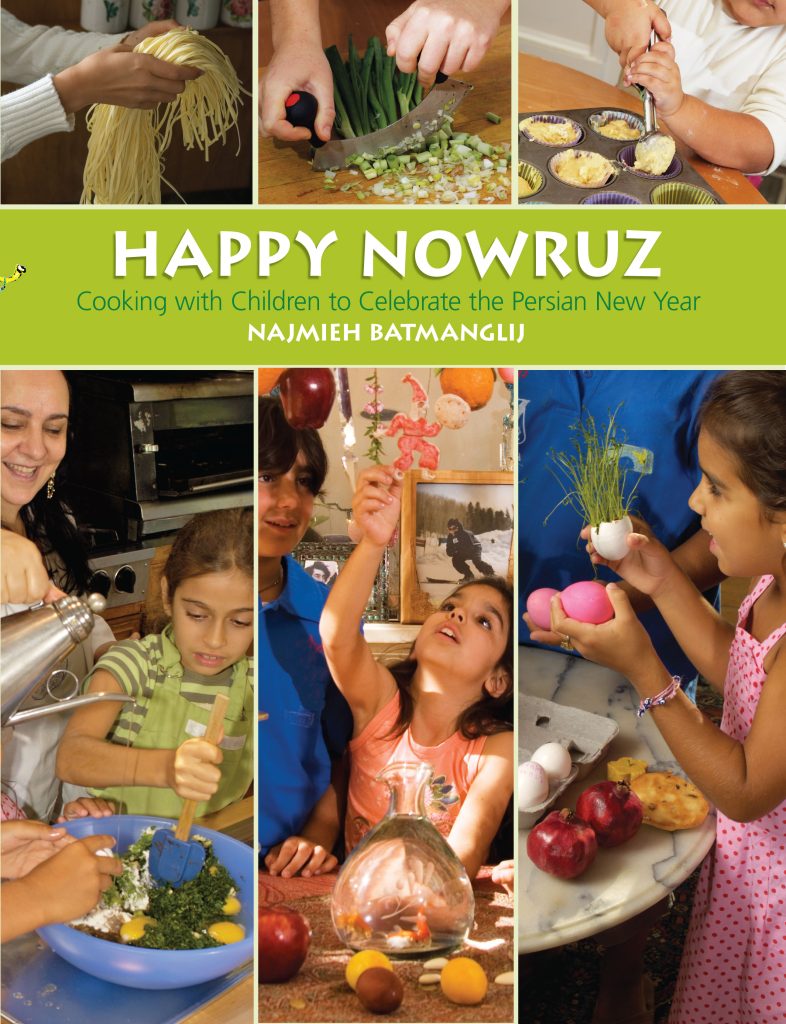
Najmieh Batmanglij has written eight cookbooks about the cooking of Iran (and its ancient predecessor, Persia), where she was born and lived until 1979. But “Cooking in Iran,” her magisterial new book, is the first for which she was able to return and travel freely around the country with notebook and camera. The result is an engrossing visual feast of modern Iran, its food and its people, from fish markets in the north piled with fresh Caspian salmon; through farmlands planted with pomegranates, pistachios and crocuses for saffron; to the Indian spices of the Persian Gulf region. With 400 accessible recipes, plus culinary history, ethnography and deep dives on ingredients like smoked rice and barberries, “Cooking In Iran” is an essential new book.

For: Cooking in Iran: Regional Recipes & Kitchen Secrets (2nd Edition)

By: American Library Association Booklist

Author: Maggie Taft

This immense volume, full of lush photographs of cities, restaurants, landscapes, and beautifully prepared food, offers a culinary tour of Iran. Divided into chapters according to region, the book’s sections offer not only recipes but also histories of cooking styles, ingredient preferences, and food cultures. Batmanglij was born in Iran but has lived much of her adult life in France and the U.S., and she writes a travel diary alongside her recipes, bringing to her subject deep familiarity as well as rekindled wonder. Many of the dishes (barley and tahini soup, sweet gingerbread crackers) may not be familiar to the average American reader, and some of the recipes include instructions (“Dig a round pit”) impossible for the average home cook. But this book is not about how to make unfussy and quick meals. Rather, it is a study of a nation’s food, a reference text preserving ingredients, techniques, and traditions for future generations.

For: Cooking in Iran: Regional Recipes & Kitchen Secrets (2nd Edition)

By: Publishers Weekly

Batmanglij (Joon: Persian Cooking Made Simple), who grew up in Iran and has written extensively of the country’s cuisine, offers a massive and thorough guide to Persian cuisine. Batmanglij spent three years traversing the country, stopping in all of its regions, and in this collection of more than 250 recipes she shares an assortment of kebabs was well as osh, a traditional porridge-like soup made with butternut squash or carrot and bulgar. Highlights abound: Azerbaijani dumpling soup, featuring dumplings stuffed with ground meat in a spicy tomato broth; saffroned almond and pistachio baklava; walnut and sumac meatballs (made with lamb or turkey thigh); a savory mushroom pie, similar to the Russian pirozhki; and pistachio cake. Batmanglij fills the book with photos of vendors, farmers, and ancient ruins, and offers history lessons and bits of trivia (“The oldest archeological evidence of pistachios was found in Jarmo”). Stories of intimate family dinners shared on her journey and recipes she discovered talking with the locals—such as sweet and sour patties with chicken, mint, and turmeric, and almond paste with saffron (a friend’s mother would “spread the almonds on a clean sheet and cover them with pussy willow flowers”)—lend the feel of flipping through a scrapbook with a friend. This is a terrific, reverential, and accessible cookbook. (Nov.)

For: Cooking in Iran: Regional Recipes & Kitchen Secrets (2nd Edition)

By: The Boston Globe

Author: Sheryl Julian

Most Persian food is a cuisine that began in the royal courts and found its way into homes whose kitchens were staffed with cooks. A dish could require hours of prepping and several more of cooking, and then grand platters of jeweled rice, kebabs, and intricate pastries appeared. Those are all represented in Cooking in Iran: Regional Recipes & Kitchen Secrets, by Najmieh Batmanglij. But so are ordinary meals that those cooks might have made for their own families, like wheat porridge with lamb and chickpeas, a popular breakfast dish, or osh, a soup of yogurt and chickpeas, sometimes with meatballs, sold at food stands across Iran. Osh is also made with lentils and herbs, barley and fresh stinging nettles, dried fruits and noodles, split peas and bulgur, lamb neck and beans. Batmanglij, who teaches cooking and lives in Washington, D.C, left her homeland almost four decades ago. For this book, she traveled 10,000 miles inside Iran to cities and tiny villages, from the Caspian Sea in the north, to regions bordering Iraq on the west, Afghanistan on the east, the Persian Gulf in the south. We see the author in a baseball cap tied with a gauzy scarf, pictured throughout. This is Batmanglij’s eighth book (her husband is her publisher). It’s mammoth, the size of an encyclopedia volume, divided into geographic areas, with maps, and begins in Tehran, her home city, where she brings roses to her parents’ burial site. She traveled with a driver and photographer, who shot ordinary people cooking in their environment and working — picking tea leaves (tea became popular during the Russian occupation of Northern Iran in the early 19th century), saffron, pistachios, and more. She offers historical sketches of each region, along with explanations of dishes sometimes found in neighboring countries, like the small deep-fried pies called pirashki (a variation of Russian pirozhki), and nan, and biryani (adaptations are made in India). We see a food bazaar in Iranian Azarbaijan with intricate pointed brick archways, metal platters piled high with pointed, identical mounds of colorful foods that seem painted rather than placed by hand, and a cafe where older men are smoking hookahs across from their younger counterparts looking at their cellphones. The author writes about Iranian Jews, who, she says, “have been so intertwined with Persian culture for so long that little difference is seen in their food — except perhaps that, to be kosher, butter is not mixed with meat.” Iranian Kurds in the west, along the Zagros Mountains, prepare appealing rustic dishes, stuffing large onions with rice and herbs, simmering white beans with heaps of chives, and adding barberries to lamb stew, bulgur and lamb meatballs, and rice with mushrooms. Iranian Armenians, writes Batmanglij, were pioneers in the arts. In the Persian Gulf, the various cultures Replay within Iran — Persians, Arabs, Baluchis, Kurds, East Africans, Armenians, and Jews live together and have intermarried over the centuries, she says. You’ll find grilled whole fish, fish-head soup, date buns, flatbreads baked on ashes (and the many other flatbreads in the cuisine), rice with lamb and rose petals, minced lamb kebabs, dried balls of a yogurt-like mixture called kashk, date halva, rice in every way, including in the national favorite, chelow, steamed saffron rice with a golden “tah-dig” crust. I made chelow with tah-dig for the first time and though the dish had too much olive oil (the grains might have better absorbed the alternate fat ghee), the rice and its crust were spectacular. I also cooked eggs in pureed eggplant, a dish from the Caspian region, charring the eggplants directly on a gas burner, which turned this striking dish mildly smoky. You will learn about Iran and its people here, and you’ll be stunned by their food. To read the book is to be immersed in another culture, region by region. It took Batmanglij five years to accomplish it all and every bit of labor shows

For: Cooking in Iran: Regional Recipes & Kitchen Secrets (2nd Edition)

By: The Wall Street Journal

Author: John “Doc” Willoughby

The new cookbook from Najmieh Batmanglij, on the other hand, exemplifies the joy to be found in tradition. I’ve been a fan of Ms. Batmanglij’s Persian cookbooks for almost 30 years. Lovely as they were, though, they were written while she was an exile in the U.S. But in 2015 Ms. Batmanglij was able to return to Iran and, over the next three years, she traveled tens of thousands of miles throughout the country searching out unique local dishes. The result is the encyclopedic “Cooking inIran: Regional Recipes and Kitchen Secrets”(Mage, 726 pages, $65). While some of the book’s more than 250 recipes require very hard-to-find ingredients, many require at most a spice or two that may not yet be in your pantry, and all will reward your effort with deep, intense flavors. But recipes are only part of the experience. The essays on cultural history, tales of personal encounters and 450 photos provide as deep an understanding of this ancient, intriguing and wonderfully diverse country as you are likely to find anywhere. To me, this is what the ideal food gift book should be—beautiful, extravagant in every way, thought-provoking and delicious.

For: Cooking in Iran: Regional Recipes & Kitchen Secrets (2nd Edition)

By: Saveur

Author: RACHEL DOLFI

I got goosebumps just reading the introductory paragraphs and stories accompanying the variety of regions of Najmieh Batmanglij’s home country, Iran. Exiled for 39 years, her first journey back was to create this anthology of Iranian cooking. Her book is littered with passionate snippets dedicated to cities within Iran, along with stories of her family and long-lost friends. It comes with a silk ribbon to help you keep your place in this 700 page tome. I found myself bookmarking every other page, drawn to dishes such as the aromatic rice, lamb, rose petals and barberries, or the tangy dish of tomato and lime broth with tiny meatballs. The journey Batmanglij took to research and write this book is truly astounding; my Persian pantry has grown tenfold with her guidance, exuberance, and recipes.

For: Cooking in Iran: Regional Recipes & Kitchen Secrets (2nd Edition)

By: KCRW radio, Los Angeles

Sometimes the best book of the year is the last one we receive.

In 2018, that book for me was Najmieh Batmanlij‘s “Cooking in Iran: Regional Recipes & Kitchen Secrets.” It’s a stunning regional tour of the country that is at once a celebration of the return of an exile and an investigation of dishes previously unknown to the author.

If you already own “Food of Life,” the book Batmanglij published in 1986, then you have what is considered to be the bible of Persian classics: written by a cook of discerning palate, determined to communicate the traditional way of doing things in a gorgeously presented way. The cookbook allowed me to be fluent in communicating with my Persian boyfriend’s family in the ’80s. At least at the table. All of us thought this was extraordinary—magical, even…


For: Cooking in Iran: Regional Recipes & Kitchen Secrets (2nd Edition)

By: The Guardian

Author: Yotam Ottolenghi

“Najmieh is the goddess of Iranian cooking”

For: Cooking in Iran: Regional Recipes & Kitchen Secrets (2nd Edition)

By: The Washington Post

Author: Bonnie S. Benwick

“Chefs Across the country are at the forefront of Najmieh’s fan base. They know what’s good, and they are Inspired by the ingredients and techniques she brings to the table.“

For: Black Parrot, Green Crow: A Collection of Short Fiction

By: World Literature Today

Author: William L. Hanaway,
University of Pennsylvania

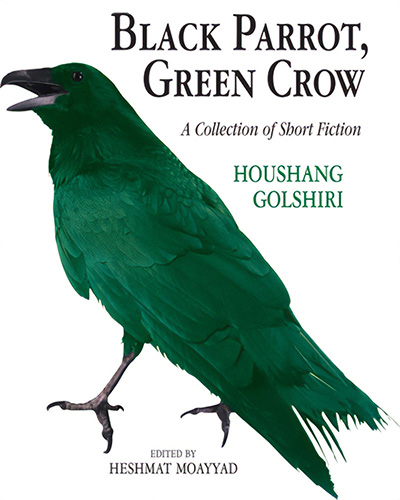
“HOUSHANG GOLSHIRI (1937-2000) was a master stylist who wrote dense, elliptical prose, often with a (more or less) disguised political content. He edited an influential literary journal and in 1968 was a founder of the Iranian Writers Association, a group that protested governmental censorship and worked for the basic rights of writers. Both the Pahlavi regime and the Islamic Republic imprisoned him for his antigovernment views and banned his books in Iran. The present collection of eighteen short stories and three poems has been selected from his many published works and gives a fair cross section of how Golshiri wrote and thought.

“One of Golshiri’s favorite literary devices is an interior monologue or dialogue, in which the narrator, generally but not always male, speaks mostly to himself or carries on a dialogue with someone not present. Sometimes the narration takes the form of a letter. Many of his stories must be read with careful attention to determine who is speaking, who is responding, and what they are talking about. This kind of forced engagement of the reader is worth the effort, however, because only through active engagement are the riches of the stories revealed. All the stories but one are set in Iran; the one set in Germany is atypical, as if the change of setting prevented Golshiri from grappling with his favorite issues.

“Probably the most engaging are four stories entitled “Portrait of an Innocent: I-IV.” In each of these, a (sometimes self-proclaimed) victim describes his plight. Here, Golshiri indulges in another of his favorite devices, a thinly disguised parallel with a narrative from classical Persian poetry or with popular stories of the death of the Imam Hoseyn at Karbala, Iraq, in 680 C.E. One drawback of this sort of writing is that it takes considerable knowledge of Persian culture and literature to understand what some stories mean and why they resonate so profoundly with Iranians today. The translations are uniformly good, and one must be grateful to the editor for bringing out this excellent collection by one of the most influential twentieth-century Persian writers.”

For: Zviad: The Legacies of Zviad Gamaskhurdia in Georgia

By: Temur Basilia, former Deputy Prime Minister of Georgia

Zviad is an impressive book with penetrating scholarship. It is an important contribution to our understanding of the struggle for Georgia’s independence. It must be read by all who are interested in Georgia and the challenges of transformation to democratic statehood in the former Soviet republics.”

For: ROSTAM: Tales of Love and War from Persia’s Book of Kings

By: Washington Post Book World

Author: Michael Dirda

Grand . . . To imagine an equivalent to this violent and beautiful work, think of an amalgam of Homer’s Iliad and the ferocious Old Testament book of Judges. . . . Thanks to Davis’s magnificent translation, Ferdowsi and the Shahnameh live again in English. This marvelous translation of an ancient Persian classic brings these stories alive for a new audience.

For: ROSTAM: Tales of Love and War from Persia’s Book of Kings

By: The New York Times Book

Author: Reza Aslan

The Shahnameh has much in common with the blood-soaked epics of Homer and with Paradise Lost and The Divine Comedy. . . . The poem is, in a sense, Iran’s national scripture, and Ferdowsi Iran’s national poet. . . . Davis brings to his translation a nuanced awareness of Ferdowsi’s subtle rhythms and cadences. . . . His Shahnameh is rendered in an exquisite blend of poetry and prose.

For: ROSTAM: Tales of Love and War from Persia’s Book of Kings

By: The New Criterion

Author: Russel Seitz

It takes Dick Davis’s delightful and animated translation of Persia’s classic 623 pages to get around to banning wine-drinking, a prohibition ended by royal decree two pages later, with 257 pages of music, seduction, and polo matches left to go. All this action, myth, and history fairly fly off the page, for Davis renders Ferdowsi’s 50,000 sesquipedalian lines of poetry as a prose narrative that here and there erupts into sonnet-sized snatches of verse. The scheme works brilliantly.… ‘That poetry which is the most difficult,” wrote Irshad Ullah Khan, “has been rendered into English … with the comparative strength of the inspirational truth and elegance of the Persian. His work shall not die. It is hard to vouch for any volume’s immortality, but this ranks among the best Persian translations of the last thousand years.”

For: ROSTAM: Tales of Love and War from Persia’s Book of Kings

By: Khaled Hosseini, author of The Kite Runner

Davis’s wonderful translation will show Western readers why Ferdowsi’s masterpiece is one of the most revered and most beloved classics in the Persian world.

For: The Persian Sphinx: Amir Abbas Hoveyda and the Riddle of the Iranian Revolution (In Persian)

By: The Spectator (London)

“Abbas Milani’s biography of Hoveyda is a compelling read….He has produced a work that is not only highly readable, but balanced, well researched and exceedingly competent.”

For: The Persian Sphinx: Amir Abbas Hoveyda and the Riddle of the Iranian Revolution (In Persian)

By: Foreign Affairs

Author: William Quandt

“Candid and revealing[offers] a wealth of insights into Iranian society and culture.”

For: The Persian Sphinx: Amir Abbas Hoveyda and the Riddle of the Iranian Revolution (In Persian)

By: Seattle Times

“Sharp observations on the volatile dynamics of revolution…. a riveting read.”

For: The Strangling of Persia: A Story of European Diplomacy and Oriental Intrigue

By: Middle East Journal

“A new edition of the 1912 work by the American appointed in 1911 by the newly (and briefly) constitutional government of Persia to help organize its finances. “Ejected” only a year later as a result of “British and Russian diplomatic intrigue,” Shuster wrote a lively firsthand account of his experiences that reveals much about how Great Power interference shaped Iran’s history, with considerable reference to recent and current events.”

For: The Strangling of Persia: A Story of European Diplomacy and Oriental Intrigue

By: The New York Times

“Outside Iran, hardly anyone recalls W. Morgan Shuster, or the 1907 Anglo-Russian agreement. Yet what happened then helps explain how Russia was shut out of the Persian Gulf and why Iranians behave as they do today. Before that pact, Iranians looked upon Russia as a traditional enemy and Britain as a well-meaning friend. Britain had aimed to keep all rivals, especially Russia, away from approaches to India, notably the Persian Gulf. The gulf was virtually a British lake, charted, mapped and cleared of pirated by the British Navy… Hardly had he arrived when Shuster became embroiled in a dispute with Russia over customs policy. He asked for, and was given, plenary powers, by Iran’s national assembly. Czarist armies were soon marching on Tehran, demanding Shuster’s removal. An embarrassed Britain, citing the 1907 pact, came to Russia’s support. Shuster departed but then wrote a forceful book, The Strangling of Persia.”

For: A Man of Many Worlds: The Diaries and Memoirs of Dr. Ghasem Ghani

By: Ambassador William Green Miller

“Offers a profoundly civilized insight into the great changes inside Iran during the first half of the twentieth century.”

For: A Man of Many Worlds: The Diaries and Memoirs of Dr. Ghasem Ghani

By: Dr. Jahangir Amuzegar, former minister of finance

“Revealing glimpses into Iranian politics and society during the Pahlavis’ era.”

For: A Man of Many Worlds: The Diaries and Memoirs of Dr. Ghasem Ghani

By: Dr. Alinaghi Alikhani, former chancellor of Tehran University

“A valuable contribution to contemporary Iranian history.”

For: Napoleon and Persia: Franco-Persian Relations Under the First Empire

By: Le Quotidien de Paris

“Using private and official English and French primary sources, Iradj Amini gives us a clear and vivid description of Napoleon’s diplomatic adventures in Persia.”

For: Napoleon and Persia: Franco-Persian Relations Under the First Empire

By: Le Monde

“Napoleon and Persia is enhanced by ample scholarship and a flowing style.”

For: Napoleon and Persia: Franco-Persian Relations Under the First Empire

By: Figaro

“Iradj Amini gives us a remarkable study of Franco-Persian relations.”

For: Napoleon and Persia: Franco-Persian Relations Under the First Empire

By: Times Higher Education Supplement

“…an enthralling book… Amini tells the story with verve and humor, blending scholarship with skillful storytelling…. A remarkable book, admirably translated…and beautifully illustrated…”

For: Savushun

By: USA Today

“An engrossing chronicle of life in Persia-just-turned-Iran by Simin Daneshvar. Her compassionate vision of traditional folk ways surviving amid the threats of modernity (including Allied occupation) give her work a resonant universality. Recent events only strengthen her position as a writer deserving a wider audience.”

For: Savushun

By: Kirkus Reviews

“Daneshvar lovingly details the old Persian customs and way of life. And the conflict between an understandable yearning for peace and tranquillity in the face of change and tragedy is movingly evoked. It is a sympathetic but never sentimental account of one woman’s rite of passage.”

For: Savushun

By: "For Western readers the novel not only offers an example of contemporary Iranian fiction; it also provides a rare glimpse of the inner workings of an Iranian family."

Washington Post Book World

For: Savushun

By: Publishers Weekly

“Folklore and myth are expertly woven into a modern setting in this powerfully resonant work.”

For: Savushun

By: Times Literary Supplement

Published in Persian in 1969. Savushun was the first novel written by a woman to appear in Iran. Its protagonist, Zari, desires chiefly to care for her husband, raise her children, supervise the kitchen and tend the garden. “If she weren’t so attached to her children and husband, things might be different. The first pick of the fruit, caresses, conversations. affectionate gazes . . . such a person could not take risks.” Simin Daneshvar creates a paradise out of the evocations of the smells and sights of flowers, herbs, Iotions and nuts. Zari’s garden is an enchanted place and she rarely ventures beyond its confines save to do charitable work in nearby hospitals.
Rumours of politics and battles are brought to her by gossiping visitors and she gathers more by eavesdropping on her husband, Yusof, and his guests as she brings them their food and their opiumladen hookahs. At first, most of this talk seems distant and uninteresting. but Savushun is a historical novel. though one about recent history, and in time the peace of the garden will be breached and the lives of Zari and everyone she knows will be affected by violent events. Indeed, they will be actors in these events. The setting is Shiraz, in southwestern Iran, in the 1940s. In 1941, Britain and the Soviet Union, concerned by Reza Shah’s pro-Nazi sympathies and worried too about the supply lines to Russia, occupied southern and northern Iran respectively. The demands of the occupying troops for food and other commodities forced up prices and encouraged hoarding. Famine was widespread in 1942 and 1943. Outbreaks of typhus in southern Iran were blamed on the British Indian garrisons. Banditry became widespread in the countryside. All this features in the novel. Above all, the arrogance of the occupiers was resented, and Zari sees that the “civilization” their schools teach is hostile to traditional Persian values. She and her husband listen to Radio Berlin, and there are others in Shiraz who believe that Hitler may be the expected one, “the Imam of the Age”.
Daneshvar grew up in Shiraz and doubtless there are elements of autobiography in the story she tells. In 1950 she married Jalal Ali Ahmad, one of Iran’s leading novelists and intellectuals, best known for his polemical essay, Gharbzadagi (“Occidentosis” or “Weststruckness”), a hymn of hatred and a bitter account of the way Iran was being ruined by the import of Western commodities and ideas. Ali Ahmad died (or was he murdered by Savak?) in the year of Savushun’s publication and the novel gives fictional form to some of the concerns of Gharbzadagi. Ali Ahmad had urged his fellow intellectuals to turn away from Europe and find in Iran’s own culture sources of selfrespect. He was inclined, though only halfinclined, to look for future salvation in the religious establishment and traditional Iranian Shi’ism . Daneshvar too seems to be advocating a return to traditional roots, though not to a rigorous religious fundamentalism. Savushun affectionately evokes the old folkways. Zari and her friends keep themselves busy, interpreting dreams, practising bibliomancy with the poems of Hafiz of Shiraz, averting the evil eye with wild rue and concoctingfolk medicines. The title of the novel itself refers to an ancient ritual of mourning in which the participants lament the betrayal and death of Siyavush, a sort of Adonis figure from Iran’s legendary prelslamic past. Just as the hero Siyavush passed through an ordeal of fire, so Yusof, Zari and their country must pass through such an ordeal. Just as Siyavush was betrayed and killed by foreigners, so Iran has fallen among toreign thieves.
Yusof is a reincarnation of Siyavush, but he is also, in some respects at leasts Ali Ahmad. Yusof argues and negotiates with tribal leaders, communists, quietists and collaborators. It is clear that he has found his own way, but what that way is (apart from resistance to foreign humiliation) is not so clear. His rather vague ideas on social and economic problems have a fortuitous similarity to those of the Young England group who gathered round Disraeli in the 1840s. Yusof. the romantic traditionalist, is a benevolent landlord to his peasants. He extends a similar protective paternalism to his wife. Zari never ceases to love and revere her husband, but she will in the end break free from the garden in which he kept her captive.
Savushun is not the sociopolitical treatise that some of the above may suggest. It is a meandering novel about fallible human beings, who are confused about what is happening and confused, too. about their role in a country which in 1940 (and in the 1960s) had lost its sense of direction. At first, incident follows incident as in an unedited diary. Threads of plot are picked up and dropped, but slowly those threads are drawn together in a phantasmagoric moderndress version of the betrayal and martyrdom of Siyavush.

For: Fathers and Sons: Stories from the Shahnameh of Ferdowsi: Volume II

By: Choice Magazine

Author: W. L. Hanaway, emeritus, University of Pennsylvania

This splendid book is the second in a projected set of three volumes that will recount all the major events of the Persian national epic, the Shahnama or Book of Kings. Written in rhyming couplets by the poet Firdawsi and completed in about 1010, the epic runs to more than 40,000 lines. Volume 1, Ehsan Yarshater’s The Lion and the Throne (CH, May’98), was translated by Davis largely from an earlier Persian prose translation. Davis translated the present volume directly from the original text and presents it to the reader as a felicitous mixture of prose and verse. Fathers and Sons begins where volume 1 left off, recounting the epic from the legend of Seyavash to the death of Rostam, bringing to a close the purely legendary part of Shahnama. Davis provides an informative introduction as well as a translation that is a joy to read. This reviewer particularly welcomed an increased amount of verse in this volume. Aimed at a wide and varied audience, not exclusively academic, these volumes appeal to the eye as well as the ear. Like its predecessor, this volume is beautifully produced in every respect. Large academic and general libraries collecting Middle Eastern literature and cultural history.

For: Fathers and Sons: Stories from the Shahnameh of Ferdowsi: Volume II

By: Library Journal

This second volume of stories from the Persian national epic, Book of Kings” (Shahnameh, composed by the poet Ferdowsi between 980 and 1010 C.E.) is so beautifully produced and so exquisitely illustrated with 181 rare color miniature reproductions that it could be used for an art class. The stories themselves are fascination, as illustrated by the adventures of princes Seyavash and Esfandyar, whose respective fathers/kings push them to face the realities of life through extraordianry trials in faraway places. Probably the most famous story here, however, is not laden with violence but romance. It depicts the touching love story of Bizhan and Manizheh, who, like Romeo and Juliet, are the children of sworn enemies. In addition to the seven main sections, the useful introduction by translator Davis (Persian, Ohio State Univ.) gives some background to the Shahnameh and to Persian miniature art. A glossary of manes and their pronunciation as well as a guide to the illustrations providing provenance and other credits conclude the book. Highly recommended for all collections.

For: Crowning Anguish: Memoirs of a Persian Princess from the Harem to Modernity 1884-1914 – 2nd Edition

By: Center for Iranian Research and Analysis Newsletter

“This book consists of two parts. The first hundred pages are an introduction by Abbas Amanat. The second part is the translation of Taj Al-Saltana’s memoirs by Vanzan and Neshati.

Taj Al Saltana was one of daughter’s of Naser al-Din Shah Qajar. She lived in the Shah’s harem until the age of thirteen when she was married and sent off to her fatherinlaw s residence. This book is the collection of Taj’s childhood and adolescent memories. She provides a vivid picture of her childhood, her relationships with her father, the shah who loved her, her mother who did not show any affection towards her, her nanny, and the rest of her cohabitants in the harem. Living in the harem, she provides a valuable account of its socioeconomic life. Women’s relationships with each other, with the Shah and with their male trustees are described very well. Taj presents a refreshing view of how the Qajar dynasty operated the country’s affairs. The corruption of the bureaucracy, foreign intervention, and the royal courts’ inability to deal with socioeconomic changes are all aspects of Qajar rule that Taj explains in her memoirs.

Taj’s memories of her own personal life and the life of her cohabitants in the harem disclose how the traditional royalty of Iran managed their life. She was a melancholic and distressed princess who had the economic opportunity by virtue of being one of the Shah’s daughters to become educated in literature and philosophy. This became a source of both her happiness and anguish. While she is critical of socioeconomic and political aspects of Iranian society as well as patriarchal arrangements, she remains docile and subjects herself to exploitative relationships. This contradiction haunts her until her premature death. Her childhood memories of harem life demystify Western accounts of mysterious Persian women. Unintentionally she discloses an important socioeconomic relationship between the royal court and the commoners. She explains that many of the Shah’s wives were from low income classes. For those young women to marry the Shah was to liberate themselves from harsh economic reality. Taj is more critical of the women of the harem and how vicious they were towards each other rather than being critical of her father and his unlimited lust for young women. It seems as if she accepted her fathers’ mischiefs as inherent rights of the monarch. Her criticisms of socioeconomic and political problems are directed at the Shah’s associates and vazirs and not at the Shah himself. The oppression of women is explained as a cultural problem. Her admiration of European life styles and the women’s suffragist movement is quite similar to those modernists of her time as well as the contemporary secular intelligentsia. She sees veiling as the most problematic aspect of women’s oppression. For her unveiling is the dynamic force for women’s liberation. She says “The sources of the ruination of the country, the cause of its moral laxity, the obstacle to its advancement in all areas, is the veiling of women…. The veiling of women in this country has spawned and spread thousands upon thousands of corrupt and immoral tendencies.” She admires the relationships between women and men in the villages who work side by side on the farm. She appreciates unveiled farm women and their productive role yet while she unveiled herself she chose not to be economically productive all her life. Throughout the book the contradiction between her knowledge and criticism of sociocultural aspects and her actions and life style is clearly manifested. While she is rightfully critical of Iranian socioeconomic and cultural factors, she continued to play her traditional role. Tai does not mention her public role as an agitator for women’s liberation or an organizer for any type of women’s organization. It seems as if she saw women’s liberation as a move from unveiling to wearing western clothing and corsets which is as problematic as wearing a veil. Taj ‘s memories are a sad story of a woman who reached a certain degree of political and sexual consciousness yet lived and died inside the walls of prisons built by patriarchal values and practices. Her love affairs were not signs of liberation but anger and rebellion against those walls which finally crushed her without being slightly scratched.

In the introduction Amanat introduces Taj as a representative of the emerging secular intelligentsia and a feminist in the aftermath of the Constitutional Revolution. Amanat describes the historical account and the political characters of the time very interestingly. However, Amanat’s understanding and interpretation of Taj’s memories is painted with his own wish thinking on the question of secularism as a solution sociopolitical problems and Shi’i Islam as the obstacle to sociopolitical reforms. He believes that the restrictions which have been imposed on women attest to the persistence or revival of old religious values a institutions. He says “The plight of today’s Muslim women remains strikingly and sadly comparable to that of Taj a century ago.” The most problematic of Amanat interpretations of Taj is his failure to briefly explain the patriarchal system which existed all along and was then encouraged by Muslim male elite. He does not mention the status of and limitations placed on nonMuslim women who lived under the same patriarchal system. His views on secularism and Islam related to women liberation do not allow him to explore either the patriarchal exploitation of women or the socioeconomic problems in their own light. Amanat clearly views women as passive objects rather than as agents of social and political change who may maintain or change patriarchal relationships. In contrast, the class base of an individual has a profound impact on how she perceive herself in relation to her immediate environment. This is manifested in Taj’s account of the royal household. A decadent, backward, yet self indulgent Qajar dynasty must be seen in its own light. The most simple paradigm for explaining socioeconomic and political ills of Iranian society is the analysis provided by intelligentsia which diagnoses Islam as the infective agent. To cure the problem, secularism is the remedy.

A short note on the translation is necessary order to clarify some misunderstandings. Fix throughout the book, when Taj speaks of God translation refers to it as He which is specific Christianity. In Farsi God does not connote a gender specific entity. Second, several words-en’san, a’dl and ba’sSlar-all of which refer to humankind in Farsi are translated as man and mankind which again is gender specific. These criticisms aside, we should be grateful the translators and Amanat for bringing this work before the public.”

For: Crowning Anguish: Memoirs of a Persian Princess from the Harem to Modernity 1884-1914 – 2nd Edition

By: Booklist

“A Thousand and One Nights meets Raise the Red Lantern in this tale of growing up among royal wives and concubines in what is now Iran. Set in a time when women of her class were cloistered, this princess’ story is a rare account of day-to-day life in a sheik’s palace, from a terrifying betrothal ceremony when its heroine was eight though a frustrating adolescence spent married to a bisexual philanderer to relations with the other women of the place, in which rivalry and political jockeying ran rampant. What distinguishes Taj’s memoirs from other Iranian court literature of the same time (the 30 years before World War I) is their honesty and thoughtfulness, says Yale scholar Abbas Amanat in his lengthy introduction. Amanat also sees the book as pivotal of its kind and the princess as one of the first liberated Iranian women, at least in her thoughts. Although perforce a subscriber to a rigid Islamic system, Taj saw and recorded a changing society, dissected the role of women in it, and questioned its conventions.”

For: Crowning Anguish: Memoirs of a Persian Princess from the Harem to Modernity 1884-1914 – 2nd Edition

By: Habibi: A Journal for Lovers of Middle-Eastern Dance and Arts

“Several books written by children of Qajar (19th century Iranian) royalty have been published in recent years. Crowning Anguish is, to my mind, the book most likely to be of interest to Habibi readers. It is an extraordinary memoir written by Taj al-Saltana, daughter of Naser al-Din Shah (ruled 1848-1896), the fourth king of the Qajar dynasty (1785-1925). Born in 1884, Taj’s life spans the dying decades of Qajar rule and its ultimate end, first in the Constitutional Revolution of 1906, and in the takeover of Reza Shah Pahlavi in 1925.

The memoir is in the form of a tale told to her teacher in explanation of some of her behavior and life choices; it chronicles, from the perspective of a child and young woman in her father’s, and later her husband’s, anderun (private family quarters), a period of turmoil and change in late nineteenth, early twentieth century Iranian history. In it, Taj gives fascinating glimpses of Qajar court life, the intrigues, dangers, liaisons, and struggles for control.

Among the most interesting aspects of the memoir are Taj’s education and feminism. She received some private tutoring in the anderun, but was largely self-educated, and read voraciously from classical and contemporary European literature in translation. As a result, she developed a notion that the best path for Iranian families would be for Iranian women to discard the veil, and receive education sufficient to allow them to work outside the home. Her view was that by doing so couples could choose to marry for love, thus reducing the many social ills that result from arranged marriages, such as marital infidelity and divorce. Women could contribute to the family and national economies, rather than staying at home bored and getting into trouble.

While the memoir focuses on Taj’s life, it depicts vividly some of the most interesting political events of late-nineteenth, early-twentieth century Iran, which are oddly reminiscent of events of more recent times. In particular, the call during anti-crown protests of 1891-92 for the overthrow of the Shah and the raising of the highest Shi’ite leader to the position of “Supreme Exemplar” seem to mirror the events leading to the (counter-) revolution of 1979.

Dancers and musicians do not appear to advantage in these memoirs. Taj’s own attitudes accurately reflect the general attitude towards professional Performers, though perhaps colored by the fact that her own husband had affairs with one of the dancing girls from the visiting Russian circus, and also with a male dancer. During the reign of Taj’s brother, Mozaffar al-Din Shah, the family was shocked by the “constant coming and going of female musicians, and prostitutes who disguised themselves as musicians.” Taj compares this with the situation during her father’s life: “I could not remember female musicians in my father’s harem, with the exception of wedding feasts, and then it was only male musicians. It was impossible to find a single whore among them.” Taj describes a boy dancer: “Renowned throughout the town, the boy had a thousand adoring lovers. Being a dancer, however, he was unworthy of being anyone’s beloved.”

Taj herself was (in her own estimation) an accomplished musician; but, since she restricted her musical performances to her own amusement, she escaped the censure heaped upon professionals. She studied tar (Persian long-necked lute) with Mirza Abdollah, one of the great performers of the Qajar era; she claims that her tar-playing skills soon surpassed those of her teacher! She was, apparently, much admired (but not for her music!) by one of the greatest of contemporary Iranian composers, ‘Aref-e Qazvini, whose rakish photograph also appears in the book.

The book begins with a 100-page introduction by Abbas Amanat that provides a fine description of the historical context of the memoirs; most of the terminology, personalities, and cultural tidbits needed to follow the memoirs are included. The book involves a long list of dramatis personae; an alphabetized set of biographical sketches of each of the major characters is provided at the end, and is a big help. The reader new to things Iranian might do well to read it immediately after the introduction, before going on to the memoir itself.

The illustrations of Crowning Anguish alone would make the book of great interest to aficionados of Middle Eastern history, culture, and arts. It includes many photographs and paintings of Iranian court ladies in their shalite (short skirt) attire, as well as depictions of court life, palaces, and ministers. Among my favorites are the etching of a Persian woman in shalite on page 26, the etching of Ziba Khanum in shalite on page 31, the famous posed photograph of ‘Aref on page 57, and the mid-life photo of Taj herself in European dress on page 311.”

For: Crowning Anguish: Memoirs of a Persian Princess from the Harem to Modernity 1884-1914 – 2nd Edition

By: Library Journal

The daughter of one of the last Qajar rulers of Iran, Taj al-Saltana penned a memoir in 1914 recounting her life and experiences in the royal harem. Inspired by Western writings and disillusioned by incidents in her own life, Taj attacked many traditions, including the segregation and inferior status of women in Persian society. Now the interesting fragments of her writings have been compiled in a book designed to appeal to an audience intrigued by life “behind the veil.” While the feminist sentiments of the young woman appear modern, it is the simplicity and directness of Taj’s personality that makes the work memorable. The abrupt end of her memoirs during an account of her disintegrating marriage is a disappointment. An introduction preceded the text and a useful section of historical biographies follows. Recommended for Middle East collections.

For: Crowning Anguish: Memoirs of a Persian Princess from the Harem to Modernity 1884-1914 – 2nd Edition

By: The Bookwatch

The life of Taj al-Saltana, daughter of the ancient ruler of Iran, is recounted in a gathering of memoirs of her life from 1884-1914. These were the days of harems, changing social and political climates, and evolving female lives: Taj could be considered a feminist by the standards of her times, and her account will prove readable not only to adults, but by high school students.

For: Crowning Anguish: Memoirs of a Persian Princess from the Harem to Modernity 1884-1914 – 2nd Edition

By: Los Angeles Times

Born in 1884 to Naser al-Din Shah Qajar, ruler of Iran, Taj al Saltana was, in her own words, a “beautiful, adorable child.” But not for long. Married at age 13 (“Oh what a cursed day, what an evil hour!”) to a mean-spirited bisexual brat, she was able to move from the harem that she had been raised in to his house. She began her memoirs, which cover a 30-year period of political and social change in Iran, in 1914. Taj’s account of her childhood in the royal harem (andarum) is the only account so far by an insider. The Golestan Palace in central Tehran was surrounded by the high walls of the Royal Citadel (Arg-e Saltum). Guarded by an army of eunuchs, the Arg housed 80 wives and roughly 800 maidservants. Around the harem, women wore white tights, short skirts, and open blouses. “In the course of the year,” writes Taj, “they were not visited by any grief, difficulty, pain or bitterness.” I’m not sure that Taj, self styled “madame de salon” in her adult life, is really the “ardent feminist” that Abbas Amanat describes in his introduction, but the seeds of discontent sown in that protected childhood certainly grew to the half-hearted rebellion of messy liaisons and libertine lifestyle that characterized her childhood.

For: Crowning Anguish: Memoirs of a Persian Princess from the Harem to Modernity 1884-1914 – 2nd Edition

By: Times Literary Supplement

Of the handful of surviving memoirs from late nineteenth century Qajar Persia perhaps those of Taj al-Saltaneh, daughter of Nasser alDin Shah Qajar, has stirred the greatest amount of interest among historians and general readers alike. Due to a resurgent curiosity about harem life, and capturing the imaginations of modern Western feminists, Taj’s rather fragmented and slim autobiography has seen several translations and numerous analyses in recent times. Despite certain textual inconsistencies and questions regarding its authenticity, one reads the memoirs with an overriding sense of peering into a littleknown world, deprived as we are of firsthand accounts relating to that period, and to women of Taj’s circumstances.

In somewhat unusual and cumbersome style, Taj’s memoirs, written in 1914, cover a thirty-year span of a rapidly changing era. She takes us from the sheltered comfort of the opulent Qajar court under its most charismatic ruler, to the disheartening close of the Constitutional Revolution, with its shattered illusions and unanswered questions. She relates her life of troubled agony an unloving and harsh mother, a benevolent but selfindulgent father; an adolescent, bisexual husband, separation from her children, financial difficulties, the stigma of leading a libertine’s life: all bear witness to the contradictions of women’s predicaments in changing times. As if to echo this “anguish”, she embodies in her own personal history the rise and fall of dreams, and the frailty of the human condition.

Our introduction to harem existence begins with her childhood memories, which ironically reinforce orientalist accounts of a comically puerile atmosphere generated by idle women and a whimsical but omnipotent ruler. The emphasis on the freakishness of harem customs, as opposed to its structure and hierarchy (of which we know from other sources), leads us to believe that she deliberately wrote for an audience, and with a view to justifying her ideas on women, as well as certain elements of her later demise.

Amanat’s superb preface, contextualizing an otherwise limited account for the uninitiated, points to the strong influence of contemporary translations and other European literature available to women of Taj’s aristocratic upbringing. The spirit of European romanticism, a penchant for melodrama and typical nineteenthcentury female “hysteria” pervade much of Taj’s writing on her personal circumstances, allowing her to lapse into self-righteousness and selfpity side by side with her insightful analysis of the condition of Persian women. Metaphors on the “darkness of the harem”, “bondage of half the nation’s population” and mothers as educators of future generations are strongly reminiscent of missionary discourse of the time, an element which colours her writing with a certain critical detachment. Her iconoclastic style confirms her as an anomaly, an outsider from within, who from her privileged position felt entitled to denounce many of the ageold traditions sustaining herself and her culture, yet without which she felt diminished and tortured, neither the enlightened and liberated persona of a George Sand, nor the firmly rooted RezaShahstyle feminist trendsetter.

A curious blend of the reconstructive and reflective, Taj al Saltaneh’s memoirs bring home the intense conflicts of a life straddling the harem and modernism. Sadly, she sees her initiation into “knowledge” as the source of her demise, partly machinated by destructive forces in an attempt to “toss our happy, free lives into a fresh perplexity and turmoil”.

With a translation that only occasionally stumbles in rendering a difficult text, the publishers have succeeded in producing a handsome volume well stocked with plates and illustrations (although Sevruguine’s remarkable photos are conspicuously absent). Amanat’s useful historical sketch enables the book to be appreciated by the general reader as well as the student, reminding us yet again, however, by means of ample glossaries, notes, biographies and so on, of the inevitable need to make one wellknown, aspect of a Middle Eastern culture familiar to the West.

For: Crowning Anguish: Memoirs of a Persian Princess from the Harem to Modernity 1884-1914 – 2nd Edition

By: Belles Lettres (Vol. 9, Number 3)

Taj Al-Saltana’s Crowning Anguish is the memoir of a daughter of the ruler of Iran. From 1884-1914, al-Saltana survived both traditional and revolutionary times, in and outside the harm. She describes her everyday life as a child, her dysfunctional (sound familiar?) family-a harsh mother and self-indulgent father, and the extended emotional support of the harem system. Through al-Saltana, the reader learns about the little-known political and economic power of the harem women and about the historical shifts in power that took place throughout Iran during those years. When she questions the values of her culture-its class structure, or the spoiling of harem children-she is genuinely seeking the truth as a tentative concept, not merely arguing a political platform.
As revolution sweeps Iran, al-Saltana’s life shifts in many unexpected directions for which she is intellectually unprepared. The assassination of her father, her marriage, her exposure to Western society and art-all of these strengthen her by challenging her presumption. Al-Saltana emerges from each conflict more thoughtful. She is relentless in her schemes to improve the lots of her people and to deepen the strength of the Persians. As egalitarian and feminist for practical and personal reasons, she eventually removes her own veil, destined to live her life in honesty and in response to her growing consciousness. Met by critics, she explains her actions through these memoirs.
Numerous photographs help the reader place the settings and visualize the people in al-Saltana’s life. The introductory historical essay provides a context for the memoirs, but it is not thorough and is much too long (100 pages): skim it after you read the text.

For: Crowning Anguish: Memoirs of a Persian Princess from the Harem to Modernity 1884-1914 – 2nd Edition

By: Middle East Journal (Vol 40, #3)

In this startlingly frank account of life in a Qajar harem, Taj al-Saltana exposes herself and the royal Persian court to public scrutiny. Born in 1883, Taj al-Saltana was the daughter of Nasir al-Din Shah, the fourth king of the Qajar dynasty and ruler of Iran for half a century (1848-96). Taj al-Saltana grew up in the harem in Golestan Palace, the principal royal residence. She was isolated from the outside world, guarded by eunuchs, and constrained by cultural conventions that ordained the veiling and seclusion of women. Relatively well-educated for her time, Taj al-Saltana could read Western literature, play the piano and the tar (Persian lute), and paint. Yet, she was acutely aware of the limitations of her education and of the debilitating effects of life in the harem on personal growth and development, and on any strivings toward autonomy or independence.

Living at a time when the bonds of religion were relaxing under the pressure of Western secular influences, Taj al-Saltana flouted convention by unveiling her face and leading a relatively independent life. For this she was castigated, vilified, and roundly condemned by her relatives and members of her social class. Her mother accused her of being a bahi (an apostate), her brother, Mozaffar al-Din Shah, was furious with her for her “wantonness,” and she herself anticipated censure for the “illicit proposals she put forth to the women” (p. 292).

While writing an autobiography in the early 20th century would have been a bold and unprecedented act for any Iranian woman, for Taj it was doubly bold in that she was a Qajar princess and in a position to describe daily life in the royal harem. This she did candidly, not only revealing her innermost thoughts and feelings, but also expressing often uncomplimentary views on her country and her countrymen. Her work was not published until 60 years after her death.

Taj’s memoirs clearly reveal her inner conflicts. She was an early advocate for the education of women, for their unveiling, and for their participation in the country’s work force. Nevertheless, Taj al-Saltana was torn between new and old values. Her self-portrait reveals profound psychological suffering born of a crisis of faith and fed by feelings of frustration, anger, and guilt. She tried to commit suicide-three times. Gifted and beautiful, she was sheltered, pampered, and indulged by her nanny and her father, and by the harem system that provided her with endless material benefits, but little moral, intellectual, or spiritual guidance. Yet, she suffered immeasurably from having an unloving mother and an uncaring, immature husband. Her eventual divorce resulted in her separation from her children and serious financial problems. She endured the peculiarly unremitting scorn and opprobrium reserved for women who dared to transgress the conventions of the times.
While Taj al-Saltana rails against the restrictions placed on women in her country, she unwittingly reveals the exceptional power that some women in the harem managed to wield. Her account reveals exceptional political awareness among the women in the harem, where rivalries blossomed, alliances were formed and broken, and political fortunes rose and fell. It also reveals a peculiar egalitarianism in the Qajar court, whereby peasant men and women were able to rise to positions of great power and wealth.

A thoughtful and informative introduction by Abbas Amanat places the events described in Taj’s memoirs in their historical and cultural setting. A treasure-trove of photographs of a now bygone era embellish, enhance, and round out this portrait of a fascinating moment in Iran’s long and troubled history.

For: Stories from Iran: A Chicago Anthology

By: Los Angeles Times

“The first and most comprehensive body of short fiction in translation, Stories From Iran samples the works of some of the greatest Iranian authors of this century, as well as those by lesser known writers with few published stories to their name. . . . The translation and publication of these works does a rare and valuable service to the literature of the East and West alike.”

For: Stories from Iran: A Chicago Anthology

By: Kirkus Reviews

“This anthology is not only a timely introduction to an unfamiliar literature but offers as well illuminating insights into a society where the postmodern and pre-Renaissance still uneasily coexist. . . . Rich in imagery and symbols.”

For: Stories from Iran: A Chicago Anthology

By: Publishers Weekly

“[the stories] stand out for their originality and well-modulated feeling.”

For: Stories from Iran: A Chicago Anthology

By: Middle East Journal

“The writings examine the most common social, political, economic, and cultural concerns of Iranians. Readers will find modern Iranian writers for the most part conscious and critical of their society and committed to ameliorating its conditions. . . . The translations are smooth and quite readable.”

For: Stories from Iran: A Chicago Anthology

By: World Literature Today

“The selection, editing, and translation [of the stories] were undertaken by scholars of Persian literature at the University of Chicago. Their work will clearly benefit other scholars in the field and contribute to a better understanding of the Persian short story among nonspecialists.”

For: Food of Life: Ancient Persian and Modern Iranian Cooking and Ceremonies (40th Anniversary Edition)

Author: Russ Parsons - LA Times

When Najmieh Batmanglij’s Food of Life was first published back in the mid-1980s, it was probably ahead of its time. American cooks were still concentrating on the cooking of France and Italy, and even Indian cooking was somewhat on the fringe. Let’s face it, we probably were not ready politically for an Iranian cookbook in those days, either. The book got a few really good reviews, but remained something of an obscurity.


Times have changed, though, and thankfully because Batmanglij has just republished the book in a gorgeous expanded edition. If you’ve ever been curious about Persian cooking — and that means just about anyone who has ever tasted it — this is the perfect introduction.


Rice is at the heart of Persian cooking and there are 60 pages devoted to it in the book. This may seem excessive for those whose idea of rice cookery is limited to boiling a bit of basmati. But if you’ve ever tasted a perfectly made tah-dig (fluffy rice served with a delicious cap of crusty golden fried rice), you’ll appreciate the care and artistry that is required.


Here’s a very brief summary: First, the rice has to be rinsed thoroughly. Cook it briefly in a lot of boiling water, then drain and rinse again. Combine part of the rice with a yogurt-saffron mixture and spread it across the bottom of the pot. Carefully spoon in the rest of the rice. Cook briefly over medium-high heat to get the crust started, then reduce the heat and cook for 70 minutes more, with the lid wrapped in cloth to absorb extra moisture. And then you get the process for unmolding.


For the faint of heart, there are also half a dozen “cheater” tah-digs –- crusts made with lavash, potatoes or just plain rice stained with saffron. And in this updated version of “Food of Life” there are also instructions for preparing many of the dishes in a rice cooker.

For: Food of Life: Ancient Persian and Modern Iranian Cooking and Ceremonies (40th Anniversary Edition)

Author: Bonnie S. Benwick - The Washington Post

It is the kind of late-February afternoon that hints at spring. Najmieh Batmanglij is in her element – cooking in the large room graced with tones of honeyed oak, smooth stone relics and the sunlight from a wall of windows at the back of her Georgetown home. She likes the CD of Iranian music turned way up; the aromatics are already at full volume. Wafts of burbling basmati rice and saffron-infused rosewater draw guests close to the long butcher-block counter, where bowls of bitter oranges and round trays of sprouted lentils herald the approach of Nowruz, the Persian new year.


The Iranian native says it’s time for her to make some noise – two grown children, more than three decades and several cookbooks after she and her husband, Mohammad, came to America in exile. Naj, as she is affectionately known, wants more Persian food in more home kitchens.


Washington’s fooderati and its Iranian community recognize Batmanglij as a premier advocate of Persian food. There are perhaps a dozen other Iranian cookbook authors alive today whose recipes appear in English, she estimates, and hundreds of people in the States have taken her cooking classes. Yet Batmanglij remains a low-key sensation, making what she says is the world’s most influential, least understood cuisine. She wishes Iranian culture could be viewed apart from Iranian politics. “I can tell you the things Westerners don’t know” about Persian food, she says. “We do not overpower our food with spices. Its flavors are subtle and delicate. It juxtaposes small, refined elements, like the designs in a Persian carpet or miniature painting. It uses a lot of fruits and flowers; more vegetables than meats. And it is delicious.”
 

Chefs are at the forefront of Batmanglij’s fan base. They know what’s good, and they are inspired by the ingredients and techniques she brings to the table. It is why she has been asked to teach for the past 10 years at the Culinary Institute of America at Greystone in Napa Valley, Calif., during the weeklong World of Flavors Conference.


Chef-restaurateur Jose Andres first met Batmanglij more than a decade ago. They were introduced by Lidia Bastianich, a fellow member of Les Dames d’Escoffier (“she’s so warm; a soul mate,” Batmanglij says). When local cookbook author Joan Nathan threw a party for the celebrity chefs who volunteered to cook a series of inaugural dinner fundraisers in 2009, she enlisted Batmanglij to make Persian wedding rice studded with fruits, nuts and spices. It was the hit of the night. Andres has invited Batmanglij to teach dishes to the kitchen staff at Zaytinya, his Mediterranean restaurant in Penn Quarter.


“Is paella not a cousin of pilau?” Andres asks. “Najmieh has been a wonderful guide to the Persian kitchen and has helped so many to understand this rich culture through its cooking. Persian culture has touched so many other peoples over the centuries – influencing, sharing, adopting, changing . . . those links are everywhere.” Rice is the jewel of Persian cookery, Batmanglij says. It is grown in Iran’s northern Caspian provinces. She makes some every day, in ways that elevate it. They can be as simple as simmering it with a sachet of crushed cardamom pods and a splash of rose water, or as involved as steaming it with saffron and creating a golden crust (see step-by-step guide at washingtonpost.com/food).


Batmanglij powers through the prep of simultaneous dishes like a seasoned instructor, explaining the steps for terrific pistachio and pomegranate meatballs and an herby, frittata-like kuku. But when she describes the allure of fresh fenugreek or the symbolism of eggs and fish and sweets for the new year, the 62-year-old morphs into her younger self, filled with passion. Like the stunning images of the woman with flowing dark hair, in family photos hung around the room. When she was a girl, her mother would not allow her in the kitchen: “She said, ‘Go to university. You’ll have plenty of time to cook.’ So I came to the United States. Got a master’s in education. Then she allowed me in the kitchen.” The daughter, one of five girls, cooked with her for three years. (Her sisters eventually followed her to Washington and are all good cooks, she says.)


Batmanglij learned her mother’s dishes well and took notes at the elbow of her aunt, a pastry chef. When the Iranian revolution occurred in 1979, she and her husband fled to Vence, France. She took cooking classes there and began translating her mother’s recipes into French. At her neighbors’ urging and with their help, she put together a compilation of 50 recipes, her first, called “Ma Cuisine d’Iran” (1984).During that time she began researching and saving string for what would become “Food of Life” and “New Food of Life,” the latter of which was featured in a 1993 Post Food section article.


“In exile,” in America, she was quoted, “you become so much more conscious of your culture, and ours is so beautiful.” She saw the book as a love letter to her sons, who she figured might never see the Iran she knew.


Last year, Zal the filmmaker, 30, and Rostam the indie rocker, 26, encouraged her to update the book for their generation. So their mother added recipes and series of instructional photos, lots of tips and an expanded glossary of ingredients. She came up with vegetarian alternatives and substitutions, testing the 330 recipes at least three times each.


The result: a handsome 25th anniversary edition supplemented with more stories of tradition, more poetry and Persian illustrations. Batmanglij was able to translate many 16th-century Persian recipes and bring them to life.


“My other books have had my mother’s recipes. These are my recipes,” she says. “And now I want people to know about it. I am calling in favors I have done for others, something that does not come easily to me.”


So in the weeks before this year’s Nowruz, her favorite time of year, Batmanglij has even more reason to be happy. The lentils she sprouted will grow by inches; they are ornamental signs of rebirth for the holiday that officially begins with the vernal equinox. She will help plan celebrations for Iranian students at George Washington University and prepare to lead a culinary tour of Rockville’s Yekta market and restaurant in April.


Late last week, her plan to get wider notice got a big boost. Folks from “The Martha Stewart Show” called to book her for an appearance on March 16. “I’m excited and honored,” she says. “To be recognized by Martha! I identify with her. She worked hard for a long time, and it really paid off.”

For: Food of Life: Ancient Persian and Modern Iranian Cooking and Ceremonies (40th Anniversary Edition)

By: Library Journal

One can experience Persian cuisine without entering Iran—Persian American chef Batmanglij presents an outstanding and complete reference for Persian cooking and culture. Novice to expert cooks will appreciate the succinctly detailed ingredients lists and instructions to prepare rich Persian appetizers, soups, vegetables, meat, rice dishes, braises, desserts, breads, preserves, drinks, and snacks. The recipes—accompanied by tips, glossaries, and Persian-English/English-Persian ingredients translations—result in sumptuous dishes. Readers can glimpse the author’s Iranian heritage from her personal anecdotes and short narrative of Persian history….Batmanglij’s clear and detailed instructions will encourage cooks to prepare Persian meals.

For: Food of Life: Ancient Persian and Modern Iranian Cooking and Ceremonies (40th Anniversary Edition)

By: The Washington Post

A jewel of a book.

For: Food of Life: Ancient Persian and Modern Iranian Cooking and Ceremonies (40th Anniversary Edition)

By: The New York Times

Too delightful to miss.

For: Food of Life: Ancient Persian and Modern Iranian Cooking and Ceremonies (40th Anniversary Edition)

By: Chicago Sun-Times

A stunning cookbook.

For: Food of Life: Ancient Persian and Modern Iranian Cooking and Ceremonies (40th Anniversary Edition)

By: USA Today

A beautiful introduction to Persian cuisine and culture.

For: Food of Life: Ancient Persian and Modern Iranian Cooking and Ceremonies (40th Anniversary Edition)

By: Booklist

Modern Iranian cooking fits perfectly with today’s lighter eating styles. Recipes are presented in an easily followed style.

For: Food of Life: Ancient Persian and Modern Iranian Cooking and Ceremonies (40th Anniversary Edition)

By: World of Cookbooks

Persian-Iranian cuisine can have no better introduction than this book.

For: Food of Life: Ancient Persian and Modern Iranian Cooking and Ceremonies (40th Anniversary Edition)

By: The Toronto Star

Effectively weaves Iranian cookery with ancient Persian legends and poetry and descriptions of traditional ceremonies and holidays.

For: Food of Life: Ancient Persian and Modern Iranian Cooking and Ceremonies (40th Anniversary Edition)

By: The Baltimore Sun

[Mrs. Batmanglij] has been careful to keep the recipes authentic.

For: King of the Benighted

By: Small Press Magazine

King of the Benighted is a book that transcends the limitations of time and space to explore the very essence of the human soul. . . . This book is a must for anyone interested in Persian literature.”

For: King of the Benighted

By: Times Literary Supplement

“A thoroughly contemporary work, a lament for a lost utopia and an elliptical and bleakly horrific account of incarceration and torture in the Iran of the Mullahs.”

For: King of the Benighted

By: World Literature Today

“An account of an intellectual experience with a political revolution and its consequences. Eminently readable and meaningful. . . . a revealing work, related in the terse and compact style characteristic of a superb and sophisticated modern writer.”

For: King of the Benighted

By: Kirkus Reviews

“The restraint of the writing and the character of the poet, idealistic and unpolitical, make this a story to be read on many levels. It is a terrible indictment of a contemporary regime, but it is equally an allegory about the loss of innocence and hope.”

For: King of the Benighted

By: Times Literary Supplement

Like Simin Daneshvar’s Savushun, Manuchehr Irani’s novella King of the Benighted draws on medieval literature, in this case the Haft Paykar, or “Seven Portraits”, by the twelfthcentury Persian poet, Nizami. Irani’s title refers to the first of seven framed tales within the Haft Paykar, in which Prince Bahram visits the Princess of the Black Dome and hears from her lips a fairystory about a city, all of whose inhabitants wear the black of mourning, for each of them has individually visited a magical paradise, only to lose that paradise through greedy impatience. Playing intertextual games with this medieval allegory, King of the Benighted is a thoroughly contemporary work, a lament for a lost utopia and an elliptical and bleakly horrific account of incarceration and torture in the Iran of the Mullahs. Like Savushun, Irani’s fable recycles folklore for political purposes and the poet’s lengthy imprisonment turns out to be a modern version of the ancient motif of “years of experience in a moment of time”.

“Manuchehr Irani” is the shared name of writers publishing samizdat in Iran, or, as in this case, smuggling it out to the West for translation. King of the Benighted is a demanding work and, though it comes equipped with notes, an introduction and an afterword, the book’s editors do not seem entirely confident about the author’s meaning. In the introduction, Nasrin Rahimieh warns readers that those “seeking the definitive symbolic meaning of every utterance made by the anonymous narrator will have their expectations thwarted at every turn”. In the afterword, Abbas Milani denounces the contemporary “culture industry” in which “easy texts are legitimized at the expense of more formally demanding works”. Thus, a banned book in Iran, King of the Benighted may also be a book without legitimacy in the West.

For: King of the Benighted

By: World Literature Today

In the years that have followed the Iranian revolution of 197879 an intellectual debate has emerged about the notion of literary commitment as it had been constituted in prerevolutionary decades and about the relationship between literature and the sociopolitical reality which informs the consciousness behind the literary work. Whereas one group of writers and poets continues to propagate the idea of the literary text as an arena for the display of commitment to social justice as a goal achievable by political action, a more sophisticated group is producing texts that attempt to redefine the relationship in terms of the writing community’s experience with the Iranian revolution and its aftermath. King of the Benighted not only belongs to the second group of texts, but it actually thematizes the notion of commitment through literature. As Nasrin Rahimieh observes in her brief but pithy introduction, the protagonist, an Iranian poet, “is, in spite of the isolation he suffers, very much part of the new spirit sweeping the world.”

Unfortunately, we do not have the original Persian text. The translator Abbas Milani explains that the manuscript was sent to him incrementally, in envelopes containing a few pages at a time, until it was complete. The reason why the author, a famous Iranian writer using a shared pseudonym here, decided to smuggle his manuscript in the guise of letters is obvious: a bulky package is more likely to attract the attention of postal censors overseeing mail traffic into and out of the Islamic Republic. In his afterword Milani imaginatively turns this external fact into a metaphor for the story’s meaning: “Part of what the author wished to convey was already contained in the strategies of concealment and mutilation to which the manuscript had been, by necessity, subjected.”

Nevertheless, the English translation is expressive enough to give the reader a taste of the Iranian writer’s quest for a different, more culturally anchored sense of commitment through writing. On the surface the story depicts a middleaged poet’s brief arrest and incarceration, and his encounter in prison with a young militant guerrilla condemned to death for the murder of two Revolutionary Guards. Even though the young man has repented, possibly betraying many of his former comrades and testifying against them, in the end he is about to be executed by the revolutionary “brothers.” The poet is found to have done nothing threatening to the state and is set free after a brief interrogation.

This simple prison narrative is framed by and interspersed with the fable “The Black Dome” from the medieval Persian romancer Nezami’s Haft Paykar (The Seven Beauties). There we see a benevolent king bent on discovering for himself why the inhabitants of the “City of the Bedazzled” are all clad in black. Having subjected himself to an elaborate journey of discovery, he returns only to ask for black garments, which he wears “in mourning of the lost ideal; an ideal lost in callow hope.”

Thus the story becomes an allegory for the condition of a whole generation of Iranian intellectuals who have lost their ideal to a state that not only has not brought them closer to the fulfillment of their dreams but is threatening their survival as well. Under the weight of such disillusionment, the author seems to be saying, a deeper commitment beacons Iranian writers and poets to a new reading of their, literary heritage in a way that would make old texts relevant to modern times. The poetprotagonist contemplates the meaning of the medieval romancer’s parable: “That was the story…. What counts is the interpretation. It has to be an inner experience.”

King of the Benighted thus makes available to readers of English an account of an intellectual experience with a political revolution and its consequences. It does so through a sensitive translation, an inspiring introduction, and a perceptive afterword-all of which make the story eminently readable and meaningful. As usual, minor problems of popular translation and publishing interfere. The translator’s afterword, useful as it is, is too jargonridden and inflated in diction. Most of the footnotes are cumbersome, some inaccurate, a few even misleading. The note on the Tudeh Party (page 23) is simply too long and too loaded, and the allusion to a twentiethcentury poet named Farrokhi on page 74 is erroneously footnoted as relating to his eleventh century namesake. Transliterations and spellings of proper names are neither accurate nor consistent.
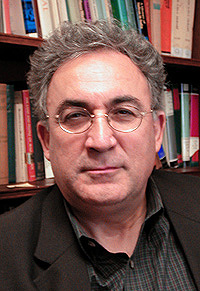
Such mistakes and oversights at times try the patience of readers, especially those concerned with scholarly standards of accuracy and consistency, but they detract not at all from the gripping power of the story itself. King of the Benighted is a revealing work, related in the terse and compact style characteristic of a superb and sophisticated modern writer. It has been brought home to speakers of English in an attractive little volume through the efforts of a publishing house that at present leads the field in translations of modern Persian literature. In addition to its interest for the general reader, the book is of central relevance to any college course focusing on contemporary Iran and the Middle East. It can also be an important part of any undergraduate survey course dealing with the literary treatment of a political experience or with the social status of intellectuals in the modern world.

For: King of the Benighted

By: Small Press Magazine

Everything about King of the Benighted, from the use of a pen name on a manuscript smuggled page by page out of Iran to the often elliptical and elegantly ephemeral prose, contributes to the beauty and mystery of this slender novella. It is not necessary to understand either the complex history of this part of the world or the state of contemporary Persian letters to fully appreciate this book; the central thesis of an artist in a repressive state, and in fact the meaning of art itself, is a universal one. It is to Manuchehr Irani’s credit that he has taken this theme and enlarged on it, examining the question from a variety of perspectives without ever losing sight of the basics of good storytelling.

An artist falls into a dream in which he imagines his future in the current police state; he considers what is important in his life, the tortures he will face, and the possibilities for personal expression. When he awakes, he reenters his life a changed man. This simple story is told in an intricate mixture of styles and voices, part allegory and part graphic history, in a narrative that is at times fragmented and diffuse and at other times painfully concise and straightforward. The writer weaves religious and secular metaphors, literary allusions and historical fact into a tapestry that encompasses not only the admittedly limited perspective of one man against a hostile world but also the intimidating complexity of society itself. ‘”That’s why he thought this lineage, if there is in fact a lineage, comes from the beginning of time, or from Besaribn Taharestani, the poet known as ‘The Chained,’; meaning the slave, whom Mahdi, the Abbassid Caliph, the Guide of the Pious, accused of heresy, and after having him flogged, ordered his body thrown into the swamps of Bataeh, to Ferdowski who was not buried in the Moslem cemetery, to him. and then to eternity…. And he sat waiting so that he too could get his share, or, pay his dues.” The poet is charged not only with his personal responsibility for the work but also for the historical and human context in which that work will be viewed.

King of the Benighted is a book that transcends the limitations of time and space to explore the very essence of the human soul. This alone would accord it the status of a contemporary masterpiece, but some mention should also be made of the exquisite production and the attention to detail which guarantee that this edition soon will become a collector’s item. This book is a must for anyone interested in Persian literature, and it would be a beautiful addition to any collection of modern fiction.

For: King of the Benighted

By: Middle East Journal

Using an English-language translation of the Iranian poet Nizami’s story “The Black Dome” as a preface and a motif, the author depicts the experiences and thoughts of a poet in postrevolutionary Iran; in particular, his stay in prison and the people he met there. “Manuchehr Irani” is a generic pen name adopted by many writers living in Iran who publish outside the country.

For: King of the Benighted

By: Muslim World Book Review (Vol. 13)

This novella shows life for the creative artiste in postrevolutionary Iran as reminiscent of the reign of terror in the Soviet Union of Stalin and in George Orwell’s 1984. The influence of Franz Kafka (18831924) upon the novelist is also pronounced. The original manuscript was smuggled out of Iran bit by bit in several anonymous envelopes to the United States to evade the everwatchful censors, together with a plea by the anonymous author to have it translated into English and published under a suitable pseudonym.

Living amongst the horrors of a totalitarian policestate, the hero of this novella is brutally arrested by the secret police because of his refusal to make his poetry conform to the ideological propaganda of the state. His books are banned, his published poems destroyed. After horrific experiences in prison where he undergoes excruciating physical and mental torture along with his fellow inmates, he is suddenly and just as capriciously released to find his wife and daughter at home clad in black, having long given him up for dead. He looks in the mirror to find his hair has turned completely white.

The theme of this story is the author’s desperate plea for artistic, intellectual and religious freedom. This is accomplished, not by preaching, but by using symbolisms in the most eloquent and beautiful manner. Nothing is obvious there is only subtle suggestion. This very subtlety makes the emotional impact on the reader all the more gripping and powerful. This is a work which could only have been written by a highly skilled artist.

Tragically, however, the whole work from beginning to end is bitterly antiIslamic. Islam is equated with tyranny, despotism, intolerance and fanaticism, the greatest tragedy in the history of Iran being the Arab/Islamic conquest 1400 years ago. Every enemy of the Holy Prophet, of Islam and the Arabs of Persian history past and present is glorified as heroic. The novelist totally overlooks the immense cultural, artistic and spiritual enrichment Islam brought to Iran and Iran’s flowering under Islamic civilization without which its greatest classical poets like Firdausi, Jami, Sa’di Hafiz and Jalalud din Rumi could not have flourished.

The writer thoroughly confuses Islam with the acts of certain ignorant, corrupt and powerhungry Muslims today. In reality, what is described is not a true Islamic state but its monstrous perversion. The traditional Caliph or Sultan represented the opposite of vulgar modern dictators, demagogues and rabblerousers. Although it is quite true that individual personal liberty as the democratic West now understands it was not recognized under traditional Islamic civilization and social controls and restraints were severe, the dignity and nobility of the individual personality was always upheld. Many Muslims today (including thereviewer) fear that the triumph of another political order in the name of Islam and devoid of the purification of the heart, might, Allah forbid, be only another replica of what is described in the pages of this book.

For: King of the Benighted

By: Kirkus Reviews

Smuggled out page by page, this novella by a highly regarded Iranian writer is being published in English under a pseudonym. Though the emotions are controlled, the language at times Iyrical, the story offers an insight into a society where totalitarian fanaticism intrudes into even the smallest and most private corners of life.

The story is preceded by a prologue that relates the old Persian tale of the Black Dome. all about a benighted king who mourns forever the loss of an ideal, “An ideal lost in callow hope.” The loss of ideals is the theme of the main story, in which a poet living in contemporary Iran had hoped for political change with the downfall of the Shah, but increasingly feels that Iran is now even worse off. He can get his poems published only abroad, and what he is writing seems irrelevant. But an arbitrary arrest, subsequent torture, and imprisonment further destroy his illusions. To pass the time, he recites verses to his fellow prisoners from the tale of the Benighted King. This recitation is responsible for his final and total disillusionment with the regime. Sarmad, a young fellowprisoner, is moved by the verses to confess to his role as a torturer and informer. A former activist, opposed to the Shah, Sarmad has been repeatedly forced by his captors to round up people from the streets who are then summarily shot each night in the corridors outside the cells. Even within the last few days, he has had to participate in the killing of his own wife. The poet is finally released, his hair now completely white, and his eyes fully opened to the horror of the present. He himself has become a “benighted king.”

The restraint of the writing and the character of the poet, idealistic and unpolitical, make this a story to be read on many levels. It is a terrible indictment of a contemporary regime, but it is equally an allegory about the loss of innocence and hope.

For: King of the Benighted

By: Translation Review (#34 & #35)  

Composed by a foremost contemporary Persian shortstory writer, King of the Benighted was recently sent page by page out of Iran. Manuchehr Irani is a pen name used by many writers living in Iran and publishing abroad. This author was imprisoned under both the Shah and Khomeini, experiences which inform this novella, written after the revolution. It is his first work to be initially published in English under a pseudonym. Translator Abbas Milani worked in Iran before, during, and after the revolution and currently chairs the Department of Social Science at the College of Notre Dame, Belmont. Milani’s afterword places the novella in cultural context. Also included as a prologue is a prose translation from the twelfthcentury Haft Peykar by the Persian poet Nizami of Ganja. This is a numbered, limited first edition from Mage Publishers. Other titles recently released by Mage include Maryam Mafi’s translation of Daneshvar’s Playhouse, short stories by Simin Daneshvar, Iran ‘s leading woman writer, and also Daneshvar’s bestselling novel, Savushun, translated by M.R. Ghanoonparvar.

For: King of the Benighted

By: Middle Eastern Studies Assoc. Bulletin #25

There is a conviction, often expressed, that Iranian life is best explicated with reference to classical Persian poetry. For many of us, contemporary Persian culture is more marked by its breaks with tradition than its continuities. At a time when massive additional breaks with classical culture are carried out, ironically, in the name of tradition, we may greet that conviction with skepticism, as the poet’s refuge into unreality, but King of the Benighted makes us believe it.

The subject, a poet in prison, can be a perilous one. The novelist’s dilemma is to find a point of view adequate to convey the experiences of horror without lapsing into another kind of writing, into a legal deposition or into sentimentality. It has happened before. Manuchehr Irani, rumored to be the penname of a wellknown Iranian novelist, frames the prison experience through the eyes of an eccentric poet who has been in similar prisons under the Shah, and the frame includes his comparisons. The particularity of the poet’s responses has a peculiar appeal and even a rueful humor, as in the painful moment when the police have arrived to take him away. His head covered by a sack, he becomes the limited, individualized point of view whose intellectual reactions are as important as the violence. “Suddenly a blow came down. It was not a fist…. Only with a book could they hit like that. But with which one? It didn’t matter . . .” (p. 41). It may not matter what book they hit him with, but he does bother to ask himself, and this makes all the difference.

The classical theme is an extended reference to the story of the city garbed in black from Nezami’s Haft paykar (told by the first of the storytelling wives, in the black pavilion), woven effortlessly and believably into the story. (The theme of blackness in that narrative generates the ingenious choice “benighted” of the English title.) A copy of Zaft paykar is sitting open on the hero’s desk when he is arrested, and he recites from it to fellow prisoners. Their reaction is surprising: “We’re young, we have many desires, we’ve never touched a girl’s hand in our lives; and then this guy won’t leave us alone with his erotic stories” (p.67). We learn later the personal connection his prisonmate sees between Nezami and his own horrifying moral compromises, doing the dirty work of the prison (handling the corpses of executed women). With that link the classical theme takes on a devastating psychological and moral depth. And in a mysteriously reassuring conclusion the poet’s copy of Haft paykar is still open to the same page when he returns from prison, to suggest a cultural still point, a vista of stability outside the protagonist’s pain and the horror of the last two regimes.

For: King of the Benighted

By: New Quest

Black may be beautiful. It may be a great colour. But it is the colour of doom. It signifies death, destruction, sadness, and mourning. It signifies loss, bereavement and compassion, an allpervasive despair, the absence of all hope. Imagine a country where the people are always required to wear black. What a depressing idea! And how unhappy the circumstances must be.

Such is the theme of Manuchehr Irani’s King of the Benighted translated by Abbas Milani. The origins of the book are interesting. Milani tells us in the Afterword that the book was mailed to him page by page out of Iran in the form of handwritten manuscript. This was perhaps the only way of escaping the country’s inexorable Islamic censors. Not surprisingly, the book is published under a pseudonym. A note tells us that Manuchehr Irani is a nom de plume used by many Iranian writers who publish their work abroad.

If this elaborate secrecy-smuggling the manuscript to a foreign country and then publishing it under an assumed name strikes us as strange and perhaps uncalled for, we merely have to remind ourselves of the narrow, Islamic bias of the Iranian regime. As an example, take the unnecessary hysteria it whipped up over Salman Rushdie’s venture into fantasy entitled The Satanic Verse. Little wonder, then, that writers from that country should feel the need to take refuge behind a pseudonym and get their books published elsewhere, in free-thinking lands where they would be accepted and appreciated, not criticized and hounded.

King of the Benighted would have been a seventypage novella were it not padded with an Introduction (which could have been dispensed with), a Prologue, and an Afterword. The Prologue is interesting as it gives us a translation of The Black Dome which is part of a longer poem entitled Haft Peykar (Seven Beauties) by the twelfth century Persian poet, Nizami of Ganja. The Black Dome contains a story within a story several times over in the manner of The Arabian Nights. Nizami’s story tells us of a king who suddenly disappeared from the midst of the people, like the mythical bird, Simurg. He wandered far and wide, to exotic, remote counties, suspended in a mysterious magic basket, or, Sindabad-fashion, clinging on to a gigantic bird. He reaches a paradise of sorts where a prolonged amorous encounter with a Fairy Queen ends in disappointment and he returns to reality, humbler but wiser clad in black. Black, thus becomes symbolic colour, symbolic of “an ideal lost in callow hope.”

This Prologue, which forms then matrix of the novella, initially raises false expectations as the reader is prepared for a children’s story, a fantasy narrative that would bring to life characters like Alibaba, Alladin, the genie, and all the others from the 1001 tales. This, however, does not happen. What follows, in King of the Benighted, is the experience of a man, a teacher, a poet, who, like Cinna the poet, is accused of writing “bad verses”. He is arrested time and again by a repressive regime that has little understanding or appreciation of the arts, but is convinced that all attempts at creativity must be viewed with suspicion. And so the unfortunate writer of the story is incarcerated, harassed, flogged and tortured. His fault? He is a creative writer. He is the author of The Demonic Decade which, to the powers that be, has seditious overtones.

The experiences of the writer at the hands of insensitive but powerful forces bring to mind those of Kafka’s Joseph K. We are also reminded of Orwell’s 1984 where the individual exists only for the state, all other concerns being irrelevant. King of the Benighted speaks of Islamic patrols that drive around in sinister Toyota station wagons through the cites of Iran, in search of spiritual or political deviants. It speaks of “Selection Centers” or “ideological commissars” that aim at purging all institutions of the regime’s political opponents. The narrative goes back and forth in time, presenting the consciousness of its anonymous protagonist who sees Nizami’s Black Dome as the central metaphor of the times. Living in an age farremoved from romantic, idealistic, utopian dreams, he sees the blackness of despair all around him. But underlying this grim vision is a stoicism that seems to advocate a holding on in the face of all despair.

What we have, thus, is a moving account of life in an Islamic republic which is not just a political document It is literary, too, in the sense that it evokes the rich tradition of Persian literature, with frequent references to Ferdowsi (we are perhaps more accustomed to the name spelt as Firdausi), Nima, and Hafez. And, yes, there is a liberal sprinkling of Nizami’s verses. All of this, and much more, in this elegantly bound and aesthetically presented slim, 100-page volume.

Privilege, along with innate gifts of intelligence and determination, shaped Houri Mostofi Moghadam in many ways, all vibrantly evident in Never Invisible. Drawn from her diaries, it documents the sweep of a long and eventful life as the world around her changed, sometimes for the better, sometimes bringing cruel setbacks. Houri was born into a lofty social stratum in Iran, a milieu of arranged marriages, overseas education for the young, financial comfort, and effective control of political power. Her father–described by her as “a learned man, hard-working, honest, and God-fearing”–was a prominent government official who served in a range of postings abroad and across Iran. Houri’s own exposure to another culture began when she entered a Franco-Persian kindergarten at the age of four. In later years, she would attend university (permitted for women only after reforms by Reza Shah in 1934), teach French and English in a top Iranian high school, spend time in America on a Fulbright grant, and run an important charitable organization with many international members. Always, however, the center of her life was her family–raising three children, running a large household, and supporting the career of her successful businessman husband.


In mid-life, trouble arrived in many guises. Her marriage fell apart. She struggled with depression, moved abroad, bought an apartment in Paris, and, from a distance, watched in dismay as revolution broke out in Iran in 1978. In that upheaval, wrath and revenge was aimed chiefly at the upper class: One of her sisters and two uncles were imprisoned for a time. Houri did not return to Iran for 14 years. There, she found her house in ruins– “nothing left of the life we lived there.” Five more times she went back to seek some restitution, always in vain. But that was her way–a tireless fighter for what she saw as right, filling her life with activity and feeling, and brilliantly chronicling the flow of years in her diaries the whole while.

“A veritable tour de force fusion of actuality, fantasy, and mystical transport. . . . Reveals Daneshvar at her most gifted, as an innovative writer of the highest order in the long history of Persian literature.” >- – Int’l Journal of Middle Eastern Studies

“These six vibrant stories chronicle the vicissitudes of life-its horror, unfairness, humor and fleeting beauty. . . . Daneshvar portrays a world full of injustices and cruel surprises redeemed by hope and acts of kindness.”


– – Publishers Weekly

“Six stories probe the lives of individuals who reflect their changing culture. From tongue-in-cheek comedy and social reflection to delicate visions of women’s hidden lives, this is packed with involving individuals and moving moments.”


– – Bookwatch

“The stories take us into the innermost thoughts of characters often tragically caught between harsh realities with which they must contend and pleasant dreams they have little hope of seeing realized.”


– – World Literature Today

These six vibrant stories by Iranian novelist Daneshvar (Savushun) chronicle the vicissitudes of life&shyp;its horror, unfairness, humor and fleeting beauty. There is the domestic tragedy of “A City Like Paradise,” which tells of a black servant cudgeled and thrown out by her employer, who is jealous of her bonds with household members; the tart comedy of “Anis,” about a woman who, as she shuttles from one husband to the next, swings from subservience to fervid religiosity to urbane sophistication; the social commentary of “Potshards,” describing a patronizing, elderly white women’s impromptu attempt to adopt a village orphan. Born in 1921, Daneshvar portrays a world full of injustices and cruel surprises redeemed by hope and acts of kindness, such as a midwife’s clandestine visit to save the life of an ungrateful pregnant woman (“Childbirth”). In the exuberant, virtuoso title story, a sea captain born in Madras, shipwrecked off Africa, recalls his smuggling exploits, his life in the Persian Gulf and the wife and daughter he forced into prostitution and then abandoned; half-delirious, he undergoes an exorcism to free himself of possession by a mermaid and then dictates his vision of a world free from tyranny and sorrow.

– -Publishers Weekly (September 19, 1994)

There are few translations into English of Iranian Simin Daneshvar, a writer for nearly five decades. Her Sutra & Other Stories allows the reader to peer into the extraordinary lives of ordinary people living in Iran. Each of the six tales has a folkloric tone, but their strength lies in presenting the woman’s point of view, the infrastructure of interpersonal bonds that still operates in the face of rapid change. Neither preachy, nor judgmental, the stories often contain a universal message. In “Potshards,” an impoverished boy chooses to remain with his invalid brother rather than move to Tehran to be adopted by a wealthy woman. “Childbirth” reveals the negative influences of poverty and the military as well as the positive side of duty and the sacredness of new life. Difficult circumstances bring people into contact with purpose, wisdom, and the ever-present veil. – -Library Journal (May 15, 1995)

Mage Publishers must be lauded for its decision to make more of Simin Daneshvar’s works available to the Englishspeaking world. Sutra follows the publication of Daneshvar’s Playhouse in 1989 (see WLT 64:4, p. 690) and Savushun in 1990. The absence of an introduction or a glossary of terms in the most recent volume of Daneshvar’s short stories signals the safe assumption on the part of the publishers that the marketplace or audience to which Sutra is targeted no longer needs to be helped with untranslated and untranslatable terms. Those who read Daneshvar in English, it would seem, have gained enough familiarity with the social and cultural setting of her works to proceed directly to the stories. Perhaps this decision on the part of the publishers could have been more emphatically conveyed to the translators, who, out of habit, have retained some italicized and untranslated Persian words one would normally expect to look up in a glossary of terms.

The decision to do without the usual introduction and glossary is a refreshing turn away from a preoccupation with the linguistic and cultural overtones of the original text. The reader can enter the fictional world with fewer impediments. If we can read Flaubert’s Madame Bovary without a glossary indicating exactly what kind of French bread Charles and Emma had in the famous dinner scene that has been so often cited and analyzed, then we should also be able to read a Persian writer’s work without worrying that characters in a story are eating lavash bread. Readers who do not know what lavash looks and tastes like will in any event not learn anything from the allusion and will no doubt be distracted by it. This particular obsession with cultural specificity stands out in a translation that otherwise reads so well, since the translators’ remarkable use of idiomatic English and felicitous turns of phrase makes one eager for an even smoother translation. It is their success in conveying the mood and tone of the six stories in this collection that prompts the reader to want to be even more deeply steeped in a seamless fictional world. The stories themselves take us into the innermost thoughts of characters often tragically caught between harsh realities with which they must contend and pleasant dreams they have little hope of seeing realized. Now and then we glimpse traces of Daneshvar’s persistent social critique and personal hopes for the future. One of the final passages of “Sutra,” for instance, reads like a political manifesto: “A day will come when certainties will freely translate into action. Tyrants will be withheld from tyranny . . . . Such a world will come.” When seen in the context of the adverse world in which Daneshvar situates her fictional creations, the simplicity and sincerity of such utterances become fully comprehensible. It is this very simplicity that attracts readers, be they inside or outside her own cultural milieu.

– -World Literature Today (Winter 1995)

Here are six stories by one commonly regarded as the preeminent Iranian woman writer of recent decades. She is unusual in not speaking for a “cause,” or from dissidence or exile, dreaming of (or mocking) an Iran that was, or never was, or might yet be; rather she speaks in a sort of organic oneness with her own people’s ongoing life process as it unfolds in only glancing contact with the worlds of politics, economics, and social and technological change. At least one of the six stories (“A City Like Paradise”) has been rendered into English once before, but a second version can always prove useful and even satisfying in its own right.

The tales vary in length from seventeen to forty-seven pages, differing also in theme and setting and treatment. What closely unites them is a pervading atmosphere of “magic realism” and an enigmatic obliqueness of vision. None of them is in the least realistic or naturalistic in the traditional senses of those terms; none of them offers anything like a straightforward narrative of events; none of them confronts its matter (or the reader) face-on; and none imposes authorial comment, much less moralizing. Matthew Arnold’s prescriptive formulas of sweetness, light, steadiness and wholeness, and the rest have absolutely no application here. If the first (“Potshards”) and the fourth (“Childbirth”) stories are those most firmly grounded in recognizable everyday worlds, the last and eponymous one (“Sutra”) presents a veritable tour de force fusion of actuality, fantasy, and mystical transport. Significantly, its title is not Islamic or even Persian, but a Sanskrit term, and one carrying overtones of both Hinduism and Buddhism that well accord with the ecstatic and widely ecumenical utterance at the end (pp. 187-88).

This much said, it is clearly to little purpose to “summarize” each story, but their settings deserve to be briefly indicated. “Potshards” is based on a village boy’s encounter with Western archeologists. It is the lightest of the six, treating ironically the widely disparate appraisals and expectations of the two parties. (This is indeed a very Persian story, difficult to conceive in a milieu like Egypt, with that country’s long, intimate, and sophisticated interaction with Western archeologists.) “A City Like Paradise” turns on the tragic, gallant life and death of a black female servant, virtually a slave, within an ordinary Persian family circle. Again, “Anis” arises out of a (much looser) mistress-servant relationship, but presents some unexpected twists and turns and reverses of social comedy. “Childbirth” confronts a woman possessing modern midwifery skills and a high sense of duty (she may actually be a nurse, but performs more or less as a doctor) with superstitious, inhospitable, resentful, and greedy villagers, living on the very outskirts of Shiraz. “Bibi Shahrbanu,” with a family taking part in a mass pilgrimage to a famous shrine, offers devastating, if empathetic, insights into the rituals and hopes and fears surrounding marriage and fertility among simple and even would-be sophisticated people. Here, fantasy and irony are again much in evidence. “Sutra” itself is notionally related by the luckless and somewhat low-principled owner of a small trading craft, currently in prison but normally plying the Gulf and the Indian Ocean, who dallies (in dream or reality?) with both his own boatboy and a mermaid. The climax, as suggested earlier, reveals Daneshvar at her most gifted, as an innovative writer of the highest order in the long history of Persian literature.

     All of these stories, in their more mundane aspects, unfold in a commonplace setting of casual, random cruelty (psychological as well as physical) interspersed with kindness and sentimentality; and in several cases the opposed manifestations proceed from the same individual. It is never made clear whether this represents a particular cultural phenomenon or is to be taken as part of the general human condition. In any case, the abrupt transitions and interchanges always demand careful reflection on the part of the reader who aspires to grasp the “inwardness” of a remark or an action. Many passages are (appropriately enough) gloomy, even grim, quite at variance with the impression given by the notice on the dust jacket of a prevailing atmosphere of gentleness, innocence, wonder and hope.

All this being so, and given the other characteristics of Daneshvar’s writing referred to earlier, it is unfortunate that the translation tends to enhance the general, purposive opaqueness by its own total lack of comment or even the most unobtrusive interpretation. This is in no way to suggest that the text should be “improved” in translation or burdened with inappropriate annotation. However, although those familiar with Iranian social norms and speech modes will usually realize what is going forward, for others the enigmatic attraction of the tales themselves might well be overlaid with further mysteries that are at once gratuitous and disconcerting. In like vein, although an index and a bibliography obviously have no place in a book of this genre, a modest aid-list would make for easier reading. Some common personal names and designations (even within the same story) are identical or similar, or referred to in various ways. (“Aqa” is a general source of confusion, for example.)

The translation as such is nearly always smooth and elegant, with only occasional infelicities or faults of “register.” For instance, the waiter in a humble village chaikhana is oddly described as a “busboy”; the archeologist intruders in the village are repeatedly referred to as “travelers” (presumably a literalism from the source language), when something like “migrants/birds of passage/wayfarers/visitors/transients” might be more appropriate and less confusing in English; and a European woman’s unattractive complexion is said to be “tawny,” when what is surely meant is not “like a lion’s skin” but “swarthy.” The title “Potshards” should read “Potsherds,” irrespective of pronunciation: “-a-” is found only in the word “shards” itself. Finally, in this select list, to characterize the ta’ziya as “religious opera” is at best clumsy and misleading and at worst liable to give more offense than the older term “passion play,” sometimes deprecated for its Christian overtones. The technical production of the book is immaculate, as one has come to expect with Mage Publishers.

– -International Journal of Middle East Studies (Vol 27, #4)

For: Borrowed Ware: Medieval Persian Epigrams

By: The Independent

“Dick Davis’s translation of the best of Persia’s medieval short poetry, borrowed ware, is a wonderful book, suffused with love, beautifully produced and with a comprehensive introduction to Persian courtly poetry.”

For: Borrowed Ware: Medieval Persian Epigrams

By: The Atlantic Monthly

“Mr. Davis has put what he called “Medieval Persian Epigrams” into easy, idiomatic English and provided an engaging introduction to the Persian world and an explanation of the code words that might otherwise puzzle modern readers. These authors were court poets, highly valued and well rewarded for wit, elegance, and a light touch. Originality of theme was not necessary, but there are surprises among the lovers’ laments and financial complaints. Jahan Khatun, one of the few women poets, considered erotic reform but decided to “renounce renumerations.” (A contemporary accused her of being a prostitute, but Mr. Davis points out that he “said this kind of thing” about everybody.) The poems are faced by versions in Persian scripts, making the collection pretty as well as amusing.”

For: Borrowed Ware: Medieval Persian Epigrams

By: Times Literary Supplement

“Many of the best poems in borrowed ware are mystical, and Davis is probably the first translator to have succeeded in conveying their intensity of focus. . . . Anyone doubting Davis’s own mastery of [poetry] should turn to borrowed ware. This anthology is the most personal of Davis’s excellent translations from the Persian. . . . Here, as in Western poetry of a similar period, the subjects are mostly religious and amorous, with some politics thrown in and a good deal of flattery for patrons. Yet these subjects, through their tone and imagery, invite into the book the whole range of that far-off culture’s concerns.”

For: Borrowed Ware: Medieval Persian Epigrams

By: Poetry Book Society Bulletin

“Some of the best known Persian poets–Rudaki, Sa’di, Rumi, Hafez-are included in this book, but its virtue is that it has cast its net widely over a fascinating variety of writers from the tenth century to the seventeenth. . . . The epigrams are erotic, religious, and political (sometimes all three together!), and their tone sweeps from the tender to the scabrous, from the bitchy to the mystical.”

For: Borrowed Ware: Medieval Persian Epigrams

By: Kirkus Reviews

“Whatever these short and witty epigrams sound like in their original language–which is included here for those who can read such calligraphy!–they are delightful as re-created in English by Davis, a poet and professor of Persian. All drawn from the classic period of Persian poetry (the 10th through 16th centuries), these public and formal poems–whether capturing a moment’s mood or praising a courtier–come alive in Davis’s scrupulous translations, invigorated with a user-friendly scholarly apparatus.”

For: Mosaddegh: The Legacies of Mohammad Mosaddegh in Iran

By: University of Oxford

Author: Homa Katouzian

Mosaddegh is thorough, well-documented, thoughtful, and fresh.… It deserves to be read by all who are interested in Iranian history, Middle Eastern oil, and democratic and anti-colonialist movements in the Third World.”

For: Lost Wisdom: Rethinking Modernity in Iran

By: Harvard University

Author: Stephen Greenblatt

“Milani shows that long before the European Renaissance generated the radical ideas that eventually reshaped Europe and the United States, Persian statesmen, artists, and intellectuals had formulated ideas that strikingly anticipate those of modernity.… Lost Wisdom is not only a powerful work of historical analysis; it is also a moving and eloquent account of a series of remarkable individuals, depicted with rare sensitivity and precision.”

For: French Hats in Iran

By: Willem Floor, author of A Social History of Sexual Relations in Iran

From a gifted writer delightful, funny, evocative, enlightening, nostalgic stories about growing up in Iran in the 1940s. A must-read for anyone who wants to know how traditional, conservative Iranian households dealt with modernization.

For: French Hats in Iran

By: Hasan Javadi, editor and translator of Obeyd-e Zakani: Ethics of the Aristocrats and other Satirical Works

Heydar Radjavi describes each episode in his school years with lucidity and consummate art. He shows a very traditionalist Azerbaijani family grappling with modernity. The father and son are nicely contrasted in their own worlds. While the young Heydar is becoming part of a modernizing world, the father is clinging to his fast disappearing world.

For: French Hats in Iran

By: Dick Davis, author of Epic and Sedition: The Case of Ferdowsi’s Shahnameh

Heydar Radjavi’s memories of the 1930s and 1940s, when he was growing up in Iran (a country he describes as one that has been “in ambivalent flirtation with modernity for the past hundred years”), are a delightful and moving evocation of a vanished past. His wise, witty, gentle, and eminently humane voice is one that is irresistibly attractive, and the anecdotes he recounts have a quiet, resonant charm that stays in the mind long after the book is closed. This little book is a gem, as a memoir and as a human document.

For: Joon: Persian Cooking Made Simple

By: New York Times

Author: Hetty McKinnon

In a review of Taste Makers: Seven Immigrant Women who Revolutionized Food in America, by Mayuk Sen, The New York Times declares, Najmieh is one of: “Seven immigrant women who changed the way Americans eat.”

For: Silk Road Cooking: A Vegetarian Journey

By: The New York Times

Author: Denise Landis, New York Time's

“…SILK ROAD COOKING: A VEGETARIAN JOURNEY (Mage Publishers, $35) is like a good novel — once you start, it’s hard to put down. It is ideal for those who like to read cookbooks as much as cook from them.

The author, Najmieh Batmanglij, who was born and raised in Iran and lectures at cooking schools, begins by describing the ancient network of trading routes stretching from China to the Mediterranean. As Ms. Batmanglij explains, along with the trade in silk, ivory and other goods came cooking techniques and ingredients that enriched and transformed local cuisines. Beautifully illustrated with photographs of food, people and places from along the Silk Road, the recipes include notes about their origins and ingredients.

The recipes also pack a punch. I served Levantine pilaf in pastry at a party and felt a genuine thrill as I cut into the golden dome of phyllo encasing a filling of vermicelli and rice flecked with apricots, almonds and raisins and seasoned with cinnamon, cardamom and rosewater….”[more]

For: Silk Road Cooking: A Vegetarian Journey

Author: Margaret Talbot, The New Yorker

“One of my favorite cookbooks.”

For: Travels through Northern Persia: 1770-1774

By: Choice

“This is an important book for those interested in Russian, Central Asian, and Persian studies.”

For: My Uncle Napoleon: A Comic Novel

By: Kirkus Reviews

“An uproarious and endearing Iranian novel… one of the most entertaining books we’re likely to see this year.”

For: My Uncle Napoleon: A Comic Novel

By: The Atlantic Monthly

“A giddily uproarious mixture of farce and slapstick.”

For: My Uncle Napoleon: A Comic Novel

By: Cleveland Plain Dealer

My Uncle Napoleon should leave properly adjusted American readers desperate for more of this howlingly funny — not to mention tender, salacious and magical — Iranian import.”

For: My Uncle Napoleon: A Comic Novel

By: The Washington Post

My Uncle Napoleon is a surprising novel, a raunchy, irreverent, hilarious farce wrapped around a core of quiet sorrow.”

For: My Uncle Napoleon: A Comic Novel

By: The Baltimore Sun

“It is so surely told, so funny, true, and ultimately heart-rending, it’s absolutely clear why My Uncle Napoleon is loved in its homeland.”

For: My Uncle Napoleon: A Comic Novel

By: Christian Science Monitor

“Readers can gain a more balanced impression of Iran from perusing this novel, which looks at life from the kind of humorous perspective few Westerners may associate with the current regime in that country.”

For: My Uncle Napoleon: A Comic Novel

By: Choice

“The farcical plot dashes along at a rapid pace and there is never a dull stretch. In this English version, much of the reader’s enjoyment comes from the outstanding quality of the translation.”

For: My Uncle Napoleon: A Comic Novel

By: The Washington Times

My Uncle Napoleon gives the reader an amusing, satirical picture of life among the privileged and their servants in Tehran at the beginning of World War II.”

For: My Uncle Napoleon: A Comic Novel

By: World Literture Review

“The translation is so sensitive to the author’s tone and to the levels of language used by the characters that the Western reader, unfamiliar with Iran, needs only a minimum of help to enjoy and appreciate both the comic and serious aspects of the book.”

For: SHAHNAMEH: The Persian Book of Kings

By: Times Literary Supplement

It is almost impossible to exaggerate the influence of [the Shahnameh] on the national culture of Iran…it marks the definitive emergence of New Persian as a language of literature and culture… in much the same way as the Authorized Version of the Bible anchored English.  The vigorous simple language of the poem is easily comprehensible to educated Iranians a thousand years after it was written.
Davis’s translation of most of the narrative material into pros, but the more intensely poetic and lyrical passages into English rhyming couplets, has in the main been very successful.  His lively, natural English prose certainly allows the reader to enjoy the narratives as adventures, romances and moral tales in the way they were always intended.  He provides a useful and informative introduction which serves to put Ferdowsi’s work into context for the non-specialist reader.  The liveliness of the style gives an interesting, action packed and sometimes moving epic…For the first time ever, it is possible for the reader of English who has no Persian to get a feeling for and understanding of one of the great monuments of world literature.

For: SHAHNAMEH: The Persian Book of Kings

By: University of Pennsylvania

Author: Choice, W. L. Hanaway, emeritus

With this volume, Davis completes his prose and verse translation of most of the Shahnameh, the Persian national epic, which Firdawsi completed in about 1010 CE. The first two volumes, The Lion and the Throne (CH, May’98) and Fathers and Sons (CR, Feb’01), rendered the mythical and legendary parts of the epic; the present volume presents the “historical” section. Davis’s translation is smooth, elegant, and up-to-date, with no attempt at “stained-glass” effects. He found a felicitous combination of prose and verse that seems just right for its purpose. The verse sections are particularly good, and one wishes for more. This set supersedes The Epic of the Kings, Reuben Levy’s translation (CH. Apr’68), hitherto the standard modern prose rendition. The physical book is sumptuous. The design is consistent throughout the three volumes, but the opulence seems to increase with each. No detail is overlooked, and the publishers out do themselves here in the taste and splendor of their reproductions of Persian miniature paintings. Summing Up: Essential. No collection of Middle East studies or art history should be without this three-volume set.

For: SHAHNAMEH: The Persian Book of Kings

By: Washington Post Book World

Author: Michael Dirda

“Grand . . . To imagine an equivalent to this violent and beautiful work, think of an amalgam of Homer’s Iliad and the ferocious Old Testament book of Judges. . . . Thanks to Davis’s magnificent translation, Ferdowsi and the Shahnameh live again in English. This marvelous translation of an ancient Persian classic brings these stories alive for a new audience.”

For: SHAHNAMEH: The Persian Book of Kings

By: The New York Times Book Review

Author: Reza Aslan

The Shahnameh has much in common with the blood-soaked epics of Homer and with Paradise Lost and The Divine Comedy. . . . The poem is, in a sense, Iran’s national scripture, and Ferdowsi Iran’s national poet. . . . Davis brings to his translation a nuanced awareness of Ferdowsi’s subtle rhythms and cadences. . . . His Shahnameh is rendered in an exquisite blend of poetry and prose.

For: SHAHNAMEH: The Persian Book of Kings

By: The New Criterion

Author: Russel Seitz

“It takes Dick Davis’s delightful and animated translation of Persia’s classic 623 pages to get around to banning wine-drinking, a prohibition ended by royal decree two pages later, with 257 pages of music, seduction, and polo matches left to go. All this action, myth, and history fairly fly off the page, for Davis renders Ferdowsi’s 50,000 sesquipedalian lines of poetry as a prose narrative that here and there erupts into sonnet-sized snatches of verse. The scheme works brilliantly.… ‘That poetry which is the most difficult,” wrote Irshad Ullah Khan, “has been rendered into English … with the comparative strength of the inspirational truth and elegance of the Persian. His work shall not die.’ It is hard to vouch for any volume’s immortality, but this ranks among the best Persian translations of the last thousand years.”

For: SHAHNAMEH: The Persian Book of Kings

By: Khaled Hosseini, author of The Kite Runner

Davis’s wonderful translation will show Western readers why Ferdowsi’s masterpiece is one of the most revered and most beloved classics in the Persian world.

For: Shakespeare, Persia, and the East

By: Al Alvarez

“The fruit of a lifetime’s devotion to English and Persian literature – learned, lucid, and full of unexpected insights into the Elizabethans’ fascination with the brave new world of the orient and its impact on Shakespeare’s unique imagination.”

For: Shakespeare, Persia, and the East

By: Library Journal

“Ghani (Iran and the Rise of Reza Shah; Iran and the West), a lawyer and Iranian scholar, here provides. . . a historical overview of Shakespeare’s Eastern inspirations. . . . The first four chapters provide historical background, while the final chapter provides an extensive listing of Persian and Eastern references in Shakespeare’s plays. . . a pleasant read. . . takes on an aspect of Shakespeare studies that has not been as extensively researched as some of the more mainstream topics.”

For: Closed Circuit History

By: Middle East Journal

“A collection of intriguing drawings by one of Iran’s foremost graphic artists, currently living outside the country. Mohassess’ art is intended to force viewers to examine and question political developments taking place in Iran.”

For: Inside Iran: Women’s Lives

By: Library Journal

“Howard places in context the history and politics of gender in Iran, making this volume accessible to a popular audience.”

For: Inside Iran: Women’s Lives

By: New York Times Book Review

“…Very much worth reading. The personal stories Howard presents are moving and colorful, and they enable us to understand Iranian women more fully than cold statistics would allow.”

For: Faces of Love: Hafez and the Poets of Shiraz

By: A.E. Stallings, MacArthur Fellow and author of Olives

In this heady volume of wine, roses, nightingales, and forbidden trysts, Dick Davis shows us three faces of medieval Persian love poetry: the elusively mystical, the searingly personal, and the gleefully profane. For those of us unfamiliar with this world, the excitement is something akin to stumbling across a new Pindar, Sappho, and Catullus in a single volume—that is, if they were contemporaries and flourished in the same small town. This book is equally valuable for its wide-ranging introduction and pellucid and musical translations (quotable as English poems in their own right)—it would be worthwhile for either, but is a gem for both. Perhaps the most thrilling surprise contained here, however, is the debut in English (if not the West) of Jahan Malek Khatun, an intellectual princess whose bold and moving poems of heartbreak (often daring in their exploration of gender roles) and exile are a revelation. Her pen name means “the world” and indeed we feel that, in bringing these poems into our language, scholar, poet, and translator Dick Davis has opened a new world for us. One couldn’t write a better description of this volume than one of her own epigrams:

Shiraz when spring is here—what pleasure equals this?

With streams to sit by, wine to drink, and lips to kiss,

With mingled sounds of drums and lutes and harps and flutes;

Then, with a nice young lover near, Shiraz is bliss.

For: Faces of Love: Hafez and the Poets of Shiraz

By: Dana Gioia, former chairman of the NEA and author of, Pity the Beautiful: Poems

“For me, the most remarkable poetic translation project in the last twenty years has been Dick Davis’ ambitious recreations of classical Persian literature. In book after book, Davis has memorably translated one of the world’s great literatures into real English-language poetry. Finally, Davis has brought us new versions of Hafez and the great Shiraz poets. What can I say about this new book except: Yes! at last we meet one of the greatest lyric poets in history fully alive in English.”

For: Faces of Love: Hafez and the Poets of Shiraz

By: Azar Nafisi, author of Reading Lolita in Tehran

“Dick Davis’s love affair with Persian literature has resulted in another marvelous offspring. Faces of Love reveals to us the mysterious connections between three vastly different fourteenth-century Persian poets. Through their eyes, Davis brings us that other Iran of poetry, lyrical beauty, diversity, and sensuality; only a lover and a poet could so passionately and meticulously capture the true spirit of these magnificent poems that transcend the boundaries of space and time.”

For: Faces of Love: Hafez and the Poets of Shiraz

By: The Washington Post Bookworld

Author: Michael Dirda

“[Dick Davis’s translation] possesses the simplicity and elevation appropriate to an epic but never sounds grandiose; its sentences are clear, serene and musical. At various heightened moments—usually of anguish or passion—Davis will shift into aria-like verse, and the results remind us that the scholar and translator is also a noted poet.…Thanks to Davis’s magnificent translation, Ferdowsi and the Shahnameh live again in English.”

For: Faces of Love: Hafez and the Poets of Shiraz

By: Times Literary Supplement, London

“One of the most extraordinary and fascinating love narratives produced anywhere in the medieval world, Islamic or Christian….Excellent introduction makes a convincing case for Vis and Ramin being the source for Tristan and Isolde…New translation by the poet Dick Davis, widely regarded as our finest translator of Persian poetry, in heroic couplets…This wonderful work should win Gorgani the Western audience he richly deserves.”

For: Faces of Love: Hafez and the Poets of Shiraz

By: Amin Banani, Iran Nameh

“Epic and Sedition is the best book on the Shahnameh to have appeared for many years, we recommend that all those concerned with literature and culture read it.”

For: Faces of Love: Hafez and the Poets of Shiraz

By: New York Times Book Review

Author: Reza Aslan

“Davis brings to his translation a nuanced awareness of Ferdowsi’s subtle rhythms and cadences. . . . His Shahnameh is rendered in an exquisite blend of poetry and prose.”

For: Faces of Love: Hafez and the Poets of Shiraz

By: Hudson Review

Author: Mark Jarman

“Dick Davis has refreshed the classic verse form of the English epic—iambic pentameter couplets—and brought a very non-Western poem into the Western canon. His accomplishment is such that one wonders what might have happened to Western literature if Persia had triumphed at the Battle of Salamis. Vis & Ramin may not be the truest or greatest epic ever written, but it is the sexiest, and at times I could not help thinking that Davis’ translation might be one of the most beautiful things I had ever read.”

For: Faces of Love: Hafez and the Poets of Shiraz

By: Economist

“A British poet married to an Iranian, Dick Davis teaches Persian literature in the United States. The cultural diversity of his life is reflected in the variety of his poems–in their skillfully handled formal range, in the scope of their subject-matter and in their commitment to an ideal of civilized life shared by many cultures. Belonging is a profound and beautiful collection, which stimulates, dazzles, surprises and delights.”

For: Garden of the Brave in War: Recollections of Iran

By: Publishers Weekly

“During the ’60s, O’Donnell lived in southwestern Iran, where he ran a farm and formed close friendships with his neighbors. PW called these “enchanting glimpses of life in the countryside.”

For: Garden of the Brave in War: Recollections of Iran

By: Wall Street Journal

“A book of recollections that is a work of art. A gem, could become a small classic of its kind.”

For: Garden of the Brave in War: Recollections of Iran

By: New York Times

“Explains more about the cultural context in which we must understand Iran than any other modern writer.”

For: From Persia to Napa: Wine at the Persian Table (New Revised Edition)

By: Times Literary Supplement

Author: Robert Irwin

“The issue of the Islamic prohibition of wine-drinking and the widespread disregard of this prohibition among Muslims looms large in Najmieh Batmanglij’s From Persia to Napa: Wine at the Persian table, a lavishly illustrated book which presents a history of wine-drinking in pre-Islamic and Islamic Persia, followed by an account of the Darioush winery’s current production of Shiraz and other wines in California’s Napa Valley, while a third section provides a selection of recipes chosen to go with particular wines.

One verse in the Koran appears to approve of wine: “We give you the fruit of the palm and the vine from which you derive intoxicants and wholesome food” (sura 16:69). However, the orthodox Muslim view is that this verse was abrogated by other Koranic verses. But heavy drinking had been an important part of the court culture of Sassanid Persia prior to the Islamic conquest, and the aristocracy went on drinking in Muslim Iran. Kaikakavus, a Persian prince from Gurgan, wrote a guide to aristocratic conduct which contained the following advice: “Wine drinking is a transgression; if you wish to commit a transgression it should at least not be a flavourless one. If you drink wine, let it be the finest – so that even though you may be convicted of sin in the next world, you will at any rate not be branded a fool in this”. There is, moreover, a remarkably rich body of wine poetry in Persian, as well as in Turkish and Arabic literature.

As Batmanglij notes, Muslims who wished to drink alcohol gave a variety of excuses. Wine was being drunk as a medicine. It was alleged that the Koran only forbade over-indulgence in wine. Wine that was diluted or boiled was acceptable. The ban applied only to wine and not to arak, beer, or fermented mare’s milk. Dick Davis, the eminent translator of classic Persian texts, has contributed an excellent chapter on “Wine and Persian Poetry” in From Persia to Napa in which he points out that the heroes of Firdawsi’s great epic, the Shahnama, drank heroically. He also discusses the metaphorical employment of “wine” in Persian Sufi poetry to signify ecstasy. Though many Sufi poems have survived in which this is indeed the case, Davis is rightly doubtful about the automatic translation of wine as some figurative reference to a spiritual experience. “Sometimes, and perhaps usually, a cigar is just a cigar – and wine just wine” according to Davis, paraphrasing Freud. In particular, Davis is sceptical about the wholesale assimilation of the fourteenth-century poetry of Hafiz of Shiraz into the mystical canon: “My own feeling is that he is almost always writing about what he says he is writing about, wine and carnal love, and that his occasional hankerings for a more secure and spiritual world safe from the vicissitudes of earthly life, are just that – occasional hankerings”.”

For: From Persia to Napa: Wine at the Persian Table (New Revised Edition)

By: WINESTATE

This is much more than just another coffee table decoration about wine and food, or both. A lavishly illustrated volume, it is the third book written by Najmieh Batmanglij in her passionate promotion of Persian cuisine and, in this case, the rich and – despite Tehran’s strict Muslim regime – continuing Iranian love affair with wine. Batmanglij and her wine enthusiast husband Mohammad fled post-Islamic Revolution Iran as refugees and now live in the US. She has spent 25 years traveling, teaching cooking and adapting authentic Persian recipes to Western tastes and techniques. Persia is one of the cradles of wine grape cultivation, with the city of Shiraz one of its earliest centers of production, and Batmanglij traces this illustrious history in fascinating verbal and pictorial detail. She then moves half a world away to California’s Napa Valley, where another iranian-American, Darioush Khaledi, has re-created the architecture of the ancient Persian ceremonial capital of Persepolis in building a spectacular winery. The final section of the book contains 80 delectable recipes, seasonal menus and a guide to Persian hospitality both past and present. And there are two special sections by guest authors – one discussing the Persian links between poetry and wine, and the other suggesting how to match wines with Persian cuisine. In all, a wonderfully complete package.

For: From Persia to Napa: Wine at the Persian Table (New Revised Edition)

By: Wine & Spirits Magazine

Iran is not famous for its winemaking, and we’ve yet to see a sommelier in a Persian restaurant anywhere, but Najmieh Batmanglij’s latest book sets out to change that. Batmanglij is a culinary ambassador of sorts, already having written four Persian cookbooks that read like encyclopedias of the very old but relatively unknown Persian cuisine. So it is fitting that she examines the even lesser known tradition of Persian winemaking and wine drinking in From Persia to Napa: Wine at the Persian Table. Part cookbook, part history lesson, and as meticulously thorough as her other books, this book traces Iranian viniculture from ancient times to Napa’s Darioush winery, which is styled after Persepolis. The emphasis on history, illustrated with plenty of classical Persian art and a section on references to wine in Persian poetry make From Persia to Napa appealing to the bookish set. But it’s also great for readers who like to eat and drink, too: More than half the book is devoted to food, with wine notes and pairing advice supplied by Burke Owens, a longtime Persian food buff and the associate director of wine at COPIA, the American center for Wine, Food and the Arts. And for those already familiar with the cuisine, Batmanglij’s recipes include a good number of more unusual Persian dishes, like pistachio soup (paired with a pinot gris or viognier), or a dessert of quince baked in pomegranate juice and grape molasses (for zinfandel, grenache or a sweet Sherry).

For: From Persia to Napa: Wine at the Persian Table (New Revised Edition)

By: The library Journal

Author: Shelley Brown, New Westminster P.L., B.C.

The popular author of well-respected cookbooks like New Food of Life and A Taste of Persia has turned her attention to the tradition of wine at the Persian table. Contrary to popular belief, wine has been featured in Persian literature and history for thousands of years. Shiraz, which many people associate with the wines of Australia and France, was an ancient Persian wine-producing city. This work will interest a wider audience than a general cookery book owing to its introduction carefully tracing the history of wine as it relates to Persian culture; there is a thoughtful chapter on wine in Persian poetry. The recipes, ranging from appetizers to desserts, specify both the preparation and the cooking time, a useful inclusion for the home cook. Batmanglij also provides a list of contacts for hard-to-find ingredients. The book’s large format and lavish illustrations make it an attractive addition to larger public libraries and perhaps academic ones, too.

For: The Mirror of My Heart: A Thousand Years of Persian Poetry By Women

By: The Washington Post

Author: Michael Dirda

Michael Dirda

Sappho, Ono no Komachi, Louise Labé, Emily Dickinson, Christina Rossetti, Charlotte Mew — these are among the pre-20th-century female poets that all the world honors and reveres. By contrast, in “The Mirror of My Heart: A Thousand Years of Persian Poetry by Women” some of the most striking writers are essentially anonymous, being identified only as the daughter, wife, sister or mother of a king, courtier or merchant.

Is this a reflection, then, of the secondary status of women in ancient Iran, Afghanistan and western India, the principal areas where Persian has been spoken and written? In part, yes. But as Dick Davis reminds us in his book’s 60-page introduction, until recently women in that part of the world were considered strictly amateur, not professional, poets. Unlike a Hafez or Rumi, they weren’t involved in what our own contemporaries call po-biz. They didn’t live off the largesse of royal patrons or recite their work in bazaars. These educated wives and daughters read and composed poetry because it enriched their lives.

In general, the lyrics chosen by Davis, especially those from before the 1800s, are short, intimate and usually addressed to one person or a small circle of friends. In some cases, the poems express what seem to be truly personal cris de coeur, even if the imagery employed — gardens, the breeze at dawn, tears, wine and roses — is as conventional as that found in a Petrarchan sonnet or a Japanese haiku. As with so much confessional poetry, old or new, the eternal themes are love, longing, loneliness and loss.

One might add lasciviousness to that list of L’s. During several easygoing regimes, the court women — especially in the 16th century — could be astonishingly forthright, even bawdy. Their poems recall nights of adulterous passion, hint at same-sex desires, complain about the impotence of elderly husbands. Their words leave nothing veiled, as in this four-line outburst by the 15th-century Mehri, “an answer to an old man who proposed himself as her lover”:

Good God, what do you think my flesh is? What?

It’s handsome men I fancy, young and hot!

If I liked weak old men, why would I whine

About the one that I’ve already got?

A daughter of the Moghul emperor Babur, Golbadan Beigum (1523-1603) sounds as cheekily epigrammatic as Dorothy Parker: Be sure that girls who treat their lovers badly/Are apt to find their lives will end up sadly.

Then there’s the 14th-century princess Jahan Malek Khatun, whose work Davis previously introduced in “Faces of Love: Hafez and the Poets of Shiraz”:

I swore I’d never look at him again,

I’d be a Sufi, deaf to sin’s temptations;

I saw my nature wouldn’t stand for it—

From now on I renounce renunciations.

At several times, alas, greater Persia reverted to extreme Islamic austerity. Girls were then kept illiterate, married off at 15 to men three times their age and forced to hide their faces in public. Eventually, regime change led to the lessening of some restrictions, so that the early 19th-century poet Mastureh Kurdi can brassily write: “I’d give the world’s wealth for a drop of wine — / I’d give both worlds, and throw in Judgment Day.” A poem by one of her contemporaries named Gowhar spins variations on the leitmotif phrase “last night.” It ends: “Gowhar, he gave your heart’s desire and took your soul—/My love can’t say the bargain wasn’t fair, last night.” Yet another poet of the same period, Gowhar Beigum Azerbaijani, neatly summarizes her impressive erotic power: “One glance of mine will make two hundred men/ Whom death has taken, come to life again.”

By the 20th century, Iranian women — like women in the West — began to demand greater freedoms. Called her country’s first feminist poet, Alam Taj lived from 1883 to 1947 and composed her poems in secret; they were only discovered after her death. In one, she describes her loathed husband’s whiskers against her skin as feeling, in a highly surrealistic image, “like a tiny knife inserted in an eyeball’s pupil.”

Today, some of Iran’s more outspoken poets have gone into exile. Others, like Simin Behbahani, have been prevented from leaving the country. Twice nominated for the Nobel Prize, Behbahani — who died in 2014 — is here represented by six poems, starting with “Prostitute’s Song,” which details the horrors of that life. Attention-grabbing in a different way, Sara Ardehali launches “A Full-Time Position” with distinctly comic understatement: “No man wants/ to fall in love with a woman/ Who works in a circus.” The very last poet represented, Fatemeh Ekhtesari, was born in 1986 and she’s anything but modest and retiring:

I was knocked up and made pregnant

By a right-wing political bore

When the dust had settled he’d left me

As if I were a whore.

As well as being an admired poet in his own right, Dick Davis is widely regarded as our leading translator from Persian. Every page of “The Mirror of My Heart” shows why, whether through the limpid beauty of the poems themselves or in his command of a diction that ranges from the elegant to the slangy, One poem, by the late 18th-century Maluli, slowly drains all the country-and-western heartbreak from the refrain, “What’s it to you?”When Kasma’i (1883-1923) laments the subordinate condition of women in Iran and her country’s subjection to the West, Davis translates: “Iran is famous in the world for her nobility — / It’s this that makes me think, and gives me hope, and troubles me.” That couplet may seem artlessly catchy, but its cadence must have taken immense patience to get just right.

In every respect, “The Mirror of My Heart” is outstanding. Reading it one discovers a whole tradition of love poetry, epigram and elegy, movingly brought into English and then beautifully printed and bound by Washington’s own Mage Publishers. Most important now, this anthology reminds us how much we all share the same joys, the same sorrows

For: The Mirror of My Heart: A Thousand Years of Persian Poetry By Women

By: Publishers Weekly

Davis, a poet, scholar, and translator of Persian literature, delivers an anthology that provides ample context for readers looking to explore Persian poetry written by women from the Middle Ages to the present. “A significant feature of Persian poetry,” Davis writes, “that distinguishes it from most verse written in European language is that almost all of it—from the earliest poems, to the present day—remains relatively accessible to a contemporary speaker.” Among the contemporary poets included in the anthology is Pegah Ahmadi (born in 1974), an Iranian political refugee and one of the translators of Sylvia Plath into Persian. “Why in the depths of no-progress is nothing moving?” she asks in an untitled poem. “Language is a cutting off of terror/ look, blood doesn’t flow from the wrist,/ and neither does it clot/ and I, whose eye was an open history of intensity,/ throw a razor into the abyss.” With its subtle, comprehensive history of how female poets have responded to political upheaval throughout the centuries, this work provides readers with a thoughtful and thorough introduction to Persian poetry, and the important role that women have played in shaping it. (Oct.)

Release date: 10/01/2019
Genre: Poetry

For: The Persian Garden: Echoes of Paradise

By: Publisher's Weekly

“The authors put the rather (to Western eyes) rectilinear gardens into context of surrounding landscape, buildings and the crucial subtle interactions of the shade, scent and color of plants and the all-important sound and sight of water.”

For: The Lion and the Throne: Stories from the Shahnameh of Ferdowsi: Vol. I

By: Choice Magazine

The Shahnameh is the Persian national epic, a poem of more than 40,000 lines completed by the poet Ferdowsi in about the year 1000. Some 30 years ago Yarshater rendered into elegant modern Persian prose the opening narratives of the epic, and now Dick Davis, the foremost translator of Persian literature into English, has translated those tales and added two additional narratives taken directly from the epic poetry. The book also contains a short summary of the entire Shahnameg, an essay by Stuart Cary Welch entitled “Illustrating a Shahnameh,” and other appendixes. The prose rendering is as smooth and polished as Davis’s translations always are. The publishers outdid themselves in producing a beautiful book that is in many ways reminiscent of a medieval Persian manuscript. Illustrated with numerous paintings, details of paintings and cartouches, section headings in gold ink, flowers at chapter heads, decorative borders and many other details, the volume is a rich and evocative example of bookmaking. More a coffee-table book than a scholarly volume, recommended for general readers and undergraduates.

For: Daneshvar’s Playhouse: A Collection of Stories

By: Publishers Weekly

In five intriguing stories, the formal detachment of Daneshvar’s prose reinforces her subtle revelation of repressive features in Iranian society. The author, one of the few wellknown women writers in Iran, is a feminist opposed to both political tyranny and religious fanaticism, themes obliquely indicated here. These seemingly simple stories disclose a rich culture in a time of ferment and change, of women in chadors, held in contempt by the men who control their lives. “Vakil Bazaar” seems innocent enough, an everyday tale of an upperclass child let loose in the bazaar while her nanny flirts with a shopkeeper. By the end, with the little girl lost and the nanny passively peering around, the reader is sure that the child will never be found, and nobody will care. In “To Whom Can I Say Hello?,” a woman alternates between mourning the loss of her lover and her job and worrying over her daughter, whose brutish husband has denied his motherinlaw access to his house. The moving “Loss of Jalal” is a nonfiction account of the death of the author’s husband, a noted writer. This volume is a valuable addition to our knowledge of Persian culture and the political complexities of modern Iran.

For: Daneshvar’s Playhouse: A Collection of Stories

By: Women Library Workers Journal (Vol. 14, #3)

Beautiful flowing language gives these six stories a dreamlike quality. In the author’s letter, included in this edition, she says she is satisfied with the translation. Simin Daneshvar is fluent in English but writes in Persian. The language in each story differs depending on which character is telling the story. In “Vakil Bazaar” the sentences are descriptive, full of color and sound from the lost child’s point of view and filled with sensuality from the flirty maid’s point of view. In “The Loss of Jalal” the beautiful, insightful language is from the wife’s point of view (the author describes her husband’s death). In the story of a lonely old woman’s memories the language is narrative, descriptive, and flowing. Each story depicts an aspect of life in modern Iran and changes are shown through symbols and narrative techniques. In “Traitor’s Intrigue” the allegiance of a colonel changes from Shah to Khomeini. “The Playhouse” is a traditional Persian theatre where the actors act on many levels, real and unreal. In “Vakil Bazaar” the wanderings of the little girl through the bazaar is really a journey through life. Parody and humor are found in “The Accident,” a story about a young woman who forsakes husband and children just to own a car. This is an unusual book that reflects ideas from a rich culture written by the first published woman author of short stories in Iran. It is a wonderful book to read.

For: Daneshvar’s Playhouse: A Collection of Stories

By: Choice Magazine

Daneshvar (b. 1921) has a number of “firsts” to her credit. In 1948, her collection of Persian short stories was the first by an Iranian woman to be published. The first novel by an Iranian woman was her Savushun (“Mourners of Slyavash,” 1969), which has become Iran’s bestselling novel ever. The present work, a collection of five stories and two autobiographical pieces, is the first volume of translated stories by an Iranian woman author. It offers what translator Maryam Mafi emphasizes as a feminine perspective in stories dealing with a little girl whose careless nanny lets her get lost in a bazaar, a middleclass woman who ruins her family’s life in her passion for an automobile and driving; a retired army colonel who eventually sides with religious opposition to the Iranian monarchy; a smalltime actor hopelessly in love with a worthless young woman; and an old female servant who has nowhere to go because her soninlaw hates her. Not tightly structured nor stylishly told in the English translation, these stories give glimpses of Iranian life and of the author’s female perspective, and therein lies their value. Daneshvar’s autobiographical reflections on the death of her husband Jalal Ale Ahmad and on her life as a woman writer are particularly revealing. Appropriate for upperdivision undergraduates and general readers.

For: Daneshvar’s Playhouse: A Collection of Stories

By: World Literature Today (Vol 64, #4)

Simin Daneshvar has long been recognized as one of Iran’s most talented women writers. She launched her literary career in 1948 at the age of twentyseven. In 1969 she published the bestselling novel Savushun. Now in her seventies, she has just completed another novel, “The Wandering Island.” Savushun will be out in English by the time this review appears in the late autumn of 1990, but in the meantime the curious reader can sample Daneshvar’s Playhouse, a collection of short stories written over the years. The six stories Maryam Mafi has carefully chosen and translated attest to the author’s preoccupation with realistic depictions of life in Iran.

Mafi’s renditions make the stories accessible even to readers unfamiliar with the social and cultural setting of Daneshvar’s texts. Without losing too much of the flavor of the original, Mafi has, when possible, found idiomatic equivalents for Persian for terms and customs. Only in one instance-the erroneous equation of the legendary bird Seemorgh and the phoenix-does her practice become inconsistent.

The metaphor of the playhouse unites the first five stories of the collection. Their protagonists, as in “The Playhouse,” are at the mercy of the social roles allotted to them. In the title story an actor dons a mask every night and plays out a role that reveals nothing of his inner needs and sufferings. His very name and identity have gradually become interchangeable with the type he represents onstage.

The nanny of “Vakil Bazaar,” the middleclass housewife of “The Accident,” the retired colonel of “Traitor’s Intrigue,” and the lonely woman of “To Whom Can I Say Hello?” are all imprisoned in metaphorical playhouses of their own. Their lives are determined by conditions and norms over which they seem to have little control. Still,: Daneshvar endows her characters with the ability to break out of the mold. In “Traitor’s Intrigue,” for example, the colonel rejects a life of subordination and acts according to the dictates of his own conscience. The freedom he gains is, nevertheless, conditional and precarious.

The last piece in the collection, although autobiographical, also conforms with Daneshvar’s understanding of literature as a fusion of the real and the fictional, the private and the public. “The Loss of Jalal” is Daneshvar’s personal account of the sudden death of her husband, the writer Jalal Ale Ahmad, in 1969. Her private grief becomes a very public mourning for a man who was an outspoken social critic and writer.

The volume ends with a letter from Daneshvar to her readers. At times the letter reads like a political manifesto, spelling out the frustrations she has had to face as a writer a university professor, and a woman living in a patriarchal society. Her social criticism is equally directed at the West, whose decadence she observes with horror. Nevertheless, she ends the letter on an optimistic note: “I have great hope that my dreams will come true, if not for my generation, then for the next.” With the publication of Daneshvar’s Playhouse, her message of hope might find a larger audience.

For: Daneshvar’s Playhouse: A Collection of Stories

By: Journal of Iranian Studies (Vol 28, #1-2)

There has been a growing interest in the discussion and translation of Simin Daneshvar’s works in the last few years. Maryam Mafi’s translation of six short stories and a monograph is a welcome addition. It is noteworthy that in this selection the English reader is introduced to the works of a Persian woman who has enjoyed recognition unknown to most male Persian writers.

Aside from the historically and socially significant place of such an author in the gamut of Persian contemporary literature, this translation once again exposes those crucial and controversial issues that will remain at the heart of the practice of translation, namely, loyalty to the source text as well as commitment to the intelligibility of the translation. Mafi’s work, for the most part, is a faithful one. It swerves from authenticity and loyalty in those instances where an English translator has to make a crucial decision between Anglicizing a culturally Persian element or Persianizing the English language in order to open room for the reception of a foreign phenomenon. Mafi often is capable of doing both, but there are instances where she makes a simplistic choice. By doing so, she diminishes the native environment and flavor of Persian culture for that of a clumsy and short-sighted rendition into English. The examples of such carelessness are numerous. I will only cite a few cases in the hope that these examples will point out the deficiency of this translation. When Mafi confuses simorgh, the mythical Persian bird, with the phoenix (p. 68), she chooses to bring the Persian element into English, but fails to explain or clarify its significance. It is true that both the simorgh and the phoenix are mythic birds, but they share little else. Sigha has been translated as “temporary wife” (pp. 17, 103); marriage through sigha, however, is of particular significance, and such a translation does not impart all its religious and cultural implications. The same is true with the translation of a “dervish’s kashkul” as a “basket” (p. 18). Though a dervish’s kashkul may be used as a basket, it is not in fact one. The kashkul has a particularly cultural and ethnic aspect that cannot be understood without directly bringing it into the target language. In “The Traitors’ Intrigue,” Mafi translates khoms and zakat simply as “Islamic taxes,” while they are, more specifically, the Islamic version of alms and tithes. When such precise vocabulary exists in English, a more faithful translation is possible without footnotes. In these instances, it would have been advisable to use the Persian noun and explain its fuller significance to the work. The translator has done this in other places, for example, when she uses the Persian “Khanum” in the English text, explaining its meaning in a footnote (p. 310).

There are other errors of a simpler nature which mainly point to a misunderstanding of the literal meaning of the Persian text or a mistake in finding parallel words in English. The error in the title of “The Traitors’ Intrigue” (“Traitor’s” instead of “Traitors”‘) could be typographical, but considering the fact that the translated text is nicely free of such errors, one could assume that it is a mistranslation of kha’enin (plural of kha’en). Nakhlestanha-ye Bahmani is translated as “Bahman orchards” (p. 34), whereas “Bahmani palm groves” would have been more accurate and appropriate. Tigh-e khod-tarash is a razor blade, not an “electric shaver” (ibid.), while mafatih means keys and not “clues” (p. 36).

Questions of translation aside, the reader expects Mafi to explain the basis of her selection of stories in the Afterword, but she does not provide one. She speaks of the different works written by Daneshvar, but leaves unmentioned why she has selected these six stories and the monograph. The only common bond apparent among the six stories, with the exception of “The Playhouse,” is that all contain central women characters. Is this the primary criterion for the selection of these particular stories? One is left to speculate. Instead, the Afterword gives a biographical account of the Persian author’s life and works, and in broad terms mentions the thematic concerns of Daneshvar’s stories in which are included “the lifestyles of the lower classes, the traditional middle class, and the bourgeoisie,” “the social factors contributing to the unfortunate situation of women,” and “folklore and traditional Persian customs.” The collection also includes a monograph and a letter by the author addressed to the reader, as well as four photographs-three of which are pictures of ancient Iranian figurines and one of the author with her late husband, Jalal Al Ahmad. It is not clear what the relationship is between the pictures of the female figurines and the stories selected for this book, other than the fact that both the writer and the translator are female and, as mentioned before, gender seems to be an issue here.

Daneshvar’s Playhouse is elegantly published, its prose style captures most of the flavor of the original text, and is above all a notable introduction to the works of Daneshvar in English. It carries with it the sanctification of the author.

For: My Uncle Napoleon: A Comic Novel

By: Cleveland Plain Dealer

“My Uncle Napoleon should leave properly adjusted American readers desperate for more of this howlingly funny — not to mention tender, salacious and magical — Iranian import.”

For: My Uncle Napoleon: A Comic Novel

By: The Washington Post

“My Uncle Napoleon is a surprising novel, a raunchy, irreverent, hilarious farce wrapped around a core of quiet sorrow.”

For: My Uncle Napoleon: A Comic Novel

By: The Washington Times

“My Uncle Napoleon gives the reader an amusing, satirical picture of life among the privileged and their servants in Tehran at the beginning of World War II.”

For: The Art of Persian Music

By: Publishers Weekly

“A sophisticated, valuable introduction to a musical heritage largely unfamiliar to Western ears, this beautifully illustrated volume dispels the common misperceptions that Persian music is simple, sad or repetitive. . . . Replete with paintings, calligraphy and poetry as well as photographs of instruments.”

For: The Art of Persian Music

By: Journal of Iranian Studies

“This sumptuously produced volume, with 90 illustrations, many in color and very artistically done, is the ultimate coffee-table book on Persian classical music. . . . A lovely way to get acquainted with Persian classical music. . . . The compact disc which accompanies the book provides a set of excellent recordings, several archival, which give the interested nonspecialist an aural snapshot of what Persian classical music”

For: The Art of Persian Music

By: Library Journal

“An innovative introduction to the music and culture of Iran. . . . Important terms, instruments, repertories, and personalities are cataloged and thoroughly explained, making it accessible to anyone.”

For: The Art of Persian Music

By: Choice Magazine

“Introduces the reader to several important aspects of Persian music: scales, rhythms, and forms. . . . The book is lavishly illustrated and accompanied by a CD providing a short historical anthology of Persian music recordings. Well written, with good bibliography and index.”

For: The Art of Persian Music

By: Publishers Weekly

A sophisticated, valuable introduction to a musical heritage largely unfamiliar to Western ears, this beautifully illustrated volume dispels the common misperceptions that Persian music is simple, sad or repetitive. Using many different seven-note scales comprising modes with distinctive atmospheres and symbolisms, Persian music often employs micro-intervals which divide the octave into more than 12 semi-tones. Performers have wide latitude for interpretation and improvisation. Replete with paintings, calligraphy and poetry as well as photographs of instruments and performers, the text surveys religious and lay chants, classical song, urban entertainment music, traditional regional forms and contemporary art music. The accompanying compact disc lets readers sample a variety of musical styles. During is a Paris-based musicologist; Mirabdolbaghi teaches Persian music in Nice; Safvat, a musician, teaches in Tehran.

For: The Art of Persian Music

By: Library Journal

This innovative introduction to the music and culture of Iran combines text, illustrations, and a sampler disk in a single package. Important terms, instruments, repertories, and personalities are cataloged and thoroughly explained, making it accessible to anyone interested. The high price tag is the only drawback. However, the distressing increase in simplified, popular accounts of Middle Eastern culture makes this serious study al the more valuable. For large music collections.

For: The Art of Persian Music

By: Yearbook For Traditional Music

Directed to non-specialist readers, this beautifully illustrated book is an introduction to the instruments and aesthetic principles of Persian classical music. The most valuable sections are Mirabdolbaghi’s compilation of short statements by Persian musicians, and the final “Contemporary Master’s Lesson from Dariush Safvat.” The chapters written by Jean During combine penetrating remarks drawn from his own experience as a performer, useful sections on poetry and mysticism, and capricious rankings of genres and ethnic groups according to “levels” of musical culture. The accompanying compact disk contains 12 excerpts from very fine performances, only one of which is readily available elsewhere.

For: The Art of Persian Music

By: Choice Magazine

Combining elements of a scholarly monograph, a general reader’s introduction, and a coffee-table book, this work concentrates on the classical music of Iran, music created by learned and highly trained musicians for an intellectual and social elite. It introduces the reader to several important aspects of Persian music: scales, rhythms, and forms; the radif, a large repertory of music that provides a basis for improvisation and is the principal device of transmission and pedagogy; instruments, described in meticulous detail; the long though imperfectly known history; the relationship to other musics of Iran. These chapters, written by the principal author, the French ethnomusicologist Jean During, are supplemented by two others: Zia Mirabdolbaghi provides a series of excerpts from interviews with distinguished musicians, and the renowned master Dariush Safvat gives his views in a “lesson.” The book is lavishly illustrated and accompanied by a CD providing a short historical anthology of Persian music recordings. Well written, with good bibliography and index, it will be useful to all levels of students, from high school up, and to the professional scholar.

For: The Art of Persian Music

By: Asian Music

The Art of Persian Music presents, in a beautifully illustrated volume with accompanying CD, an expansive view of the art of traditional Persian classical music seen from its relationship with other artistic forms such as painting, poetry, and calligraphy. It provides the reader with a balance between musical analysis and contextual descriptions of the place of music in the arts and Its central connection to Persian mystical philosophy.

Mage Publishers has produced a book on Persian music intended for the musically inclined general reader, both Western and Iranian. Other than a few examples of rhythms, this book contains no musical notations but supplies many photographs of instruments, musicians, and paintings, as well as Persian poetry.

Although During is the primary author, this volume presents a multifaceted approach which includes the collaboration of and materials from Mirabdolbaghi and Safvat, in order to give both Western and Persian perspectives. The approach of all three authors, however, appears to have an essentially unified point of view.

This point of view is one commonly found in Iran among the elite circles of Persian musicians and musicologists and focuses on a pure “art” music tradition, the music of the radif, performed within the context of a mystical purpose and philosophy. Researchers trained in the Western academic tradition have generally focused on the analysis of dastgah and secondarily on the art of improvisation (Nettl Farhat, Sadeghi, Zonis). It has largely been the works of During and Safvat that have presented the metaphysical aspects of this art to the West.

The dichotomy between the traditional Western academic approach, which focuses on structural analysis, and the Iranian mystical emphasis on religious morality and transformation, has been unfortunate, as each by itself leaves the reader with an incomplete understanding of the nature of this music and each has a distinct bias which often makes these two approaches seem mutually incompatible. While attempting to present a balance between the technical and the aesthetic, the current work, however, still approaches Persian music from a predominantly preservationist and religious perspective.

Reading this work requires experience with music and often with Persian music and philosophy in order to understand and follow many of the authors explanations. Far from being accessible to the general reader, the often esoteric and ambiguous explanations of the technical aspects of music necessitate a musically literate background. The addition of specific musical examples, either in notated or recorded form, could have alleviated much of this obscurity.

In leaving out music notations, explanations of music structure often lack concrete examples to illustrate their meaning. The accompanying CD, which in itself offers a valuable historical survey of traditional classical music, could have been more useful to the text if it had provided specific examples to illustrate aspects of rhythm and musical phrasing or differences in the forms of pishdaramad, avaz, tasnif, and reng. Each example is well documented and explained, however, in a thorough discography found in the back of the text. The CD contains both archival and contemporary recordings, including performances by two of the authors, Mirabdolbaghi and Safvat.

The authors have introduced new material and amplified concepts introduced by other authors, but their explanations often suffer from lack of concrete examples and sources. Much of the historical material, for example, has a speculative nature due to the small number of historical records. According to the works cited in the text and the bibliography, During used the important basic research in this field but seemed to rely primarily on his own observations, experience, and publications and those of his co-authors.

The photographs, while adding to the visual perception of Persian music, could have been more specifically tied to examples and explanations in the text. The chapter on musical instruments does this well with historical paintings in addition to photographs of the contemporary instruments and musicians. The captions for these Illustrations are found in the back of the book.

An aspect of the multimedia approach of this work is the inclusion of excerpts of classical Persian poetry referring to music. These are written in Persian calligraphy with few translations provided, and they lose some of their supportive value for the reader who is not fluent in Farsi.

The book is divided into the following chapters: Prologue; Historical Survey; The System of Persian Music; the Instruments of Yesterday and Today; Poetry and Music; Music, Mysticism, and Metaphysics; Suprasensory Perception or Imaginal Vision; The Masters Viewpoints; A Lesson From Master Dariush Safvat; and Epilogue.

The “Prologue “discusses the aim and point of view of the book, conceptions and misconceptions about music, and the types of music found in Iran. The “Historical Survey” sketches a brief historical overview, traces the influence of Persian music in the surrounding regions, presents brief biographies of some important figures in Persian music, and compares Persian music with Western classical music. It discusses traditional style, as well as modern trends. The next chapter, “The System of Persian Music,” analyzes the musical structure, which is the subject most emphasized in other works about Persian music. This discussion includes intervals, mode radif, dastgah forms, rhythms, and ethos, as well as improvisation.

“The Instruments of Yesterday and Today,” by Mirabdolbaghi, is by far the best written and most informative of the chapters of this book. Mirabdolbaghi’s background in art and artistic theory has enabled him to conduct a historical and iconographic analysis of the musical instruments depicted in Persian art, as well as to describe their morphology and compare it to the morphology and playing techniques of contemporary instruments. This chapter contains much specific and concrete information about current and historical instruments that is not available in other works. The ample paintings, drawings, and photographs of instruments and instrumentalists are well correlated to the explanations in the text.

The second part of the book is devoted primarily to aesthetic considerations, as well as to the relationship of music to other art forms. “Poetry and Music” discusses the structural relationship between these two arts, as well as poetry’s role as an organizing principle in the performance of a dastgah. “Music, Mysticism, and Metaphysics” explores the philosophical aspects of Persian music found both in the poetry used and in the mystical view of music. “Suprasensory Perception” compares music to calligraphy and painting.

“The Masters Viewpoints” presents a variety of perspectives on aspects of Persian music by different traditional masters. Included in this chapter are a few stories from the life of the old music masters which give the reader a glimpse of the relationship of the musicians to their students and to their audiences, and provides a sense of immediacy lacking in most theoretical discussions. “A Lesson from Master Dariush Safvat” gives an interesting perspective on the therapeutic nature of Persian music, which is related to and expands upon Safvats dichotomy between artistic and entertainment music (Caron d Safvate 1966:234). This chapter compares natural and effective music, which are defined by specific parameters and examples. The “Epilogue discusses the effects on traditional music of musical recordings and the increased accessibility of music.

In expanding the concepts of radif, rhythm, and form currently understood in the literature, the authors of this work have gone beyond the surveys and structural analyses of music found in other works and have provided the next generation of scholars with new facets to study and systematize both in understanding the structure and style of the music, as well as relating the music to other art forms and to its role in the life of the musician and the Iranian peoples.

For: The Art of Persian Music

By: Journal of the Music Library Association

With lavish, colorful illustrations and a reflective text, the authors of The Art of Persian Music attempt to evoke the character of classical Persian music. The writers seek to combine the definition familiar to the scholar and teacher with the “vision” of the Persian classical music lover; they aim “at expressing what could be considered as most important by lovers of Persian music” (p. 13) in terms of musical aesthetics and relationships among Persian musics and other arts. Their threefold purpose is to provide “keys and definitions necessary for the overall understanding of the structure of Persian music,” to “define its aesthetics, ethos, spirit, and philosophy, through measured reflections and significant anecdotes” and to outline “the main historical trends and their evolution” (p. 13). Few musical transcriptions appear in the book, nor is there a great deal of analytical detail of any sort; the reader’s understanding depends on the textual referents and the music examples recorded on the accompanying compact disc.

The intended audience is one of nonspecialists. The authors address their work both to Western musiclovers and to expatriate Iranians “concerned about passing on the spirit of their traditions to their children” (p. 11). “With a view to this duality,” Jean During writes, “two complementary perspectives are juxtaposed in this book: on the one hand, an Iranian speaking of his own culture [Zia Mirabdolbaghi], and on the other, a ‘foreigner’ [During] trying to look at things from an outsider’s viewpoint” (p. 11). Thus the authors bring their long and rich experiences with Persian music to bear on the volume. During, a French musicologist known primarily for his work on Persian and other Middle Eastern melodic systems and on Sufi religious music, writes about the history and structure of Persian music, the relationship of poetry and music, and of music, mysticism and metaphysics. Mirabdolbaghi, an Iranian expatriate trained as an art historian who now teaches and performs Persian music in France, writes about music and the visual arts and presents an enlightening compilation of reflections about aspects of Persian music expressed by noted performers and teachers, entitled “The Master’s Viewpoint.” During and Mirabdolbaghi collaborate on a chapter on musical instruments, and the volume closes with a “lesson” given by Dariush Safvat, a multifaceted performer and master of Persian music.

The authors address themselves to the reader in subjective language using comparisons, metaphors, and analogies. For example, During writes of the feeling of playing classical music, “when the interpreter is submerged, as if possessed by the essence of the mode or the rhythmic cycle, imposing on him its own internal law, without his having the impression of being a voluntary participant in the exercise. His own performance becomes unpredictable to himself” (pp. 96-97). His description of rhythm is inventive and evocative:

Imagine a regular but hardly audible pulsation, such as the ticking of a watch, beating at the rate of, say, one pulsation per 1/2 second (the Ancients called this pulsation nagara). Along with some of these pulsations, we beat low percussion strokes (tom), and with others, high ones (bak). The ensemble of these percussion strokes constitutes a rhythmic formula that consists of, for instance, three, four, or five pulsations (called beat), or even many more (10, 12, 16, 24, etc.). This formula, reproduced in a recurrent manner, forms a cycle (dowr, osul, i/l’d), to which a melody is adapted. (p. 84)

Such language is colorful and suited to the introductory purposes of the book inasmuch as it captures the attention and imagination of the reader.

The changing perspectives among the authors and musicians whose views they quote and the subjective language of description admit complexity and even contradiction: for During (and indeed for many MiddleEastern musicians as well) melodic modes both do and do not bear associations with moods: “These general assertions [of mood] do not really interest musicians, for they adapt each mode to their own humor. However, it is obvious that when someone is asked to play or sing, he always tries to pick out the mode best suited to the circumstances and to his own mood (or possibly to the poem he proposes to sing)” (p. 77). Similarly, he acknowledges that the term gushe “is applied equally to materials that differ considerably in importance, in function and position in the system, and in form” (p. 79). This approach may encourage students to formulate their own questions, and the book offers information sufficient to provide a basis for further inquiry. The bibliography guides readers to more explicitly analytical materials.

The quantity and quality of the illustrations-including photographs of musicians and instruments, reproductions of Persian miniatures and contemporary works of art, and excerpts from classical Persian poetry-is an outstanding feature of the volume. Beautiful and evocative photographs of musicians appear (notably on pp. 136 and 138). The list of comparisons between Persian music and poetry (p. 161) is useful and the chart of types of Persian music (p. 25) has great explanatory value. The accompanying compact disc contains beautiful examples of the music with annotations (pp. 26065, reprinted on the leaflet included with the disc) that are easy to grasp.

Yet the evocative approach has its pitfalls, and in the volume at hand a few problems result from it. Readers may not always feel sure that they understand During’s meaning, for instance in the following description:

Sonorities of instruments are luminous, with priority given to the high register. Singers use mostly high pitches. In all registers, sonorities remain unnatural and very sophisticated, but finesse consists of not saturating in the intensity of sounds. There is quite a parallel between the use of colors by Persian painters and the balancing of timbres in music. The painter and the musician both go to great lengths to bring out the differences of timbre and shade, all within the limits of equilibrium. In the aesthetics of classical music, preference is given to sonorities that possess a certain richness in overtones, together with a resonance of long duration. These sonorities are called zangdar, an allusion to the tones of bells. (p. 195)

One thinks one follows During’s meaning, but, for lack of definition, one is not always sure; the comparison with the sound of bells is helpful but one wonders whether one shares his meanings of luminosity, sophistication, unnaturalness, and equilibrium or would recognize these qualities upon hearing them.

Some explanations are simply unclear. One questions both the accuracy and the validity of the dichotomies of “the ‘classical’ and the ‘popular’ (or folkloric), or between urban/rural or written/oral” with which the section “Musical Types in Iran” is introduced (p. 19). In the ensuing discussion the reader struggles to grasp the boundaries or contiguities of terms such as sonnati and mahalli and relationships between “categories,” “genres,” and “forms” (pp. 1923): the authors list two “genres” and then proceed to name at least five more. The reader is occasionally confronted with particular viewpoints in the guise of statements of fact: “In the Middle Ages, Oriental and Occidental music were very much alike” (p. 47).

Musical terms such as gushe and mava are used before they are explained (pp. 3334, 35). The word “mode” appears as a gloss for dastgah, avaz, and maye on the same page (p. 48). When their definitions are given (pp. 6063), the authors use a great number of technical terms, some of which may not be necessary for the beginner. These pages may well prove confusing to the uninitiated.

Generalizing about music in the “Islamic world” (p. 28) is always problematic, as the majority of Muslims live outside the Middle East. The theory that the Islamic concept of unity or oneness (towhid, p. 185) permeates musical expression and visual art is often unsatisfying: it is not easy to accept explanations of sophisticated and varied art as necessarily the manifestations of a single concept let alone to understand exactly how that concept influences expressive culture. Happily, the authors’ treatment of this idea remains gentle and suggestive, never insistent or pedantic.

The authors’ efforts are diminished by insufficient information at a few points. Many pictures appear without captions; the list at the back of the book does not identify all of them nor does it explain what the pictures represent, leaving interpretation to the imagination of a reader potentially influenced by popular (and often erroneous) stereotypes of the Middle East. Impressive paintings such as the modern work seemingly inspired by the fourteenth century poet Hafez (p. 159) cry for identification. Some illustrations are mystifying at first, for instance the photograph on page 18 which, upon comparison with others in the book, seems to be a view from the bottom of a tonbak (an hourglass drum). Relationships among pictures, such as details apparently of the same drum (p. 14, 18, 49, and 149) may be lost.

Poetic verses serving as captions for illustrations (and even the quotation of a “famous exhortation,” p. 154) are untranslated. The poetry is impressive and good translations would have increased the impact of the book (the quotation on page 122 is translated but bears no attribution). These sorts of omissions could easily have been remedied without disturbing the aim or the tone of the book.

The Art of Persian Music will best serve individuals and collections concerned with MiddleEastern musics, melodic systems, performance and improvisation, and relationships among the arts. It is valuable for the broad perspective offered by the authors and for its multitude of illustrations, unique in works on MiddleEastern musics. Instructors will find it easy to excerpt individual chapters for topical reading and this quality renders the book more useful than many.

Mirabdolbaghi’s “Masters’ Viewpoints” offers “a brief glance at certain aspects and ambiguities of traditional Persian music, as viewed by some renowned masters” (p. 201). In fact the entire book may be viewed as a suggestive introduction to “Aspects and ambiguities” of Persian classical music, and this is no minor achievement.

For: The Art of Persian Music

By: Come-All-Ye Review Journal (Vol. 12, #3)

For centuries Persians regarded music and musicians with social contempt. Only religious music was acceptable. Middle and upper class sons were not encouraged to become musicians because of their noisy, frivolous, rowdy reputations. In recent times, enough gifted instrumentalists have almost changed this attitude by performing in concerts, teaching in schools and universities, and raising the level of understanding among the people. Traditional Persian music has been integrated via travelers with Arabian, Turkish and Western European themes and become intertwined with language and poetry.

Scales, rhythms and melodies peculiar to Persian (Iranian) music are explained and analyzed. Names of traditional music-making are given in English and Persian and described in detail. The ethnomusicological character of the music is examined. Persian music, it is said, is modeled on poetry, and poetry is woven from musical sonorities.

For: Happy Nowruz: Cooking With Children to Celebrate the Persian New Year

By: BOOKLIST

“Much more than just a recipe collection, this compendium of customs and cookery about a holiday rarely covered in books for youth will be of great value.”

For: Pivot of the Universe: Nasir al-Din Shah Qajar and the Iranian Monarchy

By: MESA Bulletin

“Lucidly demonstrates how much Nasir al-Din’s approach to government owed to his understanding of time-honored Iranian traditions of kingship. The depth of Amanat’s analysis enables him to place the beginning of this monarch’s life in its true historical context… An outstanding work.”

For: Pivot of the Universe: Nasir al-Din Shah Qajar and the Iranian Monarchy

By: Chronicle of Higher Education

“Explores the institution of monarchy in Iran through a biography of the Qajar Dynasty ruler who was assassinated in 1896.”

For: Pivot of the Universe: Nasir al-Din Shah Qajar and the Iranian Monarchy

By: University of Michigan

Author: Juan Cole

“Amanat’s biography of Nasir al-Din Shah sheds profound illumination on the historical development of Iran. . . . He makes his analysis implicit in his eloquent, textured and sensitive narrative. We are given a shah’s-eye view on issues ranging from Ottoman oppression of Shi’ites in Iraq to British imperialism in Afghanistan and the Persian Gulf. It is both fresh and fascinating.”

For: Pivot of the Universe: Nasir al-Din Shah Qajar and the Iranian Monarchy

By: UCLA

Author: Nikki Keddie

“Amanat’s book combines formidable scholarship with an understanding of broad historical questions and human interaction. He has created a book that is readable, reliable, and full of ideas, which will be a must-read for all interested in Iranian history or in historical comparisons.”

For: My Favorite Films

By: Wall Street Journal

Author: Joe Morgenstern, Film Critic

“Cyrus Ghani’s voracious appetite for films is matched by his vast fund of knowledge, and his gift for making his enthusiasm palpable in print. This is a book for every movie lover’s library.”

For: My Favorite Films

By: John le Carré, Author The Spy Who Came in From the Cold

“Ghani is unique: a scholar and film obsessive of vast erudition who owes no favors to man or studio. Who else, writing of Hollywood, can offer such pure wine.”

For: My Favorite Films

By: A. Alvarez, Poet & Critic

“Cyrus Ghani, whose encyclopedic knowledge of cinema is equalled only by his passion for the art, celebrates a lifetime of movie-going with a challenging, well-argued and highly personal selection…It is a book every movie addict will learn from, argue with, and enjoy.”

For: My Favorite Films

By: Arthur Schlesinger, Jr., Historian

“This is a movie fan’s book, written for ardent fans by an ardent, eclectic and perceptive fan. An ideal gift for movie-struck people.”

For: My Favorite Films

By: Leslie Linder, Film Producer

“What fun reading Ghani…he truly loves the movies and passes his love affair, knowledge and experience on to the reader.”

For: Life in Iran:The Library of Congress Drawings

By: Washington Post Book World

“A series of 39 drawings created between 1978 and 1980 by Mohassess, an exile from the last years of Iran’s Pahlavi regime. The sharply etched ink works are implicitly critical of both the Shah and the fundamentalist mullahs who overthrew him in the Revolution of 1979. The pointed caricatures were published widely in an Iranian newspaper and in the London-based political weekly, Iran Shahr. Mohassess left Iran in 1976 after the Shah banned publication of his work, and the national police harassed him. To make his satirical principles timeless, Mohassess has dressed his tyrants in the clothes and trappings of the Qajar period of a century ago. The drawing entitled “The Men Bent in Prayer to God and the Government Planes Arrived” captures the collision of persistent ancient ways and brutal modern technology, the aircraft is a Red Baron era biplane, and a Gatling gun perforates the backs of the devout. The depiction of Mohassess’s suffering Iranians is reminiscent of Ben Shahn’s Depression-era workers or Goya’s peasants, and his compositions recall classical Persian miniatures.

For: Life in Iran:The Library of Congress Drawings

By: Center for Iranian Research and Anlysis Bulletin

“[Life in Iran] presents a unique version of life in Iran. Ardeshir Mohassess, Iran’s greatest graphic artist and visual satirist, gives us his reading of Iran’s most crucial time in modern history, the years surrounding the 1979 Revolution. On one hand, Mohassess illustrates the cruelty and meanness of the Shah’s government, his despotism, tyranny, and the propaganda that he used; on the other hand, he also depicts the opposition’s adolescence, blindness, and attitudes that belong to the past. . . . With these superb line and ink drawings. Mohassess abandons some of his ghastly fantasy drawings and achieves his most sophisticated level in terms of style, technique, and manner of presentation. . . . One of the greatest art works coming out of Iran’s revolution.”

For: The Persian Revolution of 1905-1909

By: New York Times

“There can be no doubt of the permanent value of the book…”

For: The Persian Revolution of 1905-1909

By: Manchester Guardian

“Browne labours to show that the Persian Revolution was no mere isolated phenomenon, but one form of a movement which is affecting Islam.”

For: The Persian Revolution of 1905-1909

By: The Spectator

“No history of events in Persia between the years 1905 and 1909 is ever likely to compete with this.”

For: The Persian Revolution of 1905-1909

By: The London Times

“A large amount of information which is of the upmost value…”

For: The Persian Revolution of 1905-1909

By: Middle East Journal

” In this account of Iran’s Constitutional Revolution, British Orientalist Edward G. Browne portrays Persia as a nation oppressed by its leadership and foreign interests, struggling to establish a constitutional government. In the introduction to this reprint of the 1910 edition, Abbas Amanat writes that Browne’s description is unique in that, amidst a time of imperialism and orientalism, it speaks sypathetically of a nation’s aspirations to shape its own political system.”

For: Seven Shades of Memory: Stories of Old Iran

By: The New York Times

Author: Donna Shalala

” Mr. O’Donnell explains more about the cultural context in which we must understand Iran than any other modern writer about the Middle East.”

For: Seven Shades of Memory: Stories of Old Iran

By: The Wall Street Journal

Author: Edmund Fuller

” …a book of recollections that is a work of art. The book is a gem that could become a small classic of its kind.”

For: Seven Shades of Memory: Stories of Old Iran

By: Publishers Weekly

” Enchanting glimpses of life in the countryside of southwestern Iran… an improbable combination of Turgenev, Steinbeck and Isak Dinesen.”

For: Seven Shades of Memory: Stories of Old Iran

By: Kirkus Reviews

” A book of sensibility and beauty, mad all the more striking just now by the insight it gives into Iranian culture and character.”

For: Epic and Sedition: The Case of Ferdowsi’s Shahnameh

By: Times Literary Supplement

“Davis explores the main themes of the Shahnameh with great insight and provides some convincing answers to these questions. In doing so, he rightly emphasizes the poet’s own dramatic conception of the work, thus rescuing it from the notion that it is simply a versified chronicle of the kings of Iran. Davis discusses complex interlocking themes cogently. The main issue emerges with great clarity and force.”

For: Epic and Sedition: The Case of Ferdowsi’s Shahnameh

By: Journal of the Royal Asiatic Society

“Davis has succeeded in bringing alive the issues and the conflicts which inform the Shahnama in a study which will undoubtedly remain important for many years to come.”

For: Epic and Sedition: The Case of Ferdowsi’s Shahnameh

By: Dr. Ehsan Yarshater in Iranshenasi

“[Epic and Sedition] can be considered as the best book on the Shahnameh yet written, as an introduction/guide to the work, in its drawing of attention to which are the most significant narratives in the poem, and as a description of Ferdowsi’s poetic art.”

For: Epic and Sedition: The Case of Ferdowsi’s Shahnameh

By: The Persian Book Review

“Davis has been able to open a broad and effective perspective on the Shahnameh. With Epic and Sedition, Shahnameh studies have certainly made a great step forward.”

For: Epic and Sedition: The Case of Ferdowsi’s Shahnameh

By: Univ. of Pennsylvania

Author: Dr. William Hannaway

“The most original and best argued interpretation of Shahnameh that I have read in many years Very well written.”

For: Festival of Arts, Shiraz-Persepolis 1967-1977 جشن هنر شیراز 

By: ايران امروز

Author: Mandana Zandian

.اگر جاودانگی را نه به معنای زمان بی‌پایان دنیوی بنگریم و نه بی‌زمانی، کسی که در زمان حال زندگی می‌کند همیشه جاودان است
…در جامعه‌ای که «گفت‌وگوی پویا» هنوز و همچنان سخت و اندک شکل می‌گیرد، کتاب جشن هنر، پیشنهاد ارزنده‌ای است برای بهره بردن از دانش در بازتعریف و بازآفرینیِ پذیرفته‌شده‌های بازاندیشی‌نشدهٔ تاریخ، در زمان حال، که «همیشه جاودان است
.جشن هنر، شیراز–تخت جمشید (۱۳۴۶ – ۱۳۵۶) عنوان کتابی است در معرفی یک رویداد فرهنگی که آخرین روزهای یازده تابستان ایران را میزبان موسیقی، رقص، تئاتر و فیلم جهان ساخت

“Masters & Masterpieces of Iranian Cinema offers a remarkable overview of Iranian cinema and the directors who have transformed the shape of Iranian culture in modern history. With his superb authority on the social and political history of the region, Dabashi provides a tour de force of the artistic developments in Iran over the past half a century and thus beautifully lays out the alluring dynamic between Iranian art and politics. Perhaps the most significant accomplishment of this marvelous book is Dabashi’s refusal to limit the importance of Iranian cinema to its regional domain, as he consistently cultivates its global prominence.” —Shirin Neshat, film & video artist, director of Women without Men

“For over a decade Hamid Dabashi’s revelations have been as instrumental in the fashioning of my own cinema as Naderi, Kiarostami, Bresson, or Rossellini. Dabashi brilliantly weaves together Iranian cinema, literature, history, philosophy, and politics in a national and global setting, and lovingly and masterfully guides his readers to cultural and aesthetic insights. If Iranian cinema brought the world a “poetic” vision of modern Iran, Dabashi has done no less in this piercing analysis.” —Ramin Bahrani, filmmaker, director of Man Push Cart

“Learned…sparkles with verve and a sometimes punishing wit.… Encyclopedic in its scope, informal in tone, shrewd in its interpretation, indispensable…Dabashi is the perfect guide.” —Edward W. Said

“The grand clash of civilizations and ideologies will increasingly take place within the west, with such writers and intellectuals as Dabashi”. —Pankaj Mishra, The Guardian

“Lively and well written…. Objective and empathetic…unlike many others on contemporary Iran”. —Ervand Abrahamian, International Journal of Middle East Studies

For: The Artist and the Shah: Memoirs of Life at the Persian Court, by Dust-Ali Khan Mo`ayyer al-Mamalek

Author: Abbas Amanat, author of Iran: A Modern History

Eskandari-Qajar has produced a delightful translation of the memoirs of a subtle observer of the late Qajar era. The copious notes and the excellent collection of photographs further enhance our understanding of court and high culture of a bygone era from the artistic vantage point of a member of the old nobility.  

For: The Artist and the Shah: Memoirs of Life at the Persian Court, by Dust-Ali Khan Mo`ayyer al-Mamalek

Author: Houchang Chehabi, Boston University

This book is as enlightening as it is beautiful.

For: The Artist and the Shah: Memoirs of Life at the Persian Court, by Dust-Ali Khan Mo`ayyer al-Mamalek

Author: John Gurney, Wadham College, Oxford

Manoutchehr Eskandari-Qajar’s study is an extraordinary achievement. On the basis of less than a hundred and fifty pages of Persian text, written more than sixty years ago, he has created a work of meticulous, painstaking scholarship, whilst at the same time revealing in a highly readable and accessible way a remote, unfamiliar world with great sympathy and understanding

For: Faces of Love: Hafez and the Poets of Shiraz – Bilingual Edition

By: The Times Literary Supplement Books of the Year

Author: A. E. Stallings

“Radiant…Davis expertly elucidates the conventions these poets worked within and played against.”

For: At Home, and Far from Home: Poems on Iran and Persian Culture

By: The Economist, which chose Belonging as a “Book of the Year” for 2002.

“A British poet married to an Iranian, Dick Davis teaches Persian literature in the United States. The cultural diversity of his life is reflected in the variety of his poems–in their skillfully handled formal range, in the scope of their subject-matter and in their commitment to an ideal of civilized life shared by many cultures. Belonging is a profound and beautiful collection, which stimulates, dazzles, surprises and delights.”

For: Khosrow and Shirin

By: Publishers Weekly

This moving and influential narrative love story by 12th-century Muslim poet Ganjavi draws on historical characters from the seventh-century Iranian court. In the work’s first modern-verse English translation, Davis (Hafez and the Poets of Shiraz) brings the story of Khosrow, an Iranian prince, and Shirin, an Armenian princess, to life through highly lyrical rhymed couplets that weave in contemporary language. The introduction provides valuable contextual information for both general and specialist readers: “But for all his innovativeness, Nezami had not turned his back on the literary tradition he inherited; rather he transformed the tradition by combining elements within it that had hitherto existed more or less separately.” We hear Davis’s excellent ear for and skill with rhyme throughout: “The shining sun rose, and the head of night/ Was severed from day’s body by its light./ The night was like a raven, and the sun/ Its golden egg now morning had begun,/ Leaving the darkness as it rose on high/ Beneath the parrot-colored morning sky.” The tale is rich with nature imagery: “In winter a good fire is like a flower,/ Healing the heart with its reviving power./ From hand to hand a flagon was passed round/ Shaped like a rooster, with a fitting sound.” Davis’s energetic rendering ensures that Nezami’s important contribution to Persian literature will be appreciated by wider audiences. (Jan.)

For: Khosrow and Shirin

By: The Washington Post

“Before Romeo and Juliet, there was Khosrow and Shirin. The medieval Persian epic ‘Khosrow and Shirin’ is a rich and gloriously excessive love story”

For: Khosrow and Shirin

By: Michael Dirda

Obstacles, prohibitions, uncertainties — these are essential to the blossoming and continuance of romantic love. They ensure that the imagination, rather than harsh experience, governs the erotic relationship: Unable to meet freely, the two lovers construct idealized versions of each other, to which they then offer their sighs, tears and hopes for happiness. Little wonder, then, that our most intensely romantic stories are largely about yearning rather than fulfillment: Think of Tristan and Isolde, Lancelot and Guinevere, Romeo and Juliet, Gatsby and Daisy, Leo Vincey and Ayesha (from H. Rider Haggard’s “She”).

To that list one should add the protagonists of two of medieval Persia’s greatest romantic epics, “Layla and Majnun” and “Khosrow and Shirin,” both by the poet Nezami Ganjavi (1141-1209). In the first, the lovers experience suffering and madness before transcending the bodily to achieve a spiritual union reminiscent of the Liebestod (“love-death”) in Wagner’s opera “Tristan und Isolde.” Famous all over the Middle East, “Layla and Majnun” has also enjoyed some currency in English: I first encountered it in a simplified 1915 abridgment gorgeously illustrated by Edmund Dulac. In 2020, this arch-romantic work was freshly translated by the poet Dick Davis, and this is now the version to read. After all, Davis firmly established himself as our leading translator from Persian with his stunning 2006 rendering of the “Shahnameh,” a sprawling historical epic analogous in importance and influence to Homer’s “Iliad.”

This year, and just in time for Valentine’s Day, Davis and his publisher, Mage (located here in Washington), have brought out Nezami’s other great romance, “Khosrow & Shirin,” which draws in part on episodes from the “Shahnameh.” Once again, Davis emulates the original’s rhyming couplets, this time to tell the story of the last great pre-Islamic king, Khosrow Parviz, and his passion for the beautiful but strong-minded, almost proto-feminist Shirin (pronounced shih-REEN). It’s a fascinating work that challenges and rewards the modern reader in equal measure.

First, by today’s narrative standards, Nezami’s style is slow-moving, baroque and flowery. Italo Calvino once compared its richness to the glorious excess of Shakespeare’s “Venus and Adonis.” While Davis’s English always remains clear, Nezami revels in litanies of similes and metaphors, many requiring interpretation. Almond blossoms, for example, represent pale cheeks; breasts are likened to pomegranates (very “Song of Songs”); and a handsome maiden is regularly compared to a cypress tree. Invaluable endnotes clarify the more obscure meanings.

Still, Nezami’s expressions, in Davis’s English, can be striking on their own, as in this playful description of nightfall: “Beneath night’s ebony backgammon board/ The shining dice of day were safely stored.” In the exquisiteness of his singing, Khosrow’s court musician “could compete with tipsy nightingales.” As for Shirin, she possesses “eyes like life’s dark water,” while “each finger is as slender as a pen/ That signs death warrants for a hundred men.” One lavish section about Shirin’s physical beauty and the pleasures it will someday afford a lover could be summed up in the self-description of Flaubert’s Queen of Sheba: “I am not a woman: I am a world!”
Second, Nezami is a moralist: He likes to give advice on how we should live. “Khosrow & Shirin” is packed with gnomic sayings, most often urging us to shun this mutable world, practice self-control and aspire to a more spiritual way of life. At times, one can even read the poem as an allegory of, and invitation to practice, a kind of Sufi mysticism:

Seek peace, then nothingness, and you will leave
This earth’s existence, where you’re forced to grieve —
Let the wind take your soul, forsake here, sever
Your ties to earth’s foul prison-house forever.
The world’s contemptible, and will desert you.

Third, and most interesting of all, Nezami’s hero and heroine aren’t at all the earthly paragons they’re said to be. King Khosrow is sybaritic, deceitful, boastful and often drunk, while Shirin doesn’t seem to know her own mind. When we first meet this niece of the ruler of Arman, she’s a bit spoiled and used to getting her way. Though she weeps and pines for Khosrow, and regularly seems ready to succumb to his imploring advances and his call to “seize the day,” a sense — a shrewd sense — of her own worth inevitably reasserts itself, and she sends him packing. Here’s Khosrow sounding a typical plea:

Come through this doorway into happiness
Where life consists of pleasure and success,
And let us live tonight, since who can know
What turns of Fate tomorrow’s dawn will show?

The king usually then adds how much he utterly adores Shirin, but she wisely puts no trust in his words:

But no, you simply want to have me handy
To sweet-talk when you’re drunk, to crunch like candy,
To get me careless drunk and have your fun,
Share this articleNo subscription required to readShare
A rose to sniff, and throw out when you’re done!

When the two first meet, Shirin appears more tough-minded than she really is, telling the youthful Khosrow, then living in exile, that “only when you’re crowned will you obtain/ The sought-for prize that you’re so keen to gain.” She insists on marriage, on becoming queen — not just another concubine. But when Khosrow does regain his kingdom, largely through the help of the emperor in Byzantium, he is required to wed that sovereign’s devout daughter Maryam, who, Nezami slyly adds, “made a Christian heaven of his life.” Not surprisingly, Khosrow is again soon yearning for Shirin.
She, in her turn, is suffering sleepless nights over him when not ravaged by jealousy:

What is my heart that I should care for it?
I’ve had no joy of it, no benefit.
At times Fate hurts us all, but I’ve no way
To halt this pain that’s here day after day;
Oh, I was happy once, but then I fell
From blissful days to days of endless hell.
How long must I hide all this ceaseless burning!
When shall I see the end of all this yearning?

Halfway through this long poem, Nezami introduces a stonemason, a gentle giant named Farhad, who grows so dazzled by Shirin that he wanders into the desert, forgets to eat and thinks of nothing but his adored and unattainable beloved. Medieval knights tended to behave this way too, for courtly love easily morphs into religious mysticism.
Compared with Farhad’s pure devotion, Khosrow keeps on living for pleasure, and once he hears about an apparently promiscuous beauty named Shekar, he can’t get her out of his mind. What follows is one of the most entertaining sections of the poem, an example of that universal folklore motif, the bed trick. After Shekar entertains Khosrow, she sends a maid, dressed to resemble her mistress, to spend the night with the blind-drunk king. In the morning, Shekar innocently settles beside the smug Khosrow, who asks if she’s ever encountered any lover as virile as he is:


She said, “Oh, you’re the best, I swear it’s true,
I’ve never seen another man like you!”

But then she adds the kicker:
T

here is one tiny fault we might regret —
Your breath smells dreadful; please don’t be upset!

As the poem progresses, Nezami sets up multiple situations in which the two lovers argue about their feelings for each other. When an intoxicated Khosrow tries to make his way into Shirin’s castle, she staunchly keeps the gates locked and guarded, even though it’s snowing. Nonetheless, when the time is finally right, Shirin overcomes her pride and sexual reticence, so that she can murmur to her beloved: “Make me the wine you drink tonight.”

As for Khosrow himself, he gradually comes to realize that “I’ve spent my days/ Searching for useless things in useless ways!” Through Shirin’s civilizing love, the self-indulgent king slowly progresses from a pointless life to a spiritually meaningful and selfless one. In the end, not even death will separate Khosrow and Shirin.

By Michael Dirda

Michael Dirda is a Pulitzer Prize-winning columnist for The Washington Post Book World and the author of the memoir “An Open Book” and of four collections of essays: “Readings,” “Bound to Please,” “Book by Book” and “Classics for Pleasure.”

About Mage Publishers

Mage Publishers is an independent press founded in 1985, dedicated to publishing works of Persian (Iranian) literature and culture in English. The word Mage – a singular of Magi and rhyming with sage – comes from the Persian magha, meaning “bounty” and “giving.” The Magi were hereditary members of an ancient Persian priesthood, revered for their wisdom and spiritual insight. Our logo is drawn from a design on a burial shroud, now housed in the Cleveland Museum of Art, discovered in the ancient city of Rey near present-day Tehran. Believed to be the 7th-century shroud of Bibi Shahrbanu – the daughter of Yazdegerd III, the last Sasanian king, and the wife of Imam Hosein – it depicts the legendary Zal being carried into the sky by the Simorgh. This image symbolizes the spiritual and cultural rebirth of Iran, a vision that continues to inspire our publishing house.