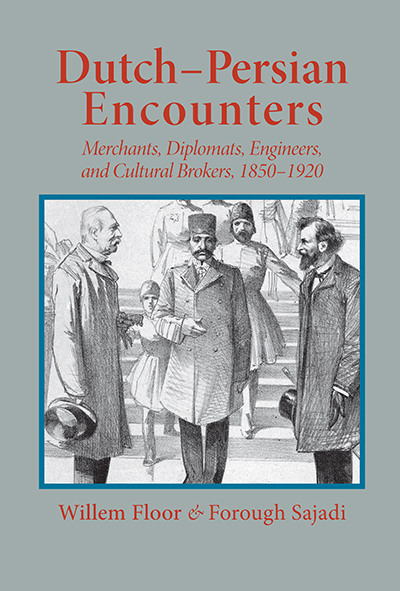

Dutch-Persian Encounters tells the remarkable story of a small group of Dutch and Iranian travelers, merchants, diplomats, engineers, physicians, and cultural brokers who forged unexpected connections between their two countries during the nineteenth and early twentieth centuries.
Though few in number, these men and women left an outsized legacy. Johannes Lodewijk Schlimmer helped create the foundations of modern Persian medical terminology and medical education. Charles R. Keun advanced Dutch commercial interests in the Persian Gulf. Albert Hotz became one of the most influential foreign entrepreneurs in Iran, helping to develop trade, transportation, banking, and retail commerce. Dutch engineers proposed ambitious irrigation schemes that sought to transform the plains of Khuzestan, while diplomats, scholars, and collectors introduced Dutch audiences to the richness of Iranian history, art, and culture.
Meanwhile, Persian shahs, diplomats, and consuls brought Iran to the Netherlands, fostering a growing fascination with Persia that culminated in the extraordinary ceremonial entry of Shah Abbas the Great into Delft during the celebrated student festivities of 1913.
Drawing on archives, newspapers, memoirs, and unpublished sources in both countries, Willem Floor and Forough Sajadi illuminate a fascinating but little-known chapter in the history of Dutch-Iranian relations. Rich in vivid personalities and surprising encounters, this book reveals how a handful of determined individuals helped shape the relationship between two nations far apart in distance, yet connected by commerce, curiosity, and cultural exchange.