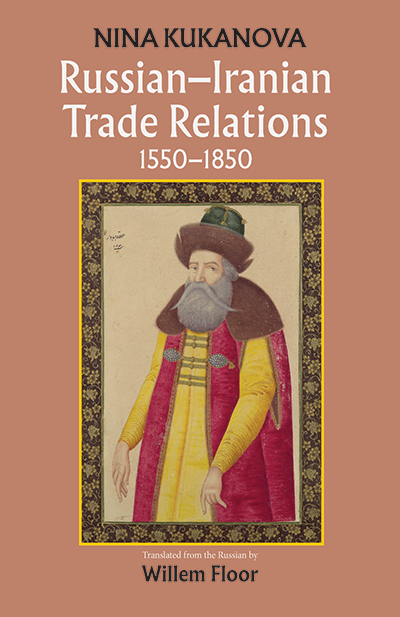

Drawing on a rich body of Russian archival material, Nina G. Kukanova traces the development of commerce between Russia and Iran across three centuries. Beginning with Muscovy’s expansion toward the Caspian in the sixteenth century, she follows the growth of trading networks that linked the Volga, the Caucasus, the Iranian plateau, and the markets of Western Europe.
Kukanova examines the merchants, commodities, institutions, and policies that sustained this exchange through periods of war, political upheaval, and economic change. Raw silk, textiles, metals, grain, and luxury goods moved along shifting overland and maritime routes, while Armenian, Iranian, Russian, and other merchant communities established commercial networks extending from Isfahan and the Caspian ports to Astrakhan, Moscow, and beyond.
The book also explores the increasing role of governments and trading companies in regulating and promoting commerce. From Safavid diplomacy and the reforms of Peter the Great to Anglo-Russian competition in nineteenth-century Iran, trade emerges not merely as an economic activity but as a powerful influence on diplomacy, imperial policy, and regional development.